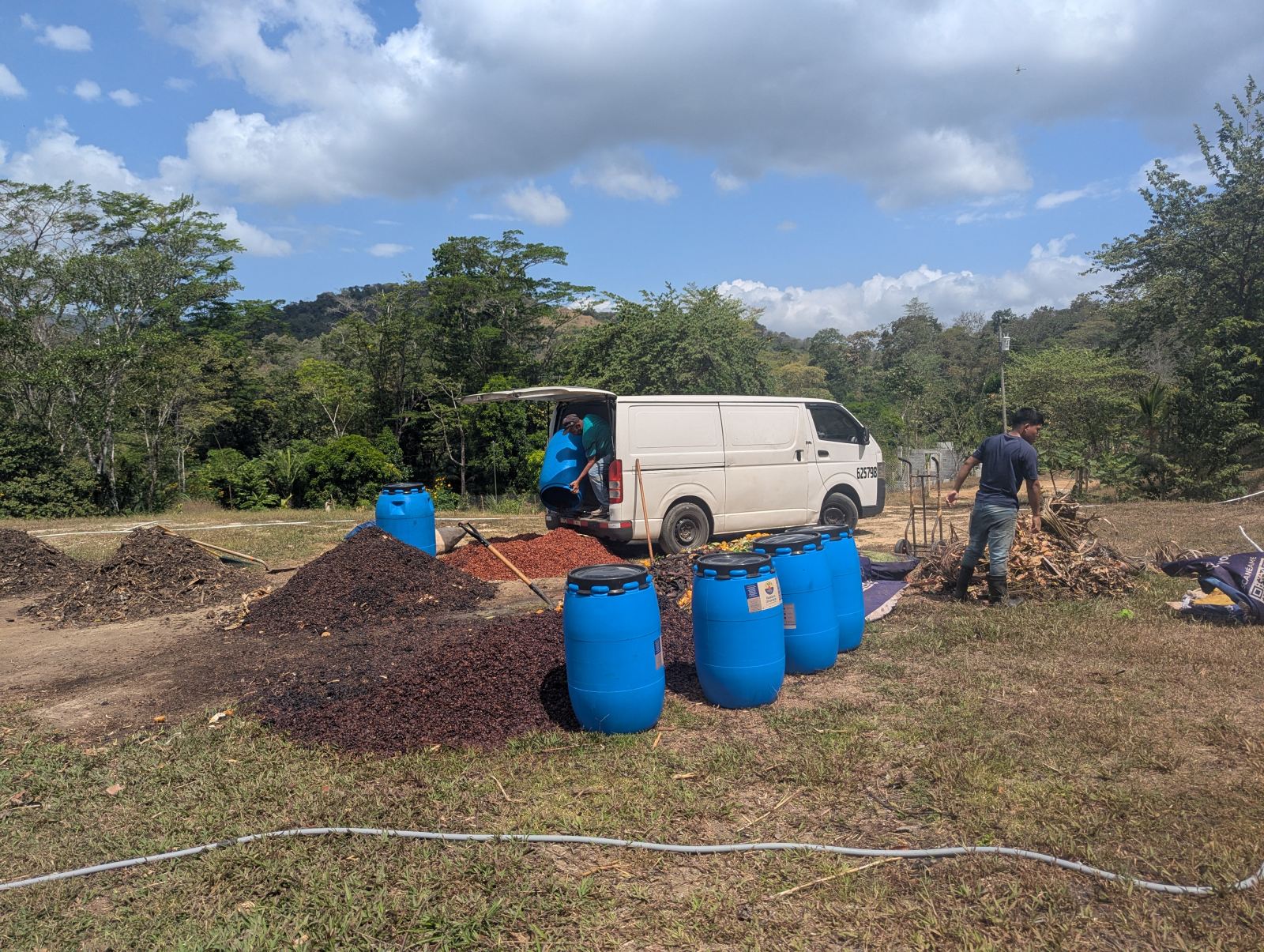
Arrives
Pulp, tank vegetables, manure, straw, whatever the week brings. Photo of this plot.
Compost · bocashi · life
The pile is not a sack. It is a dense ocean of life. Ingredients change with whatever the week brings. Bocashi is water: liquid that carries bacteria, yeasts and minerals to the bed. The city route lives at residuosdinamicos.com.
Pulp, tank vegetables, manure, straw, whatever the week brings. Photo of this plot.
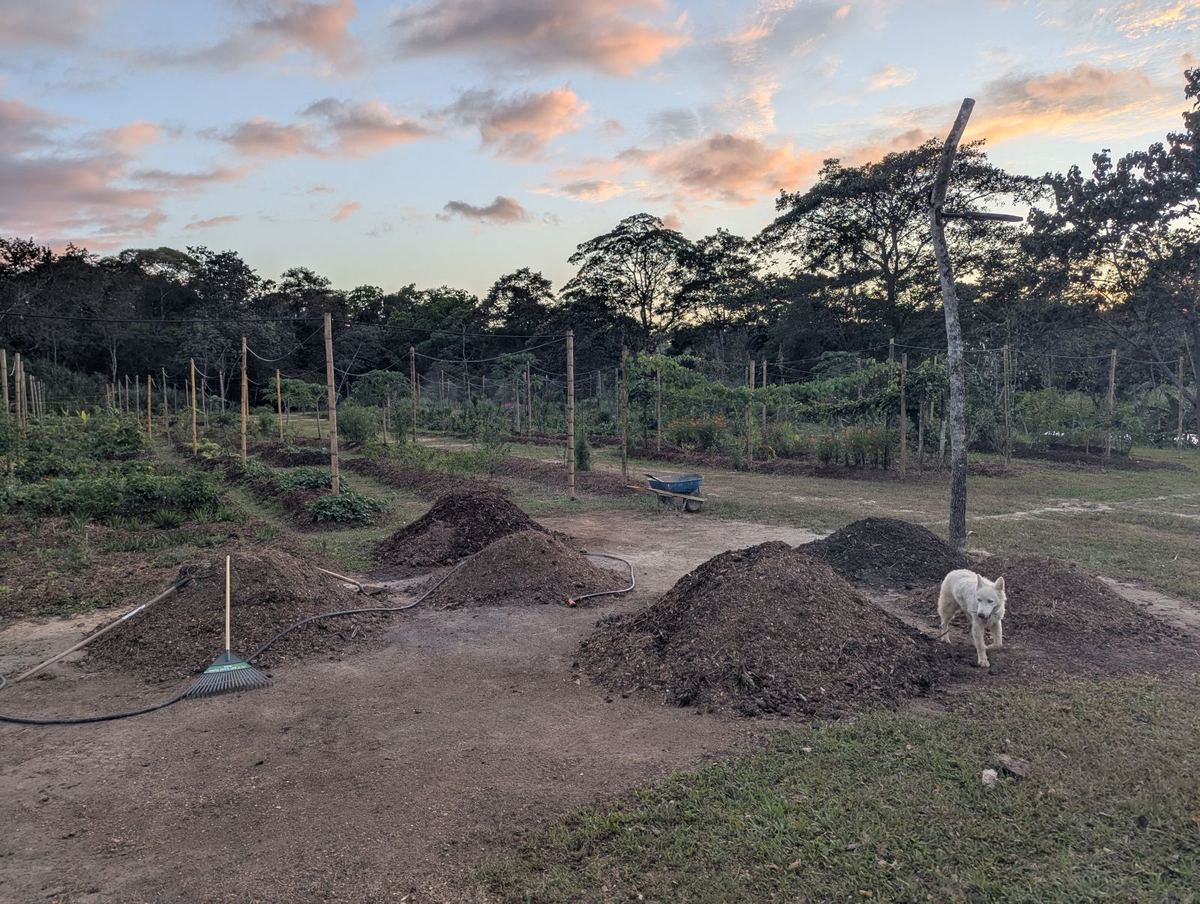
Heat, moisture, air. The pile becomes an occupied building: guilds that eat and hunt.
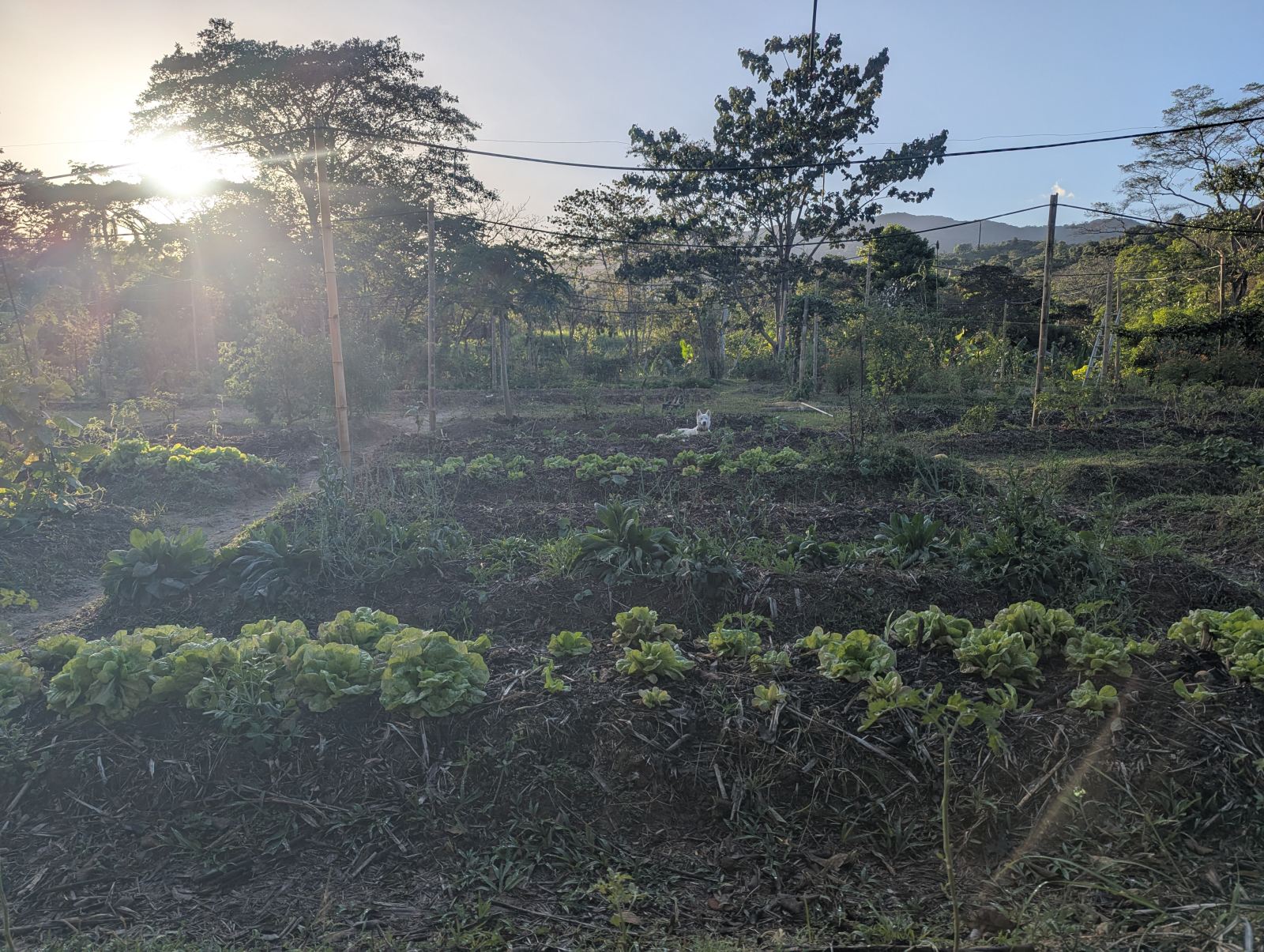
Out comes solid delicacy for the bed and bocashi water to irrigate the life already working below.
Restrepo: the ferment is made on the farm. King: return to the field what left the table and the yard.
Who lives here
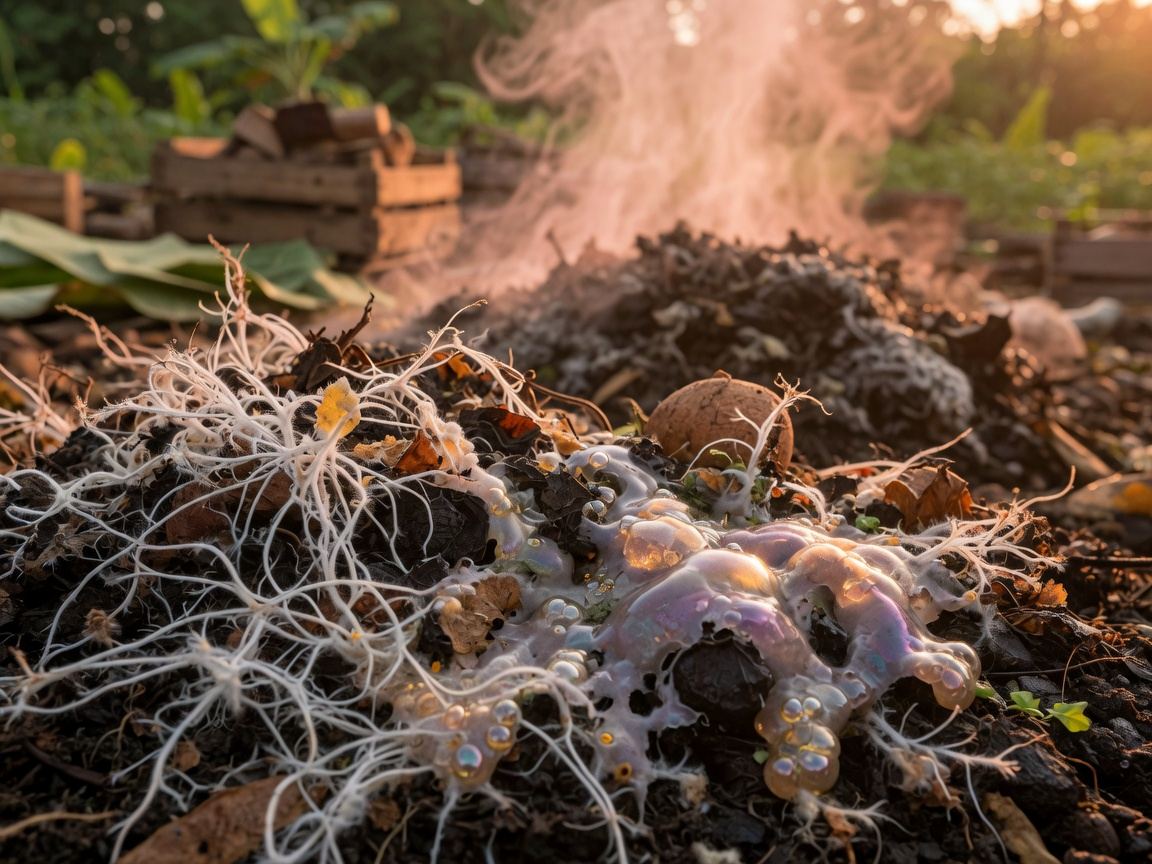
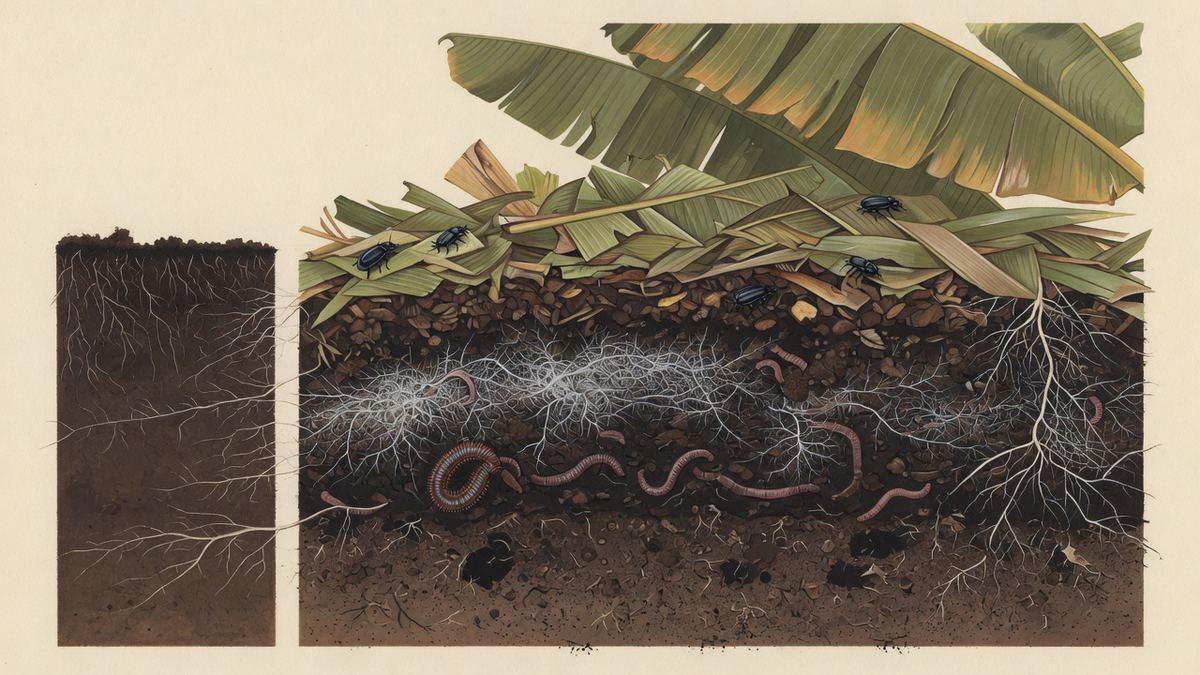
The pile is a dense ocean. Below: the animated guild scene. Beside it: what each one does. No borrowed microscopy.
Break sugars. Heat the pile.
Work in bocashi water.
Weave hard carbon into a net.
Wet edge, living minerals.
Graze bacteria. Release N.
Amoebae, flagellates, more guilds.
Ingham: without microbial predators, compost does not release N. JADAM: the microorganisms of the place already live here; the pile raises them.
Guilds
Hyphae, shredding, hunting, roots coming in. The delicacy is not “fertilizer”: it is habitat ready to settle in the bed.
Odum again: sun → plant → residue → microbe → soil → again. The dump cuts the flow.
The mix changes
What enters depends on the week: mill, yard, tank, rain, whatever the city delivers. We name roles. Examples appear when they are here. We do not invent materials we have not used.
Soft matter that heats and feeds bacteria.
Without dry carbon the pile packs and drowns.
Phosphorus, calcium, ash. Not a chemical shortcut.
Fuel for yeasts and bacteria in liquid bocashi.
The list is not closed. It changes with the harvest, the mill and the route. We do not pad the site with materials we have not named on the farm.
Bocashi
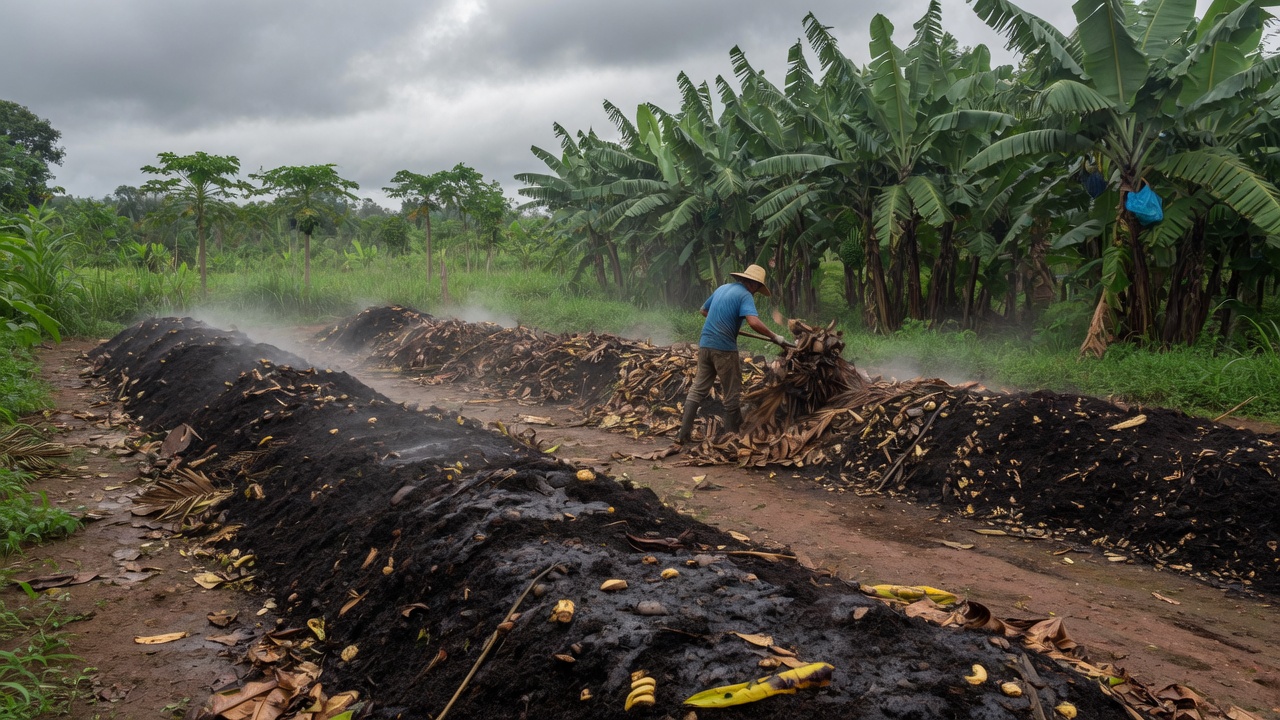
It is not an imported dry sack. It is liquid ferment: molasses, microbes and minerals traveling in water toward the bed, the leaf and the rhizosphere. The pile cooks the solid. Bocashi irrigates the life.
Restrepo: bocashi on the farm, not a sack. Palmer: fermenting the plant’s juice is returning to the soil what that plant already gathered.
Rainwater · sponge
On 1 hectare with 4 inches of bocashi in the soil: rainwater that layer can capture and store.
Each inch of bocashi in the soil can capture and store on the order of ~150,000 liters of rainwater per hectare.
1 ha × 1″ = 254 m³ of layer. With typical organic-media / bocashi volumetric retention (~50–70%), the order of magnitude is 100,000–200,000 L per inch. We use ~150,000 L/inch → 4″ ≈ 600,000 L.
Order of magnitude from layer geometry and organic-media / measured bocashi retention (~2 g water/g dry). Not the USDA “1% organic matter” claim, which is a different metric.
From pile to bed
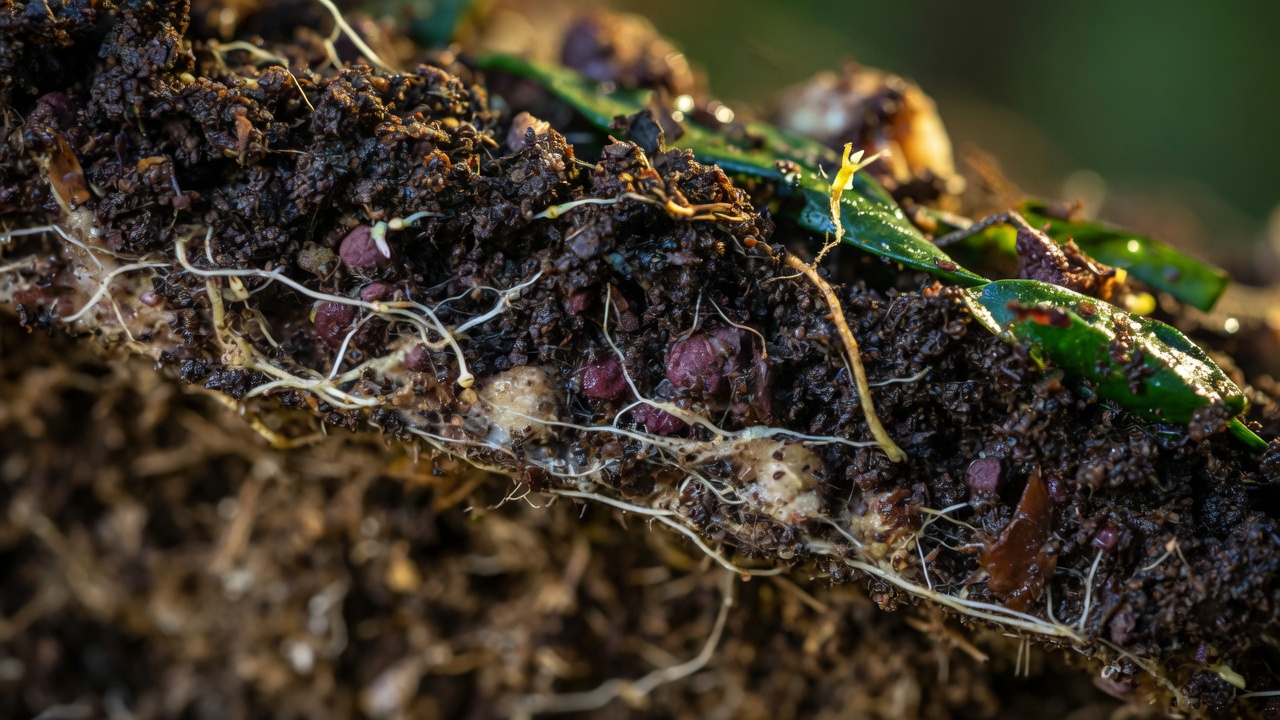
Mature compost opens pores and aggregates. Liquid bocashi carries the living web to where the root is feeding. Plants do not “eat compost”: they eat what microbial predators release.
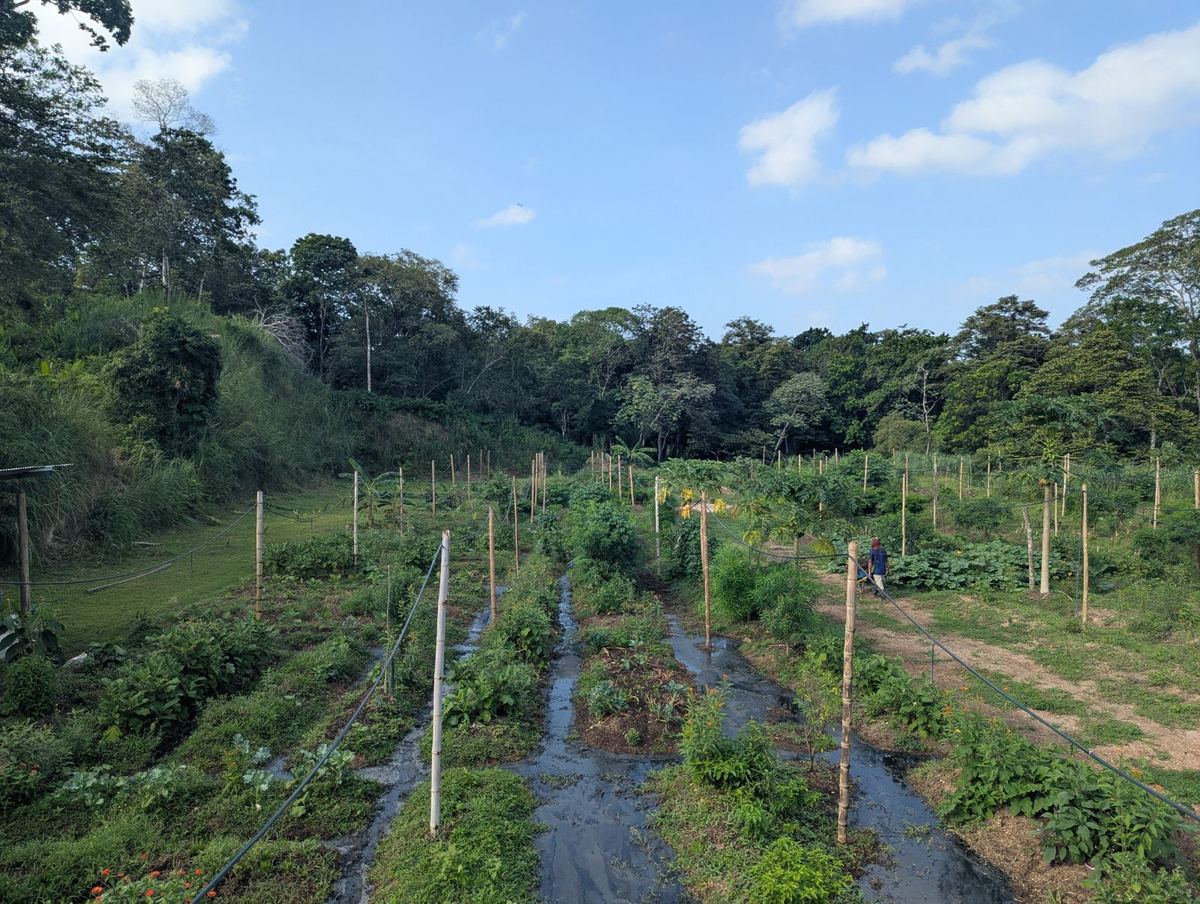
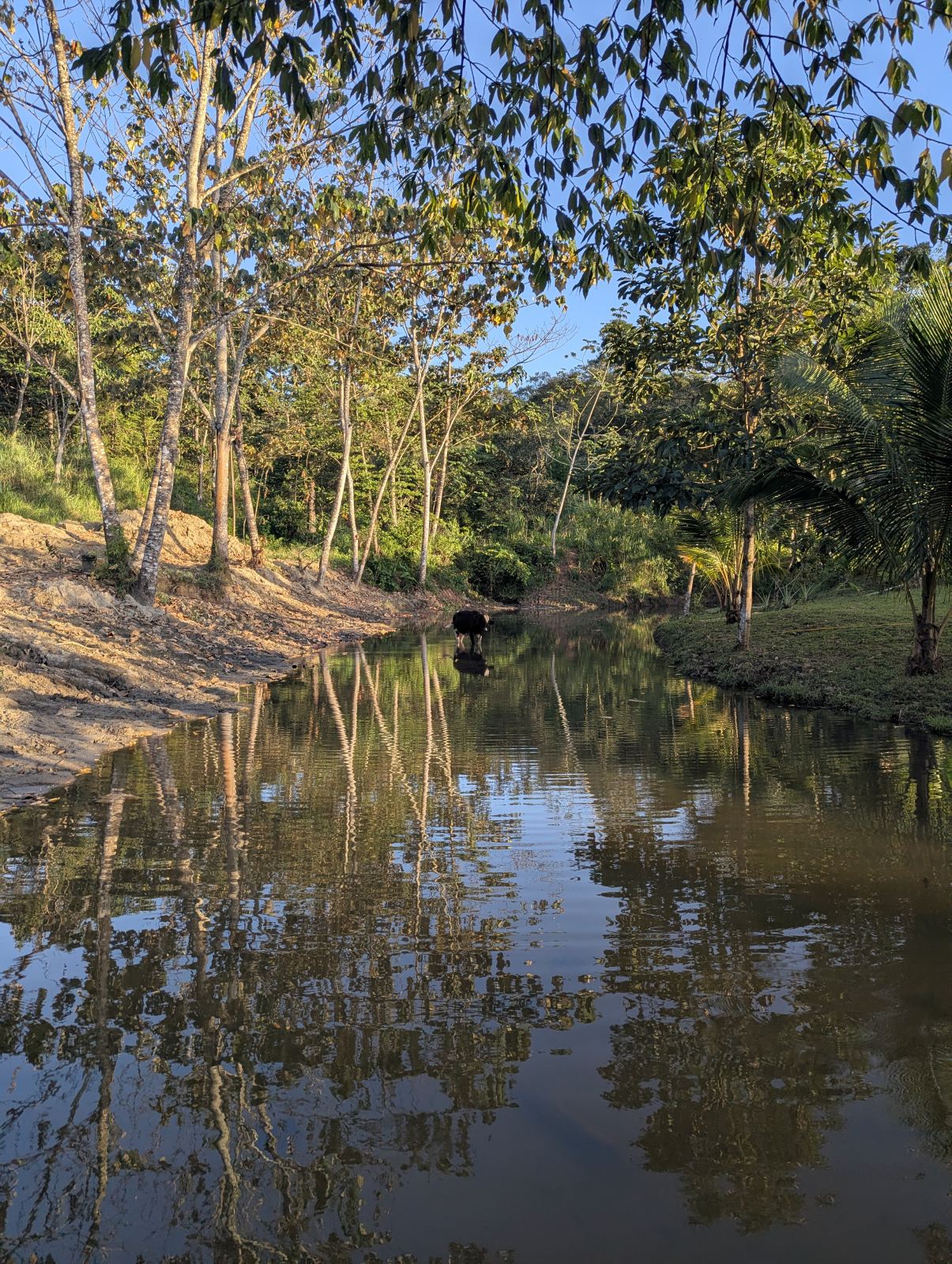
The farm in photos
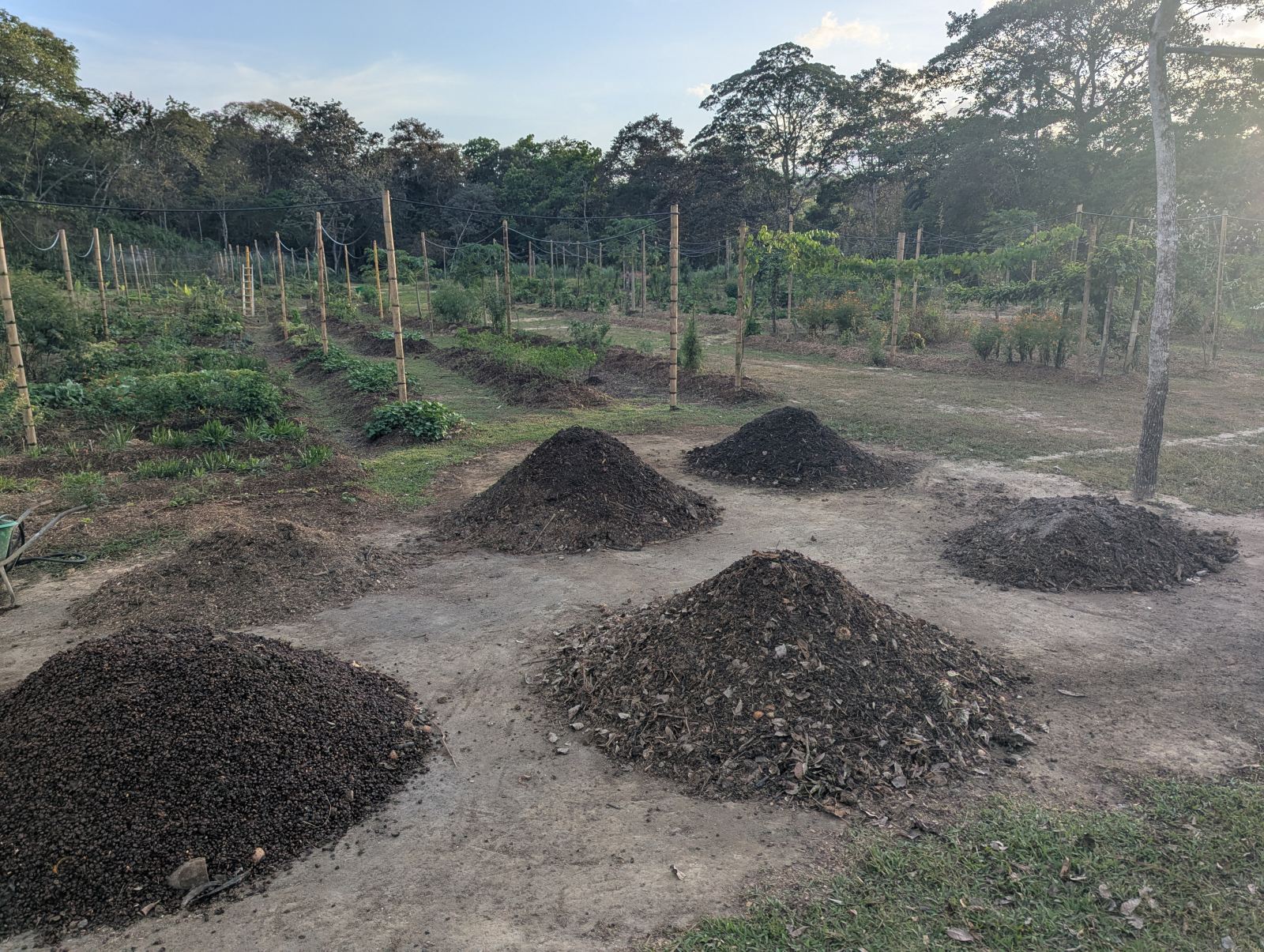
Not an abstract diagram. Photos of this plot: tanks, compost, river, terraces and living soil.
Trophic web
Bacteria cook. Fungi weave. Nematodes hunt. Bocashi water moves the web toward the root.
Company site: residuosdinamicos.com · rcd@hierbawena.com · +507 6030-1022
Orgánica Store / Bites, March 2026, published a weighing of their operation with us. A partner’s dated figure. Not the headline of this pile.