 1
Already done
Scraped land → compost → habitat
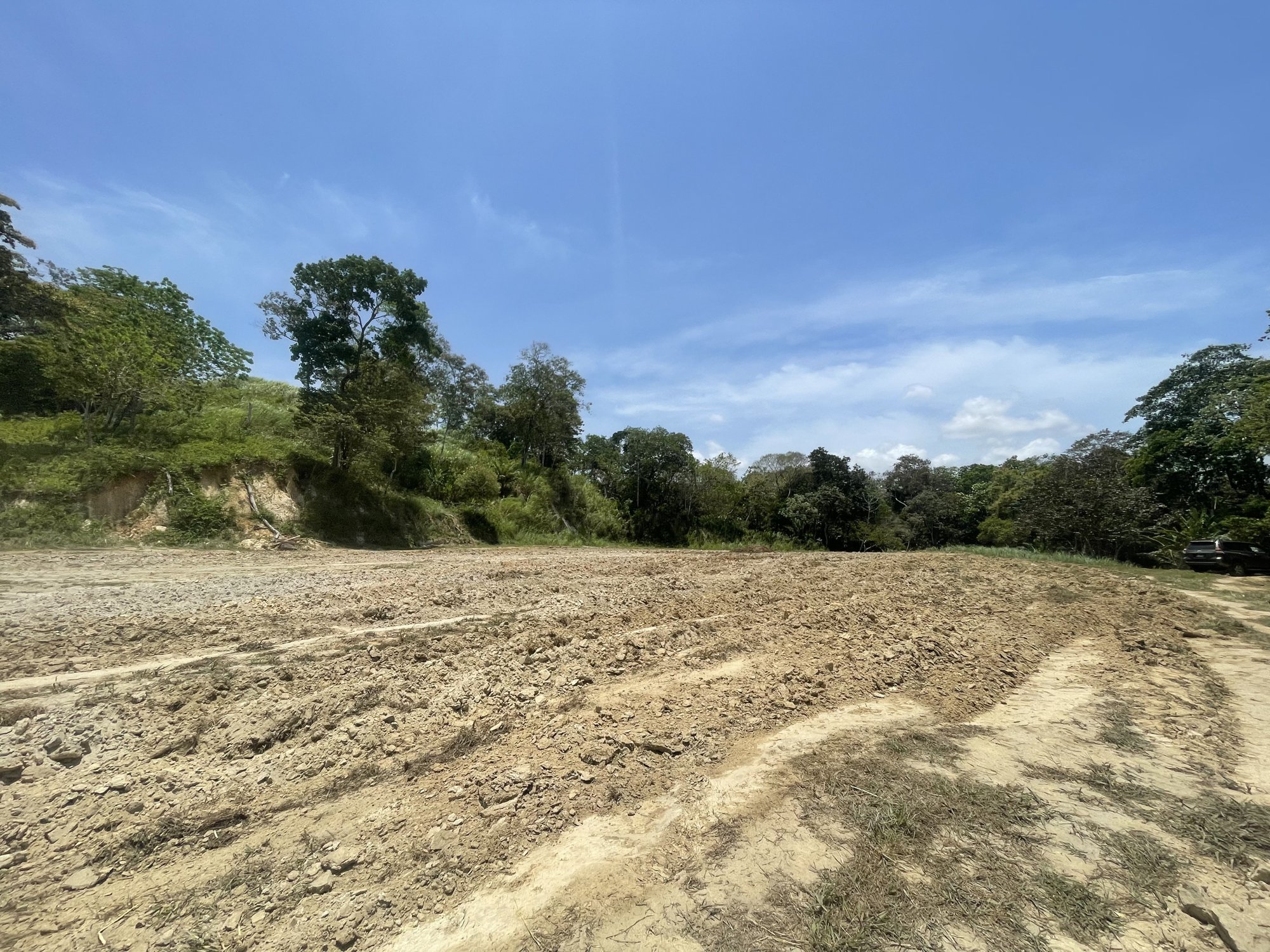
No topsoil. We invent a horizon with piles, mulch and pores.
The land arrived with topsoil and subsoil stripped. We make compost. Compost makes habitat. Habitat partitions niches. Food comes after.
The craft
We are a soil-creation project on a tropical farm.
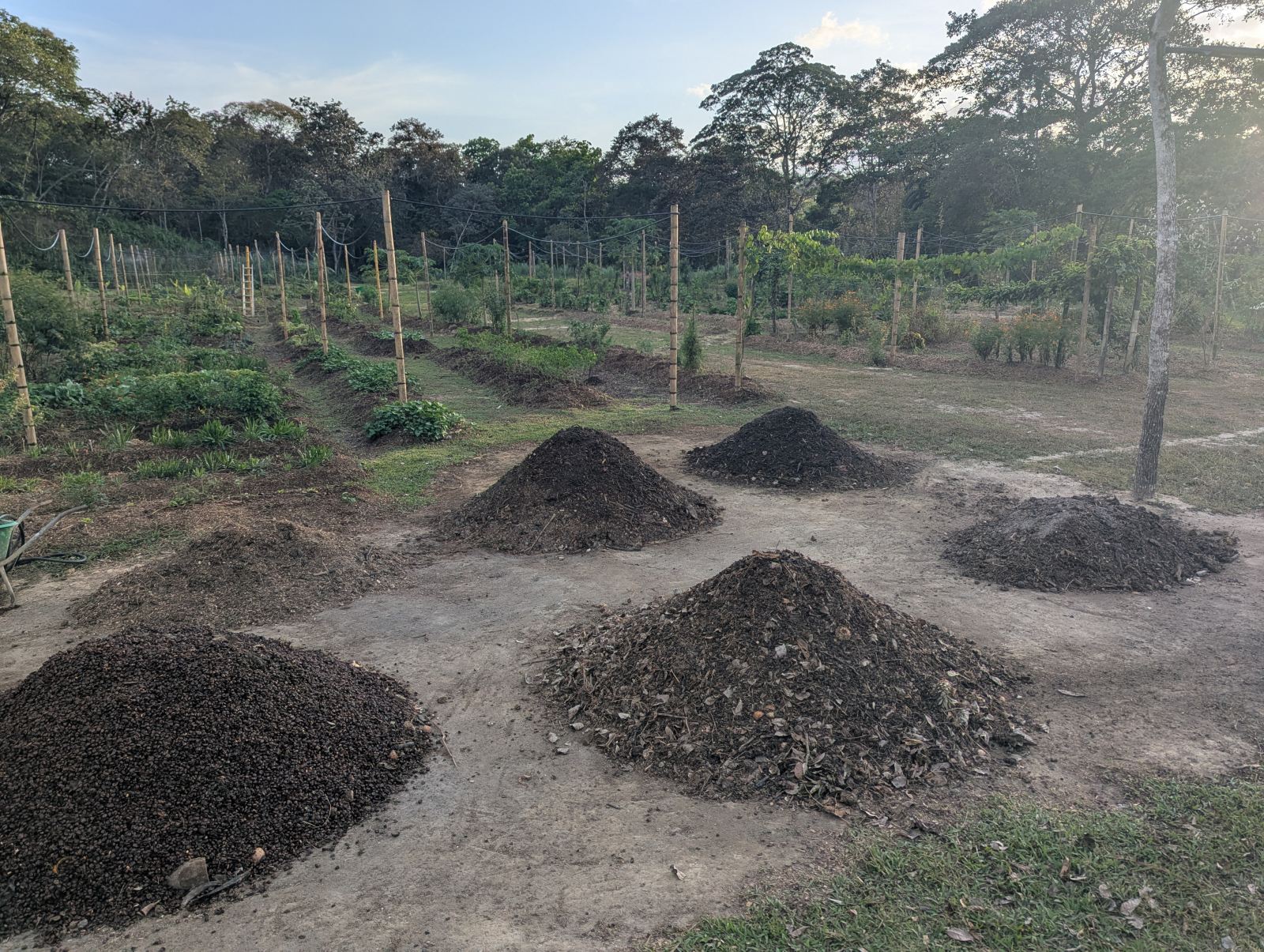
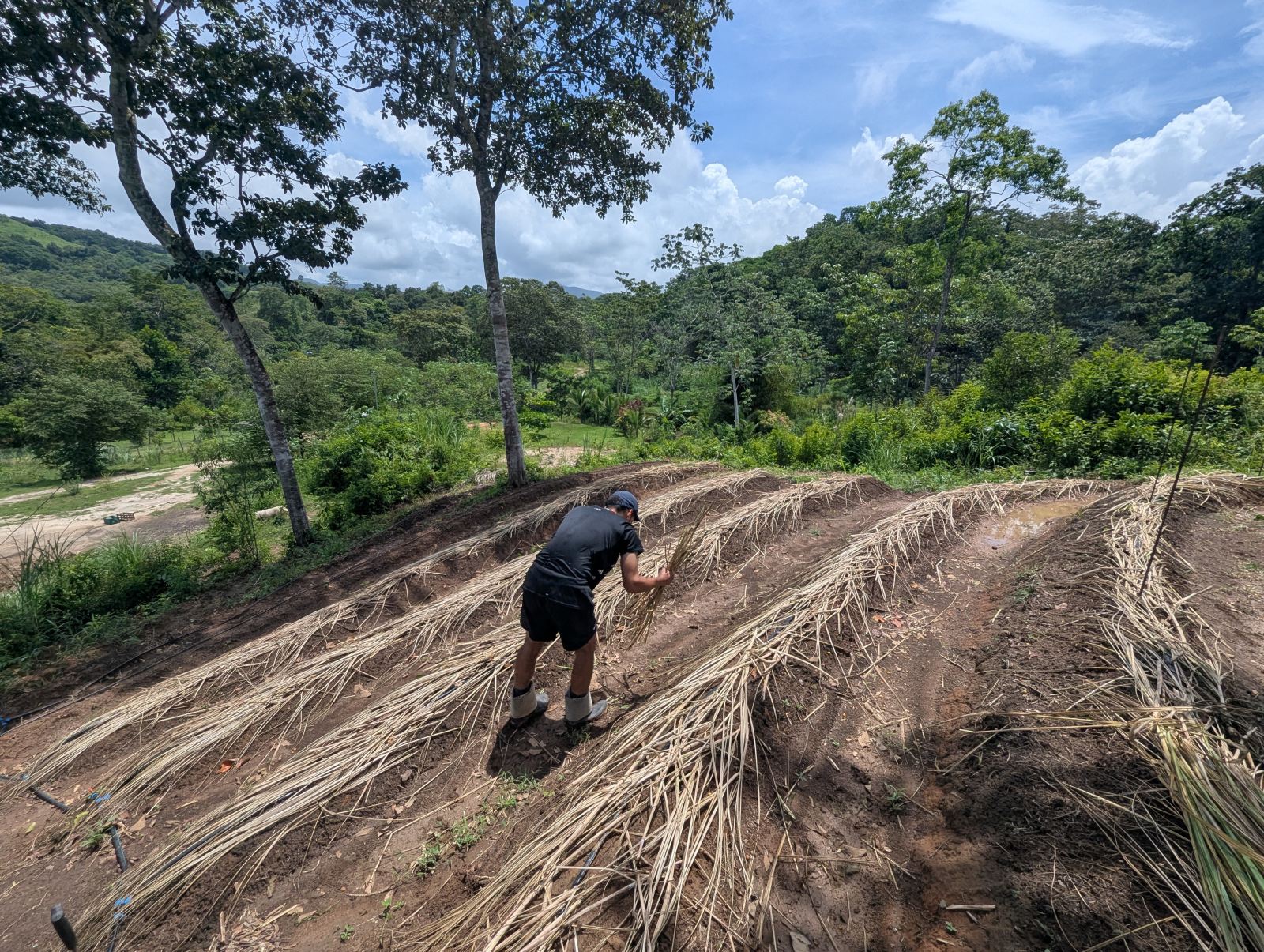
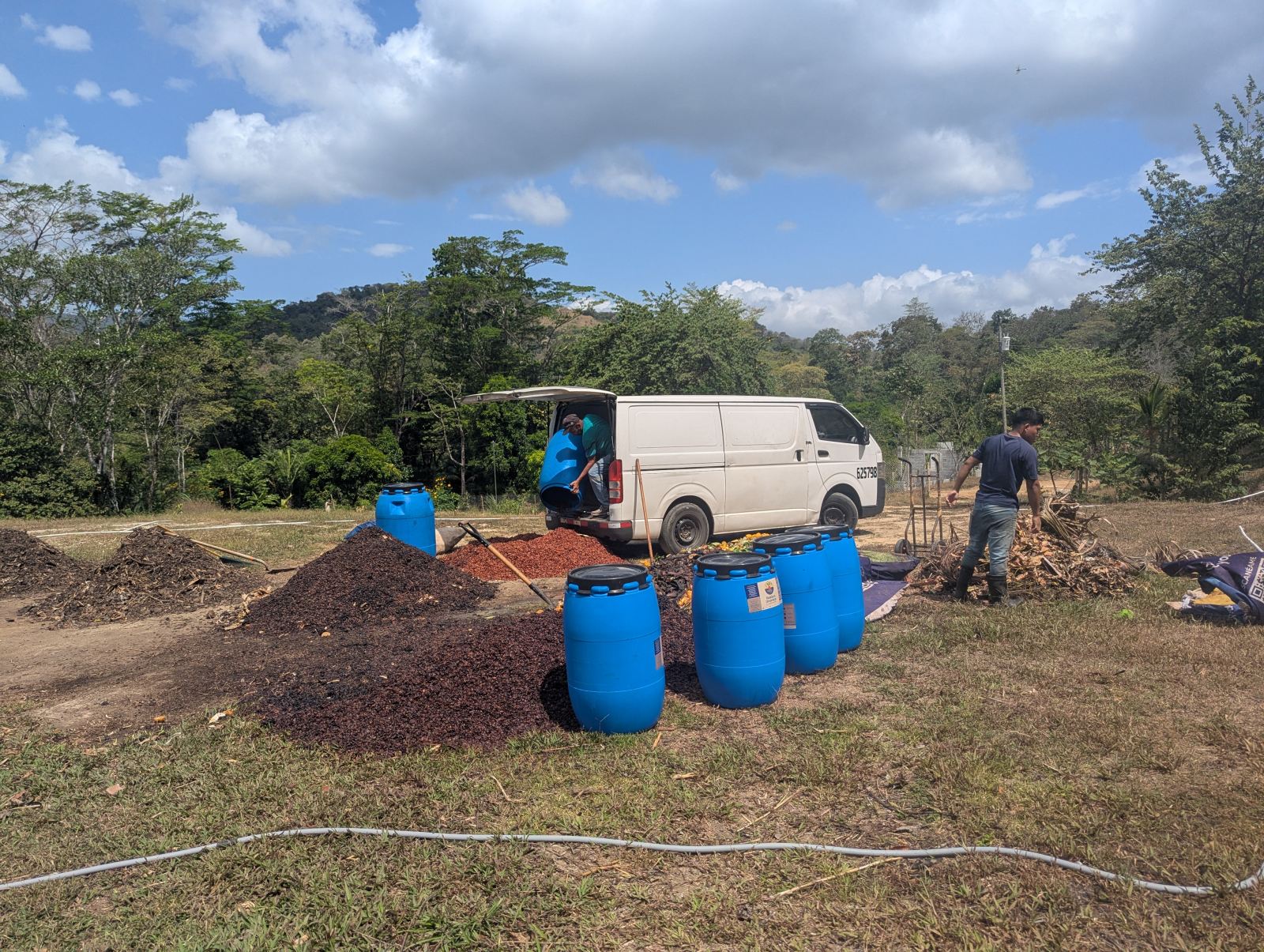
F. H. King: they returned to the field what left the table; we threw it in the sea. Here residue becomes a microbial body again.
Our purpose
And that takes organic matter: it creates life and feeds the soil.
We collect the city’s organic waste, turn it into compost, and grow food with that compost.
Energy
Drawn with photos from this farm, not an abstract circuit.
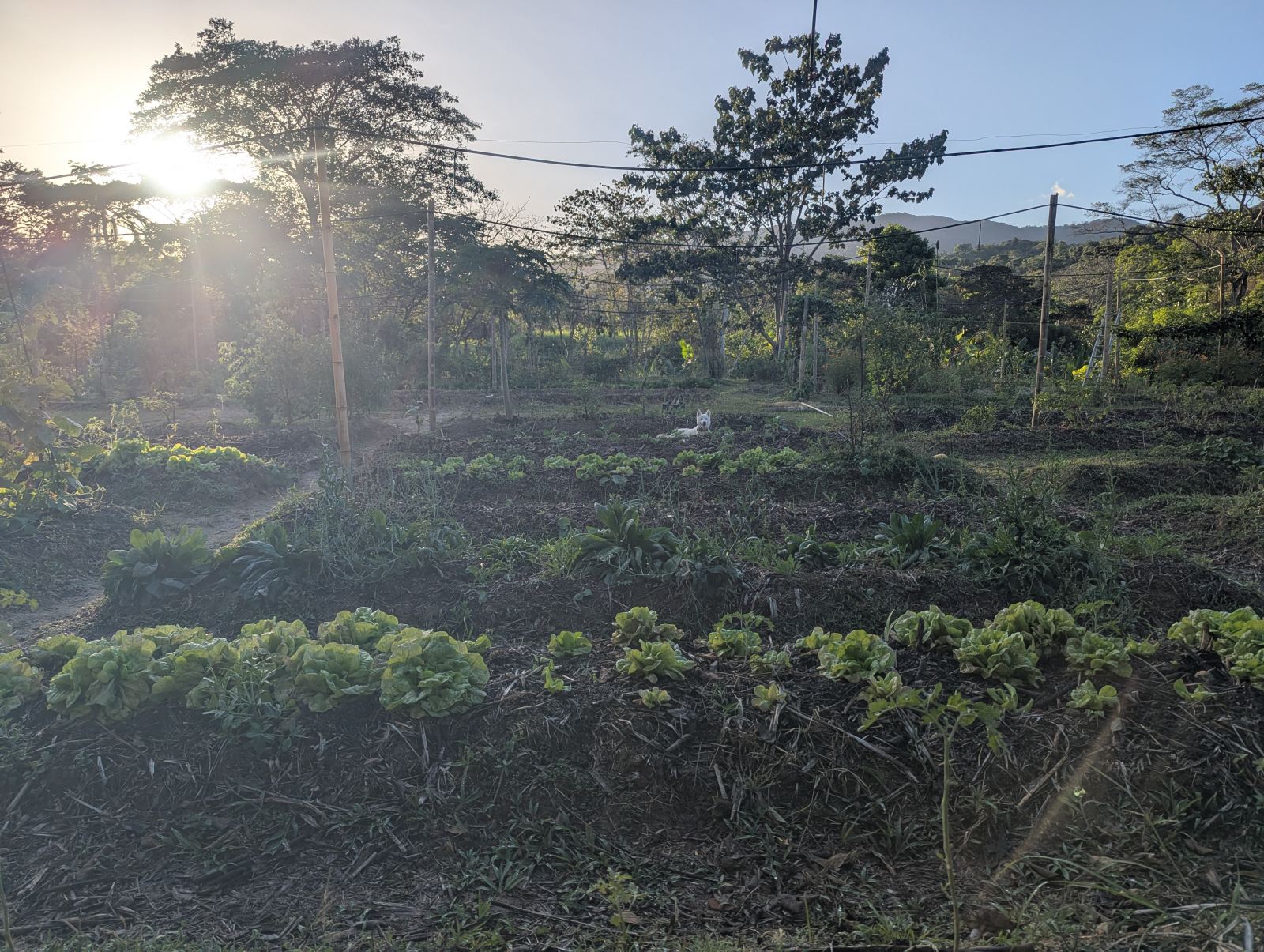
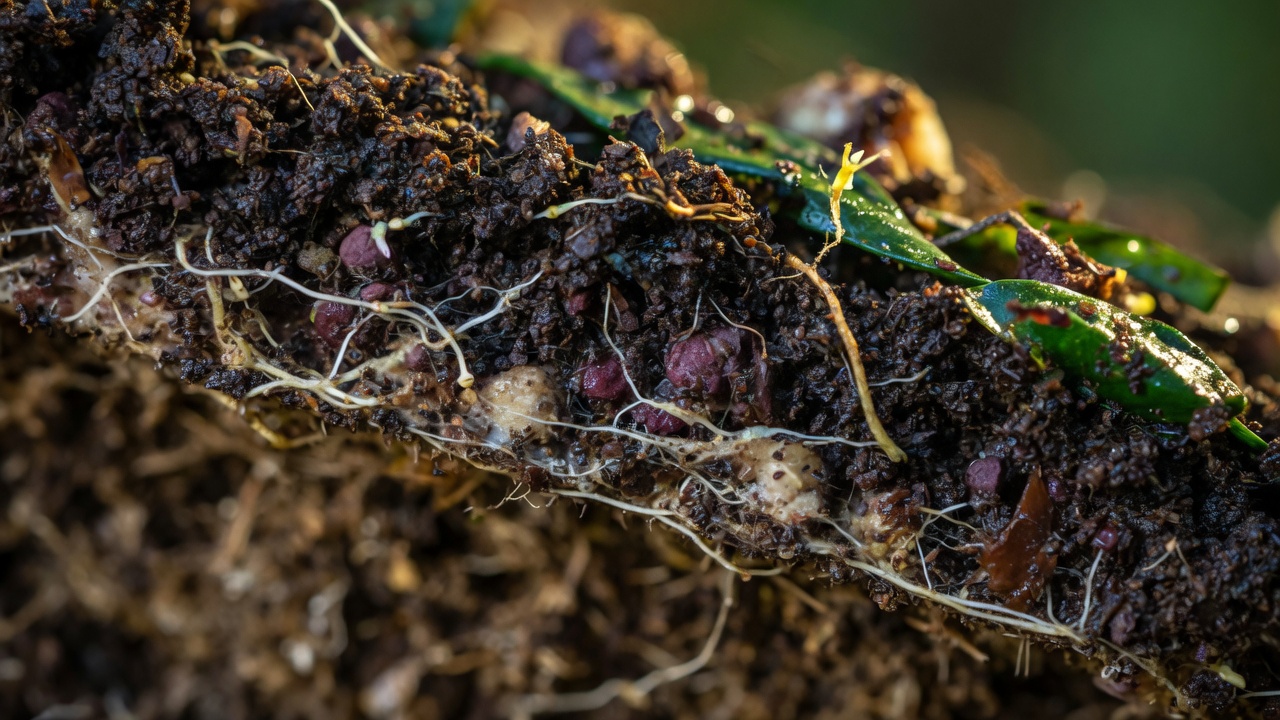
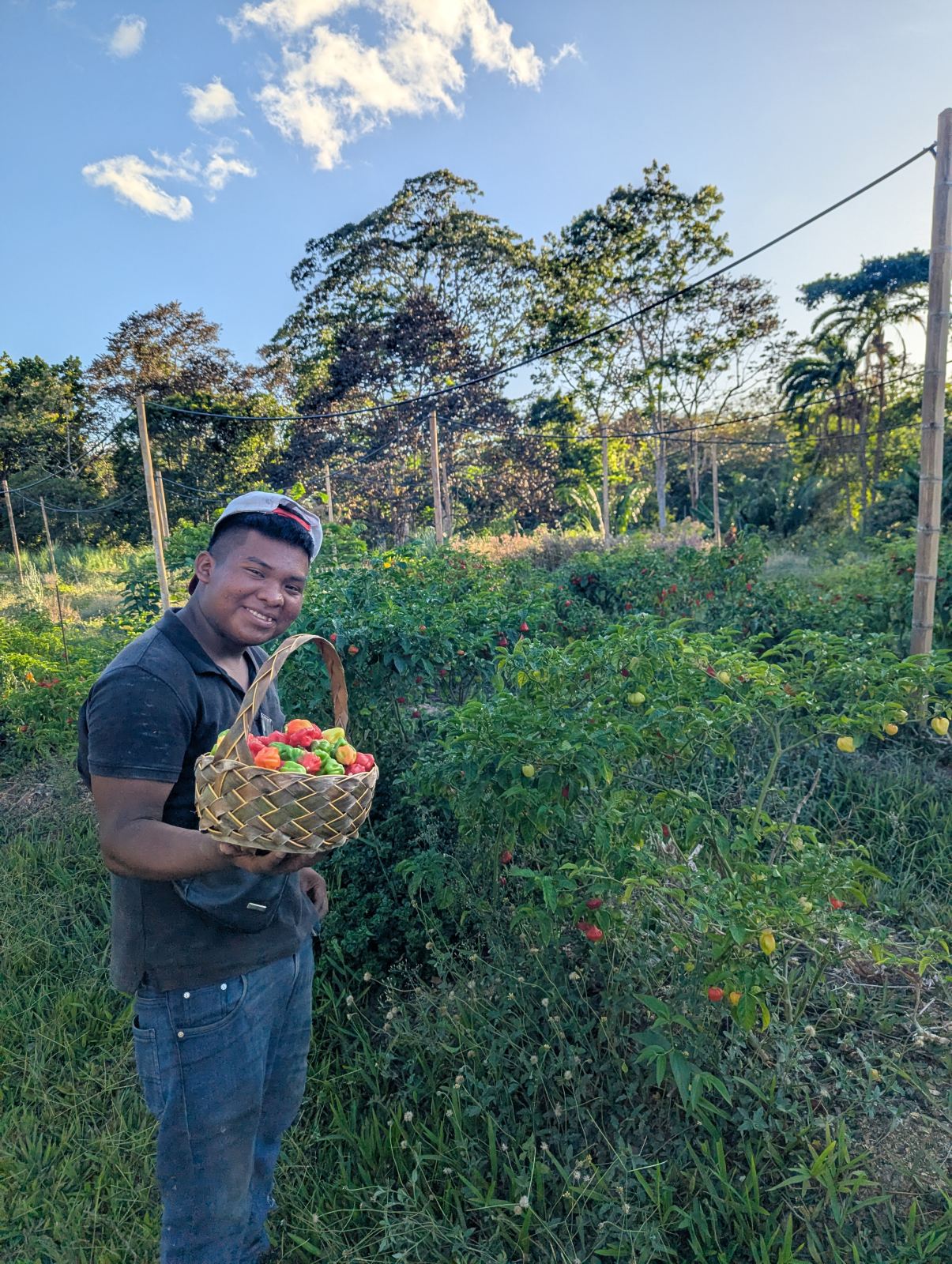
Odum: the ecosystem is the unit. A plot that only produces one crop is a poor system.
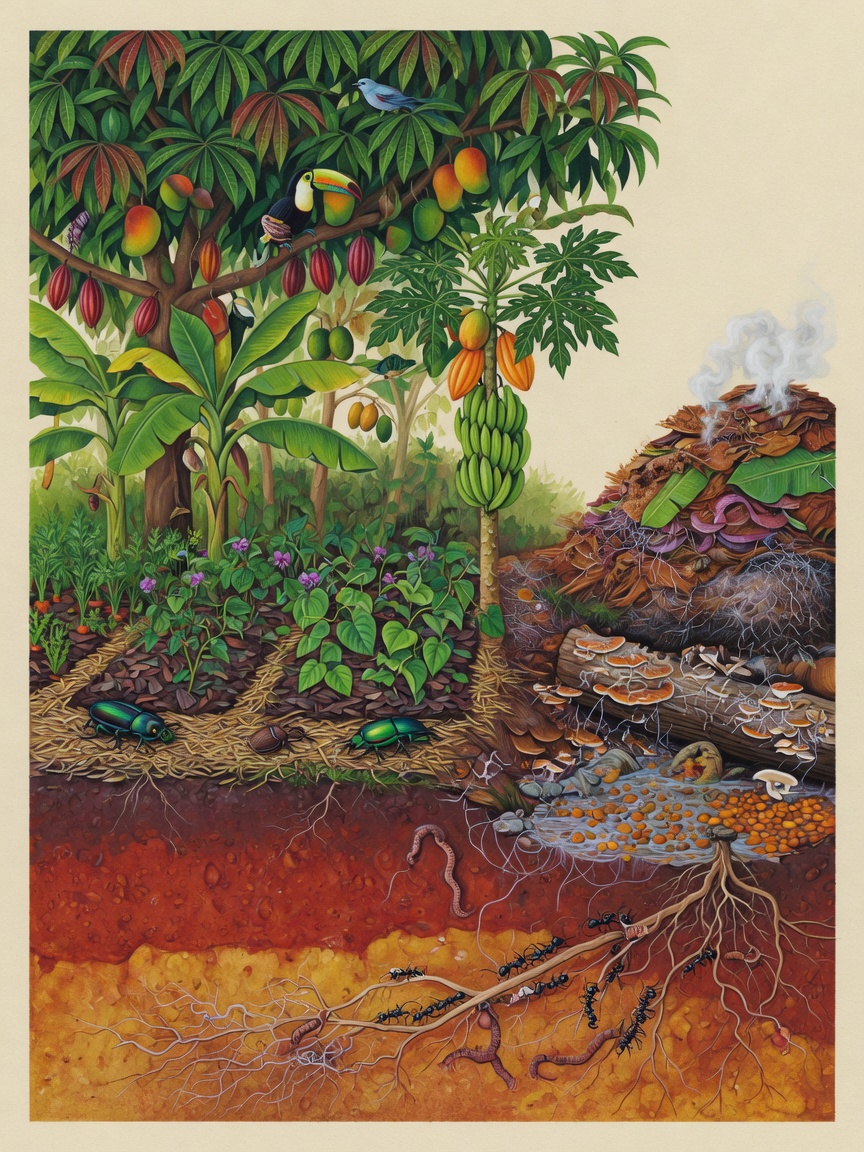
Niche partitioning
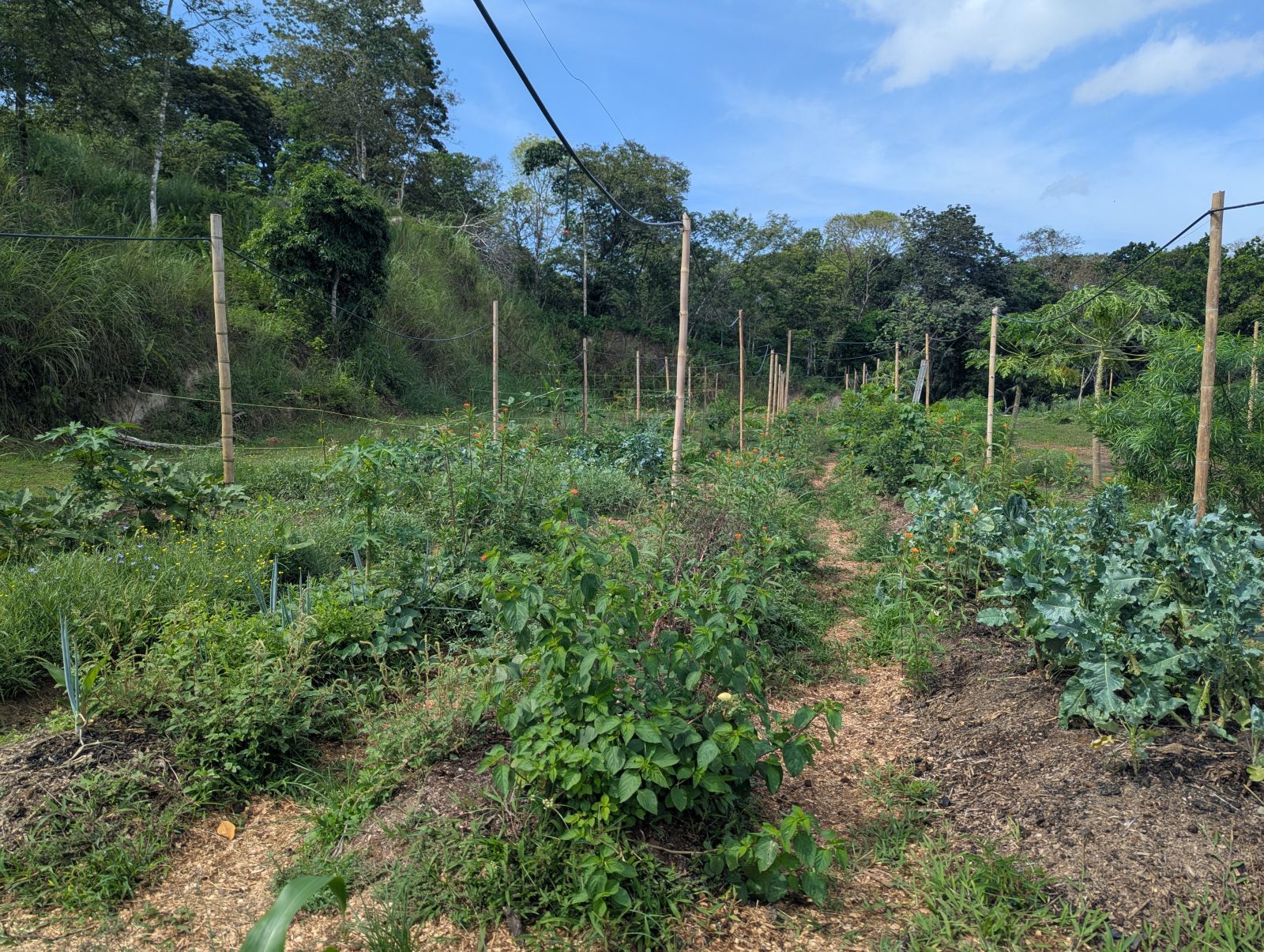
Canopy, understory, surface, rhizosphere, piles, water and dead wood. No one does the same work at the same time in the same place.
Farm road
Soil first. Now niches and vegetables. Then sales. Then the table and tourism. School last.
1
No topsoil. We invent a horizon with piles, mulch and pores.
2
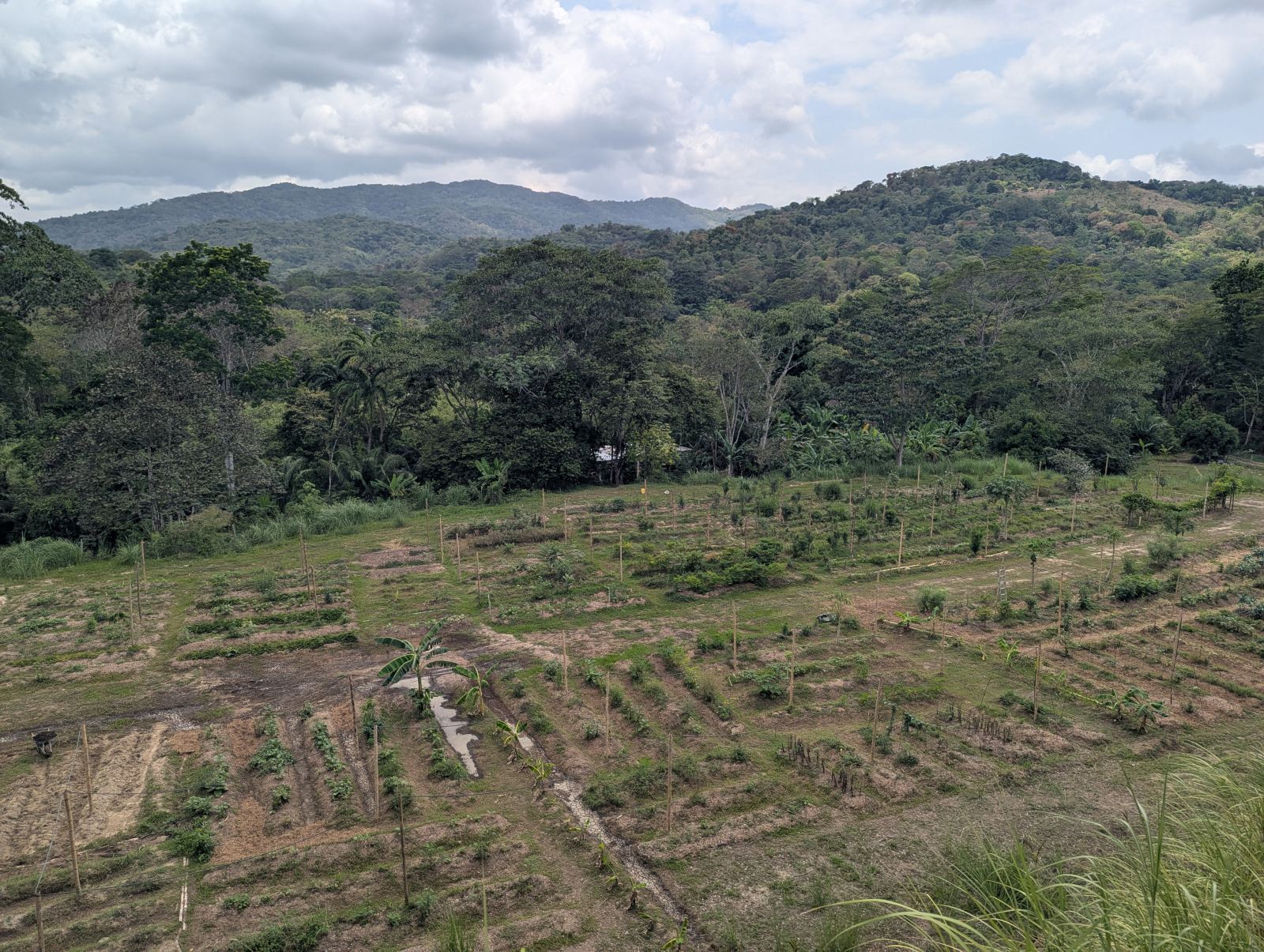
We partition habitats. We domesticate greens in living beds. Here we are.
3
Stable volume. Harvest leaving the farm. Direct link to whoever cooks.
 4
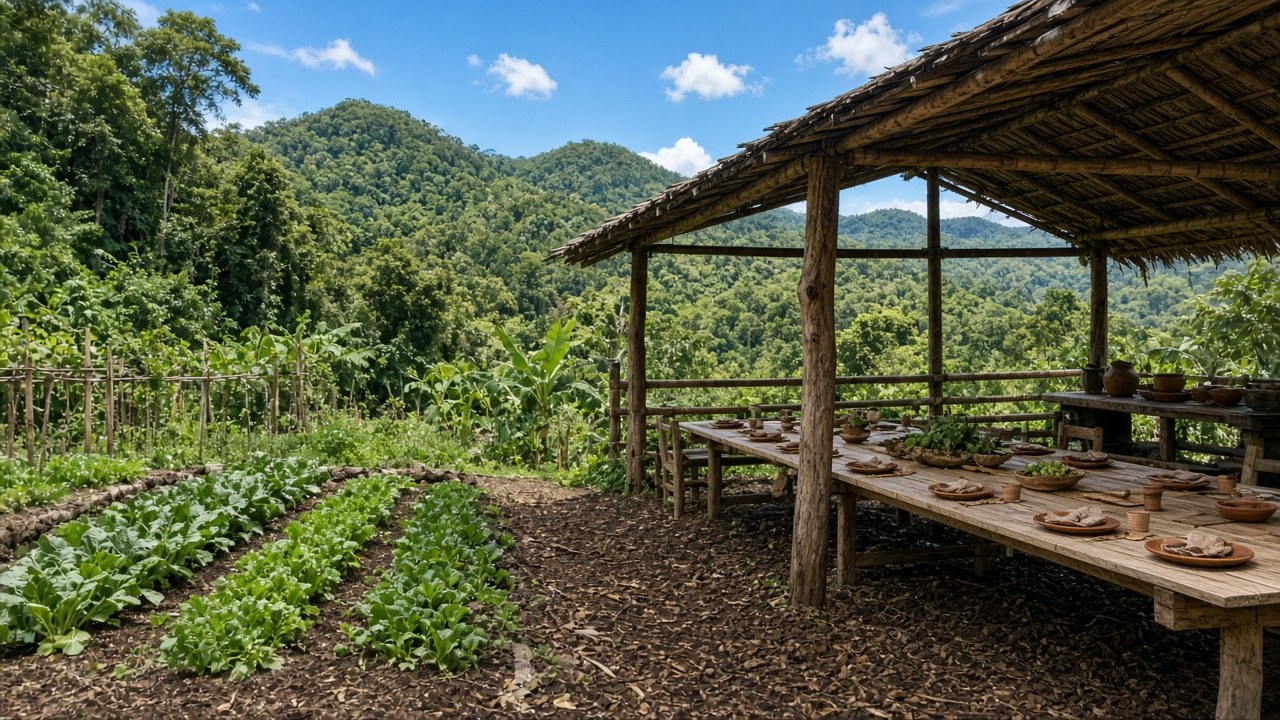
The table on this soil. Visits and food born here. Not bookable yet.
 5
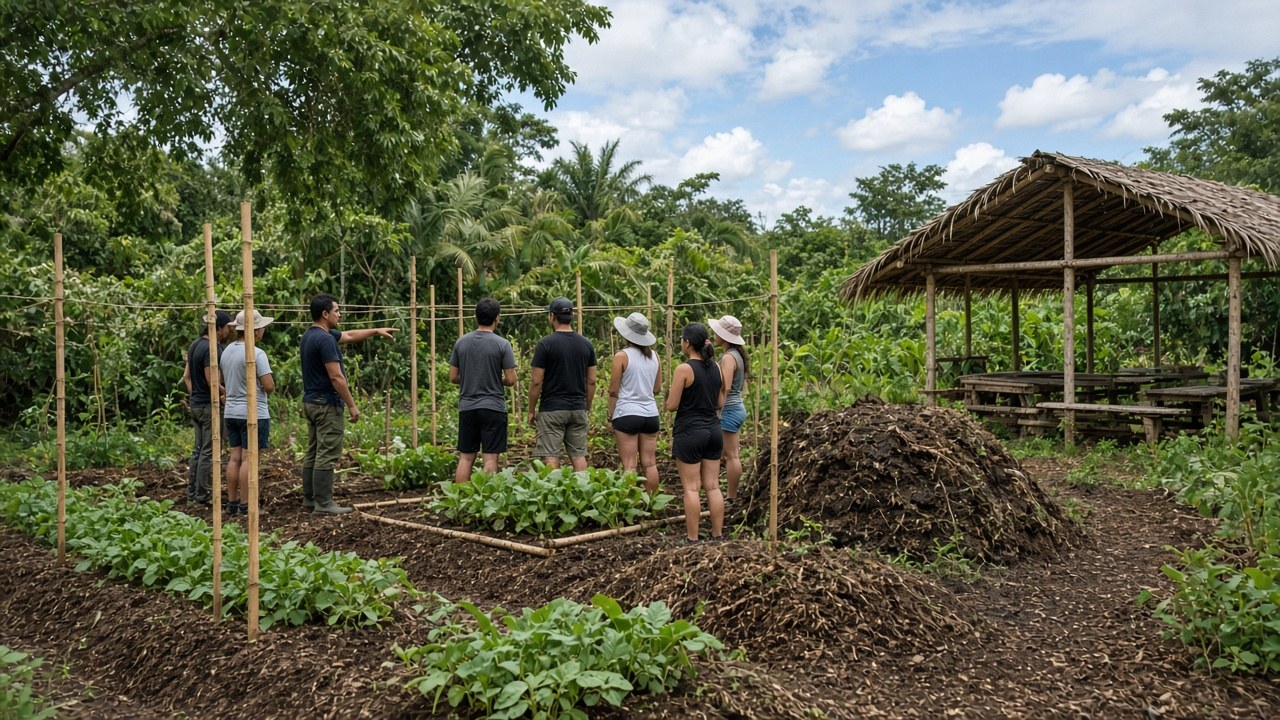
Hierbawena teaches the craft: soil, compost, niches, no poisons.
Done · soil originNow · niches and vegetablesAhead · sales → table → school
Manifesto
True intelligence is not creating waste, and raising the soil that will feed us.
Hierbawena teaches the craft without poisons, in plain language. Residuos Dinámicos brings the city’s organics. Neither is the house: the house is this soil.