01
Habitat
Every organism needs a room: moisture, carbon, pores, shade, a predator that does not erase it. Compost, mulch and roots are architecture.
Habitat · biological agriculture
The work of this farm is to create niches for bacteria, fungi, protozoa, nematodes, insects, earthworms, birds and roots. Food is what is left when a community is alive.
Every organism needs a room: moisture, carbon, pores, shade, a predator that does not erase it. Compost, mulch and roots are architecture.
The niche is a species’ job in the community. Many fit if they do not do the same work at the same time in the same place.
On stripped land there is no “improving the soil.” You invent it. City residue + life = a horizon that was not there.
Farm section
Canopy, understory, surface, rhizosphere, compost piles, water and dead wood. Each layer a different tenant.
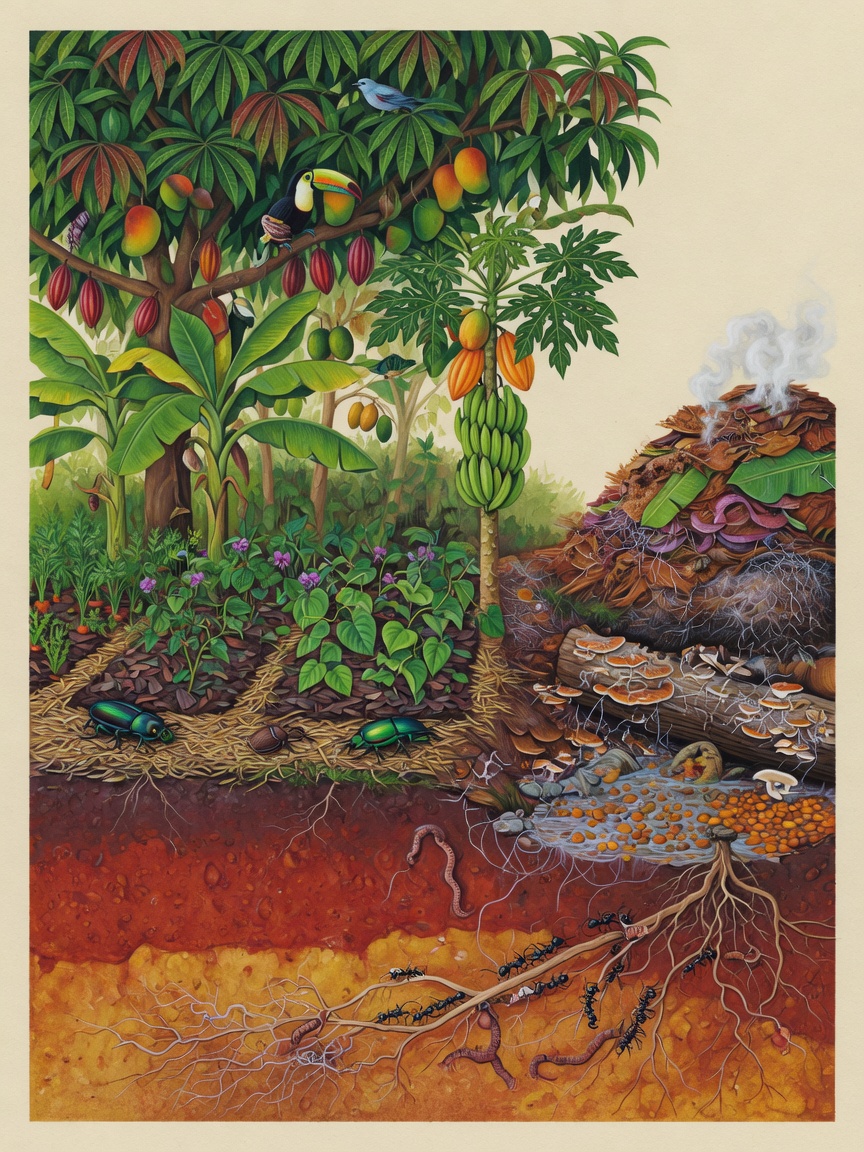
Canopy
Mango, cacao, birds
Fruit, shade, perch
Understory
Plantain, papaya
Microclimate and litter
Surface
Mulch, beetles
They shred last year
Piles
Compost, hyphae
Habitat we build
Water
River, bank
Moisture and edge
Dead wood
Fungi, insects
Slow carbon
Rhizosphere
Root, exudates
The plant pays rent
Odum: the niche is the job. If two species ask for the same resource, one loses. If each occupies a stratum, both stay.
Young and mature · Odum on this ground
One bed is cut. One edge stays. Both must fit on the same ground.
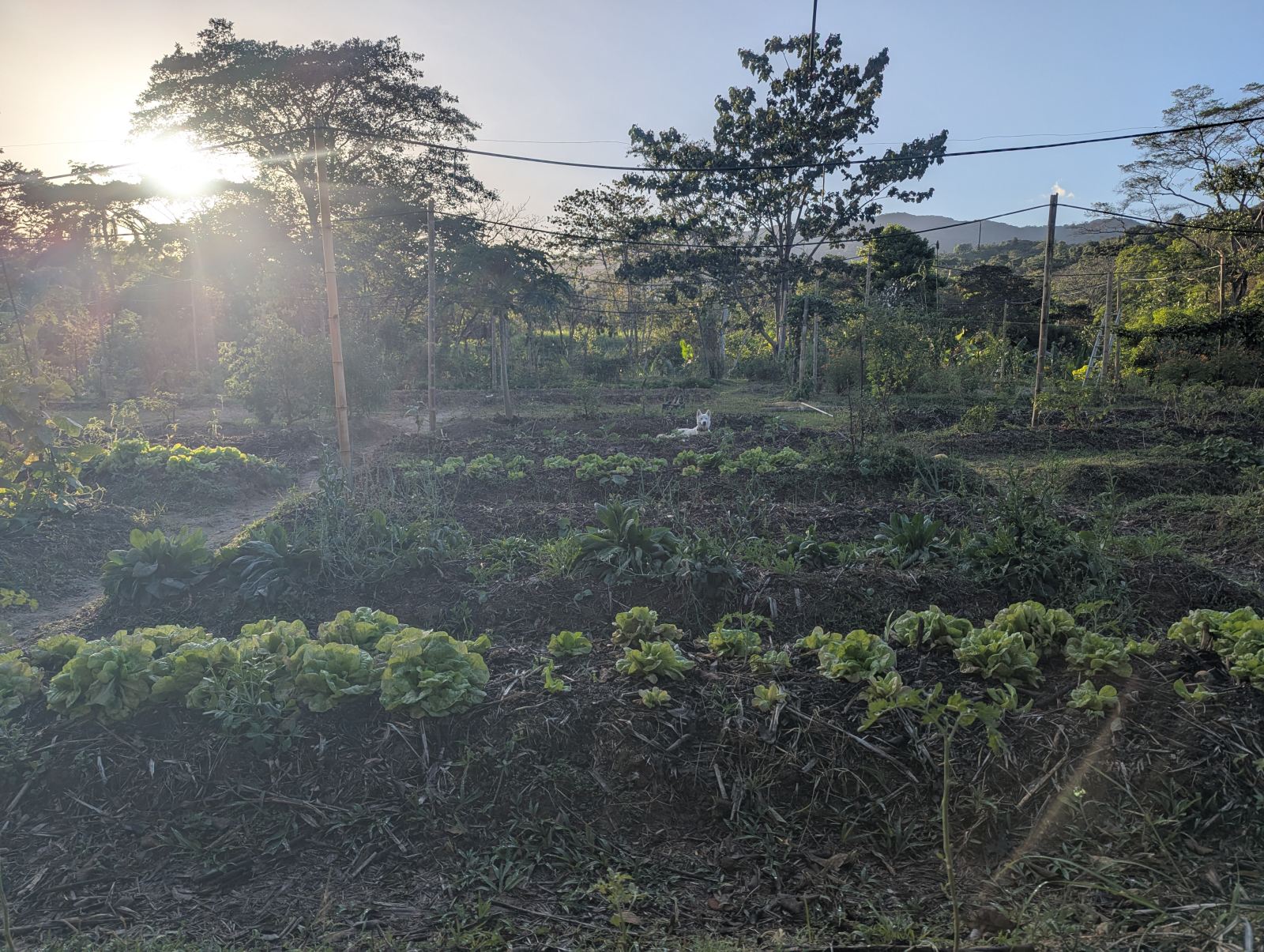
Young patch
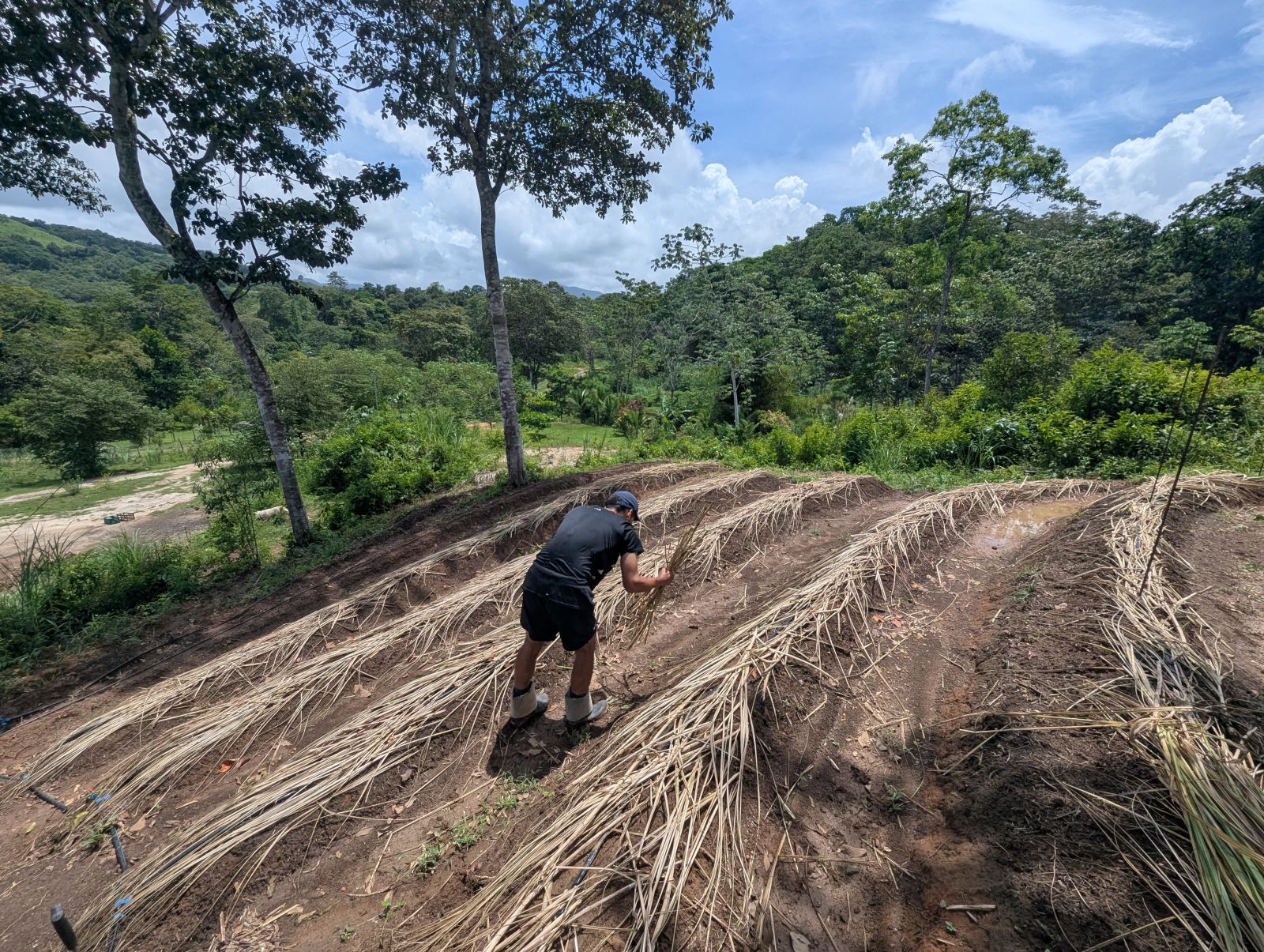
Here the land turns fast. Kale, lettuce, young yuca. Energy leaves in the crate. Without this patch there is no plate.
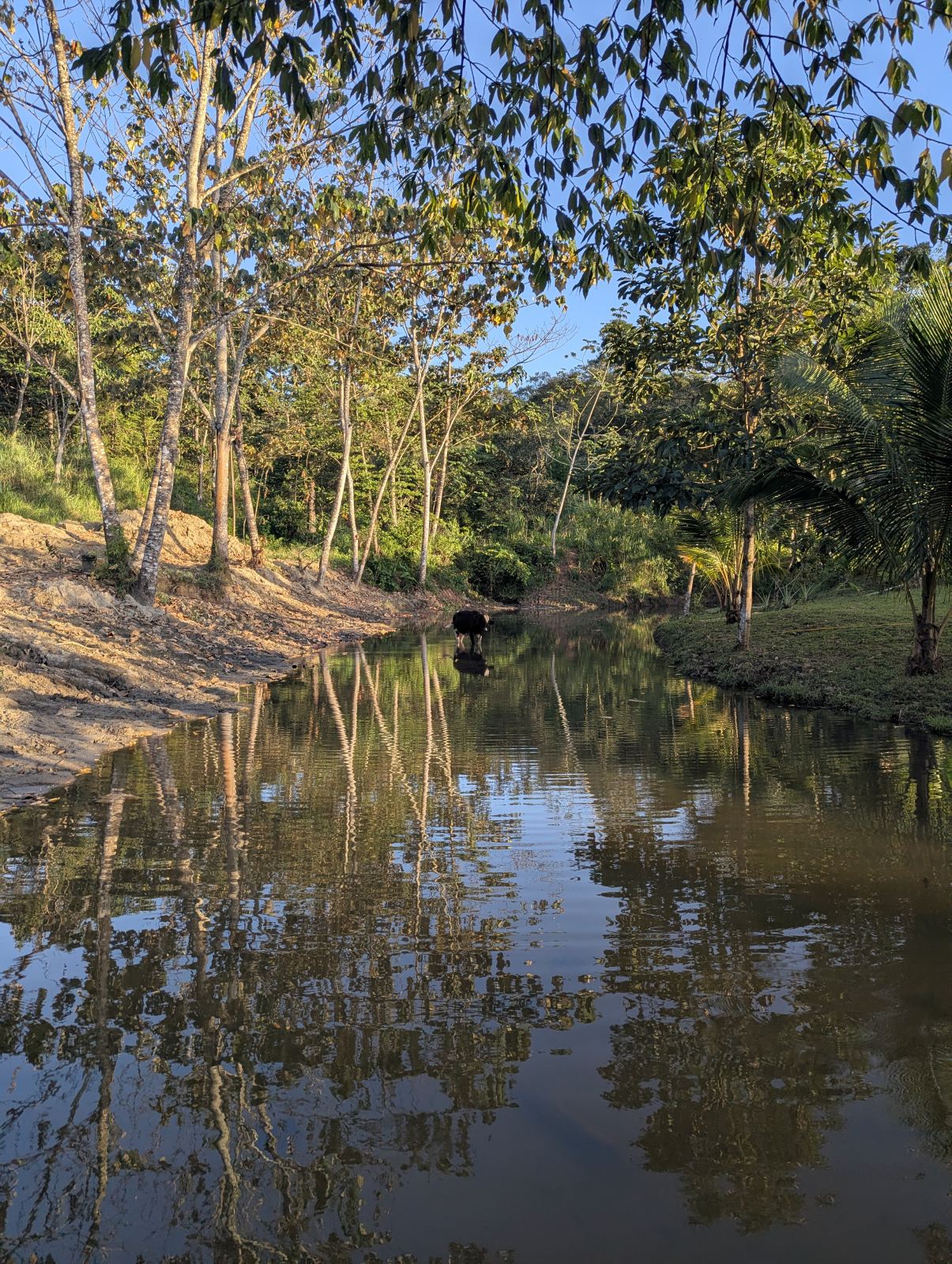
Mature structure
Tree, shade, litter, deep root. Rain stays. Wind does not take the soil. The predator hunts the edge. Here energy is kept.
The exchange
From the canopy fall litter, shade and moisture onto the cut bed. From the bed the residue returns to the pile and to bocashi, and that food goes under the mature medium. The mineral stays on the land.
All young, always: harvest with no house. All locked mature: a fine house, little plate. Both on the same farm, sized so the place still holds.
Rain, dry and flood in Panama are the clock. We do not erase them with chemistry or diesel.
Odum, on land: the young patch gives net food; the mature structure holds the house of water, air and mineral. Both. One alone is not enough.
Food web
Plants do not eat compost. They eat what the predators of microbes release.
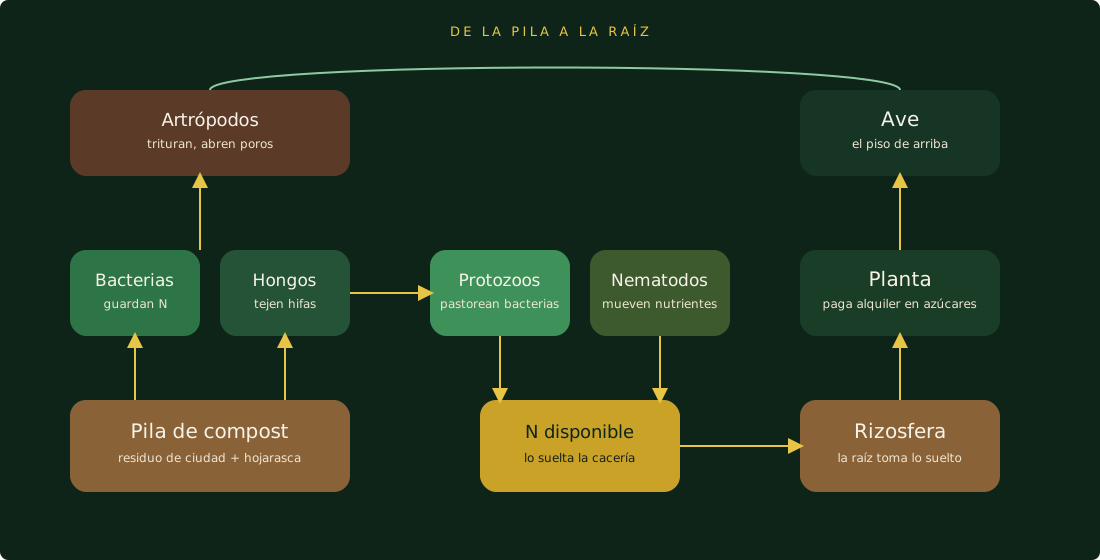
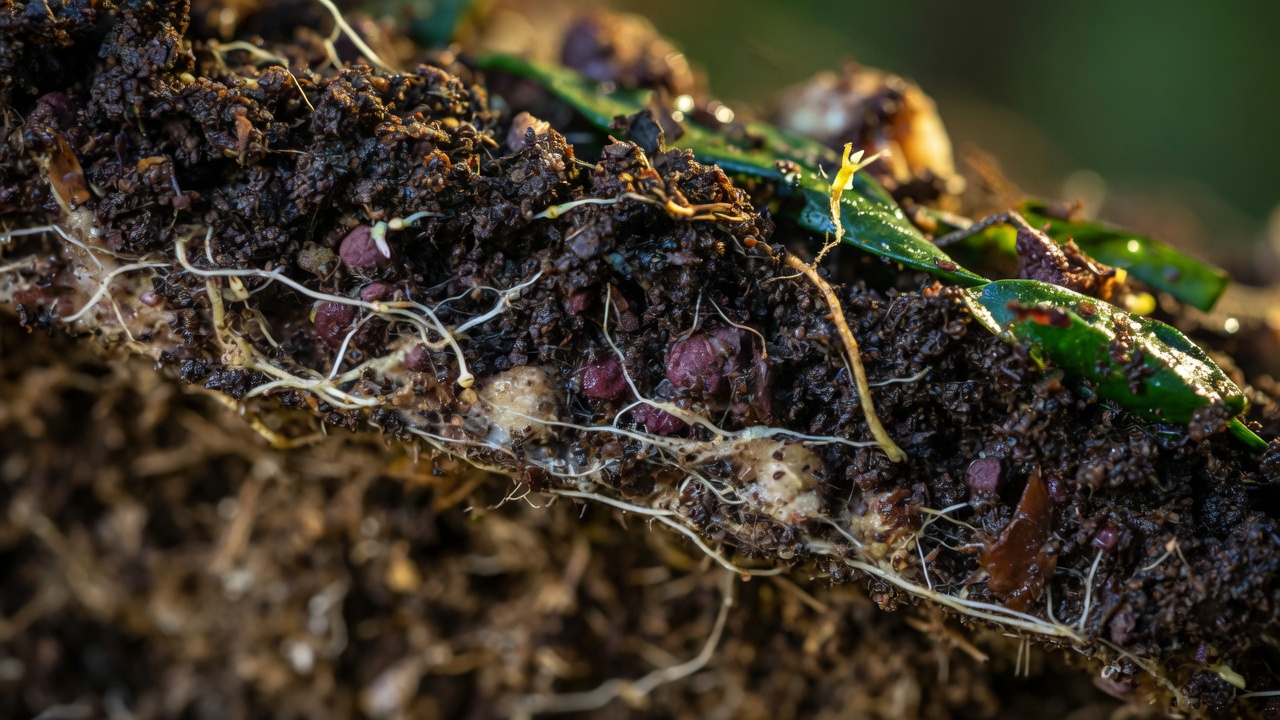
Elaine Ingham: bacteria and fungi lock the nutrient; protozoa and nematodes release it. Without that hunt, the pile is a closed store.
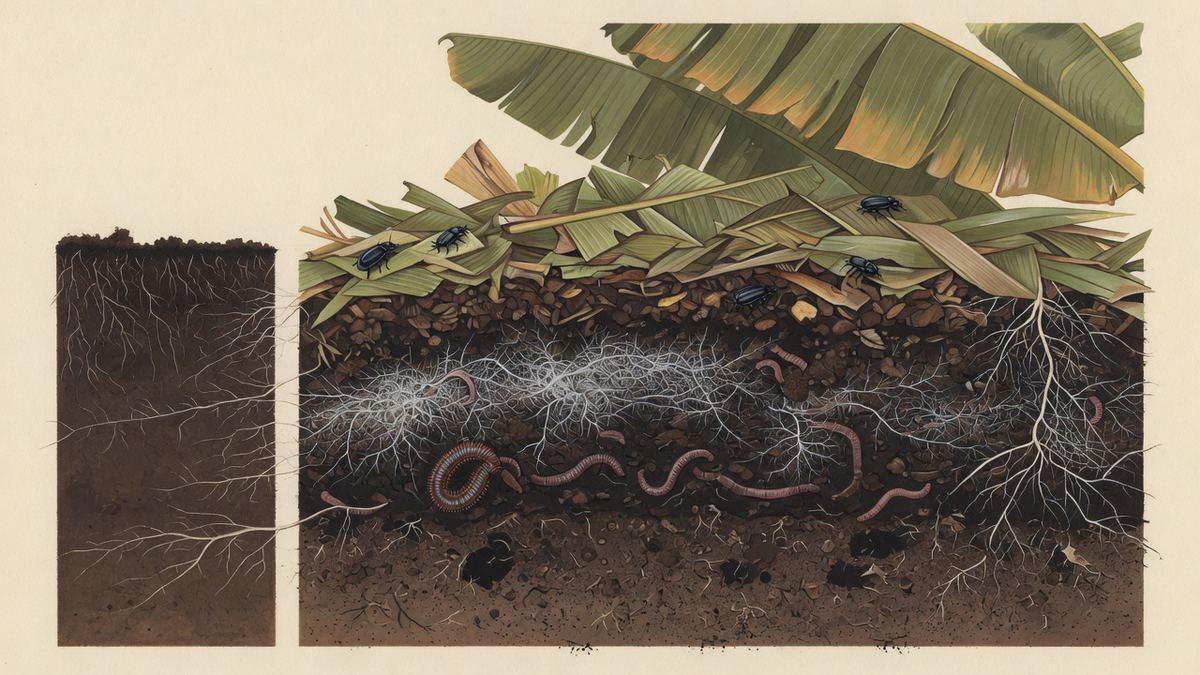
We do not publish lab SEM or stock photos. This illustration is what we look for in the pile: hyphae, shredding, roots coming in.
JADAM: the microorganisms of local litter already live here. You do not buy strains. We also compost, because this land had no tenants.
Rhizophagy
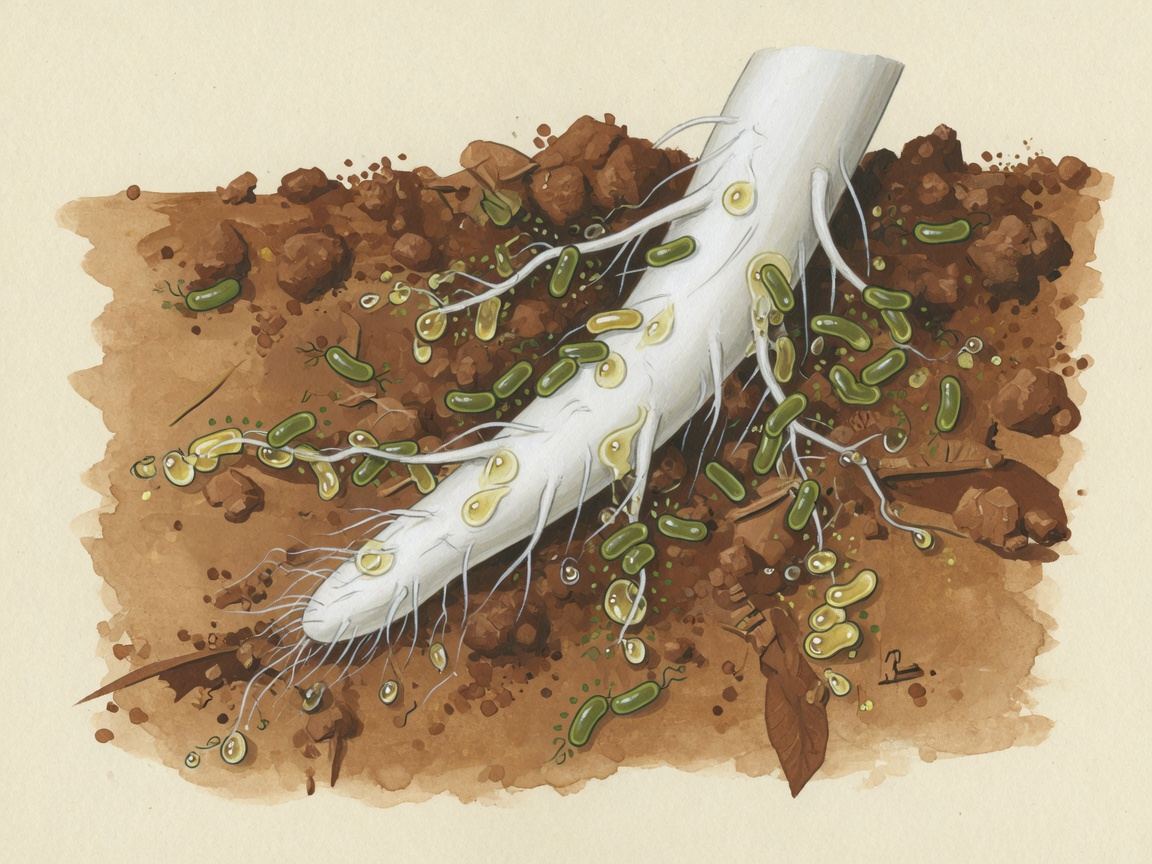
In the rhizosphere bacteria do not only “help.” They enter at the root tip; the plant extracts nutrients with oxidative stress; survivors return to the soil.
 Illustration
The plant pays rent in sugars. Bacteria gather in the rhizosphere.
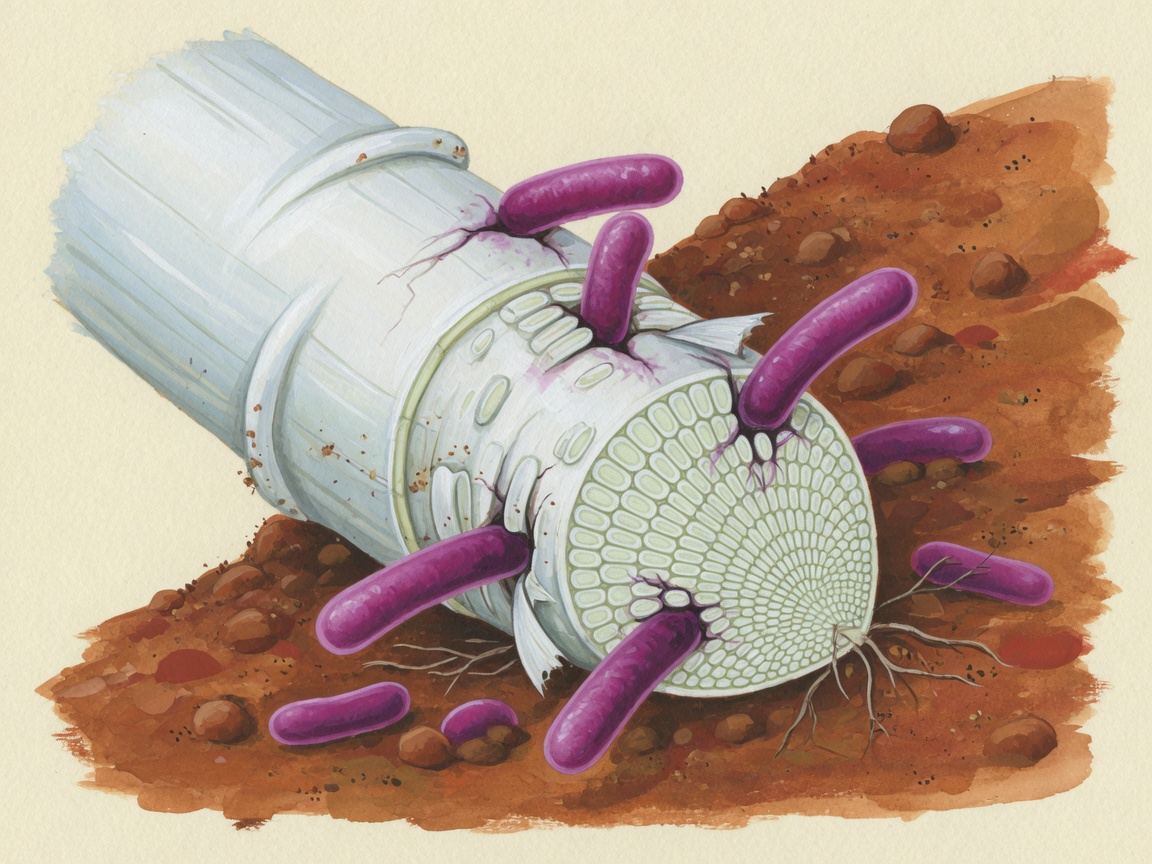 Illustration
Some enter through the tip meristem. Not a miracle fertilizer. A metabolism.
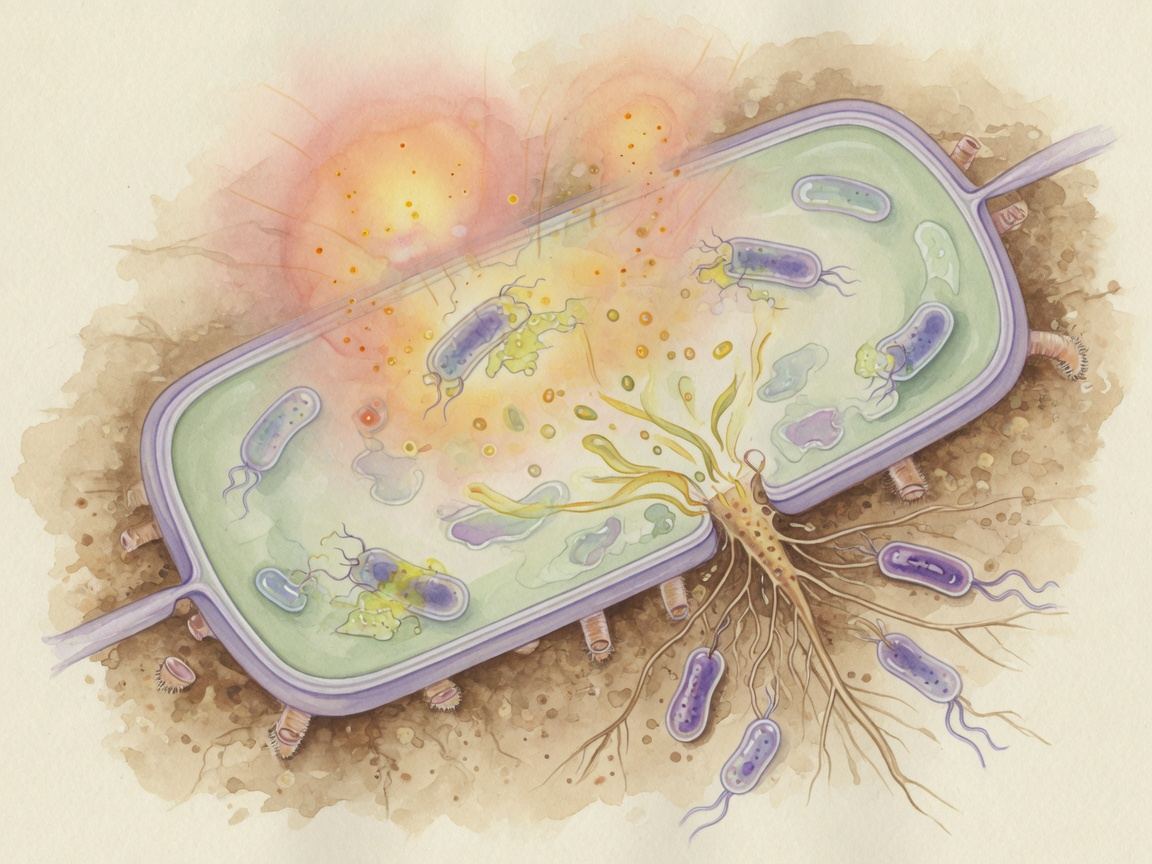 Illustration
Oxidation, nutrient for the plant, survivors back to the soil. The chemical shortcut cuts this circle.
James White: rhizophagy is research, not a product. One more reason not to leave the rhizosphere empty.
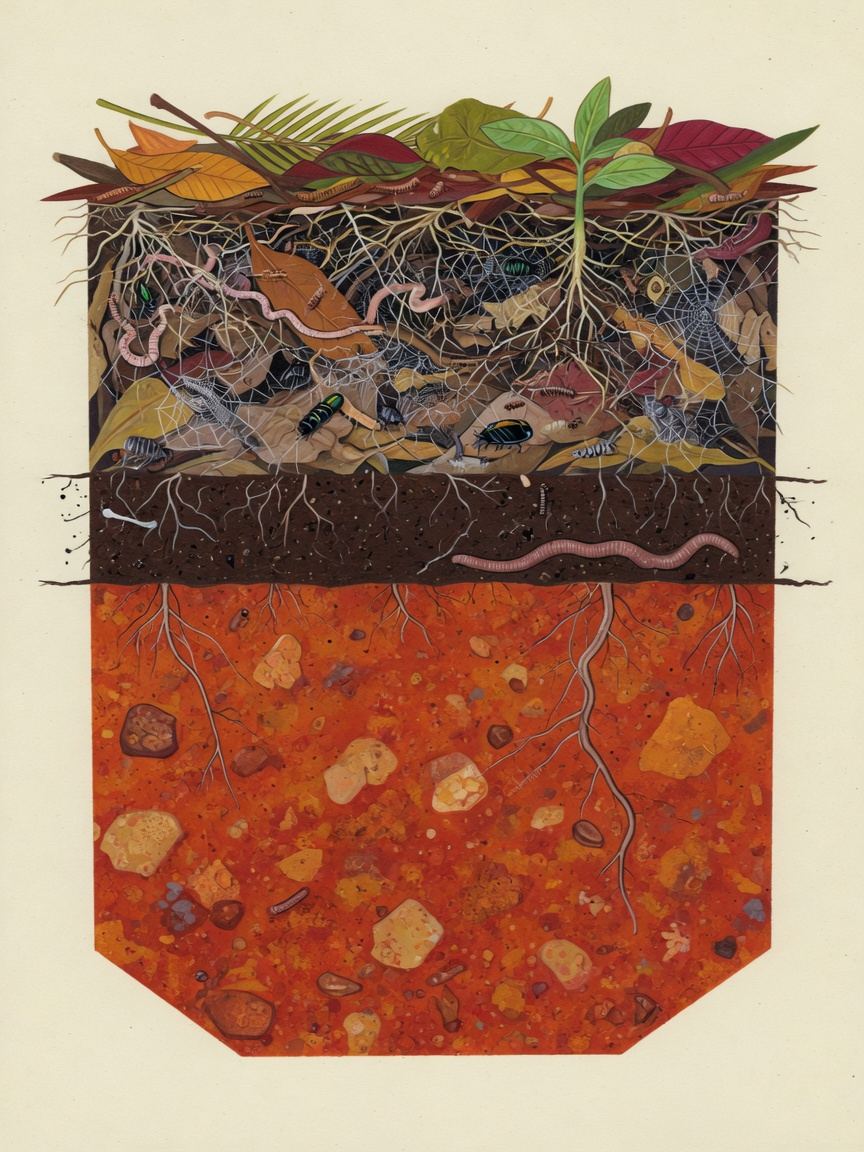
Profile
Litter, a thin A, laterite. Uncover it and water and air leave. Mulch is not decoration: it is the roof of the neighborhood.
Primavesi: in the tropics structure is made by life at the surface, not by prairie chernozem.
Restrepo: bocashi, broths, autonomy. Knowledge is fermented on the farm, not imported in a jar.
Energy
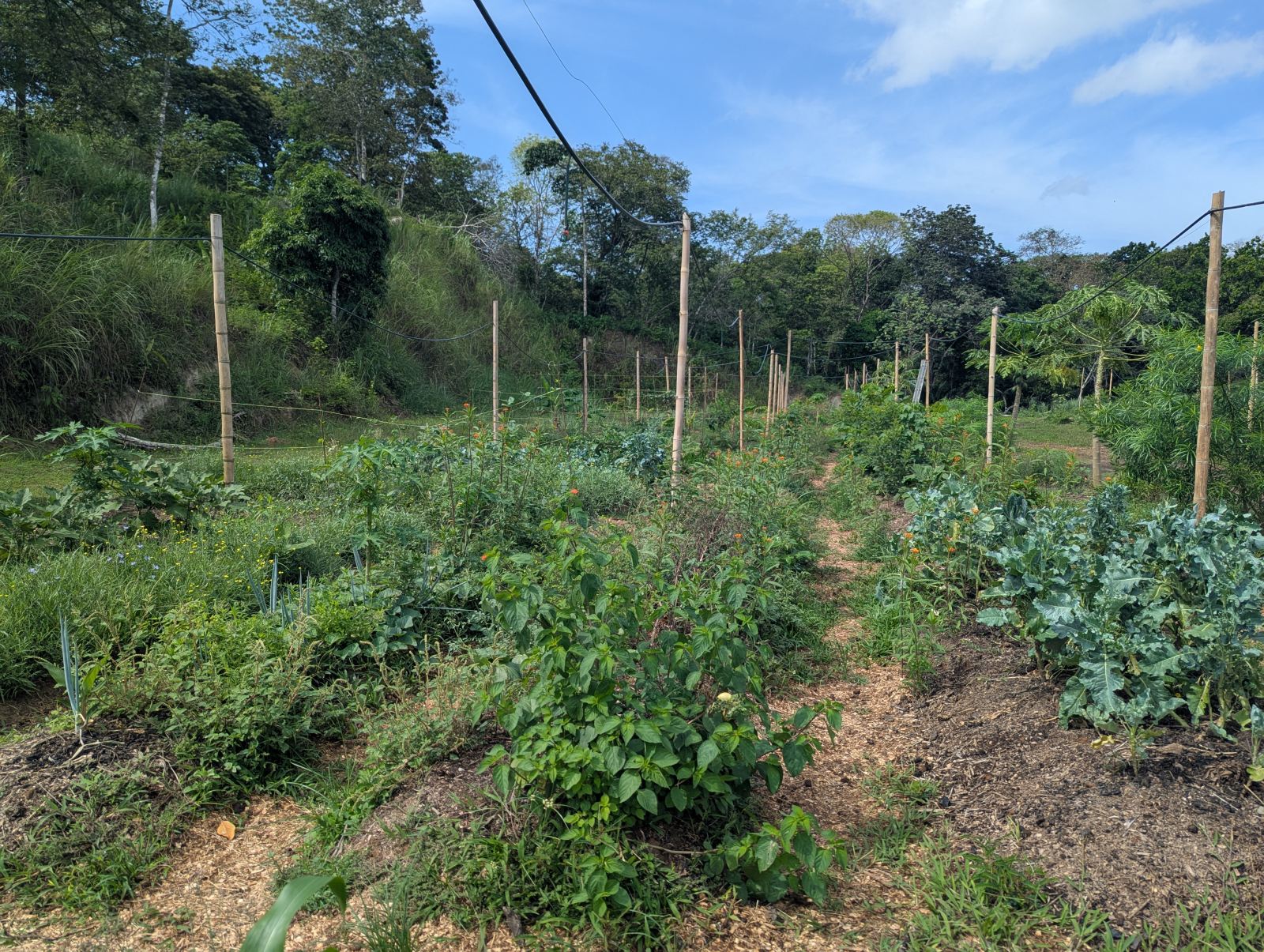
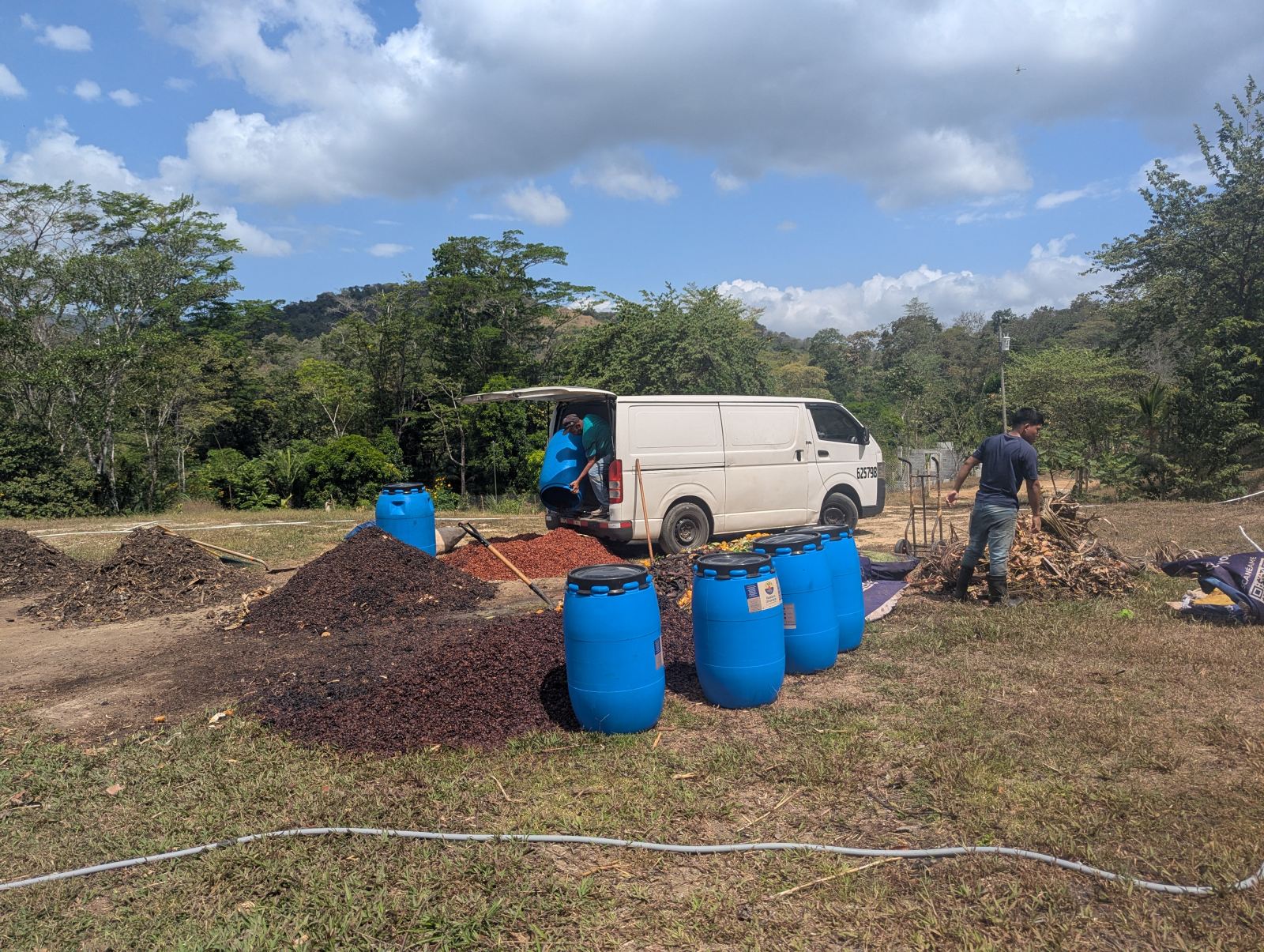
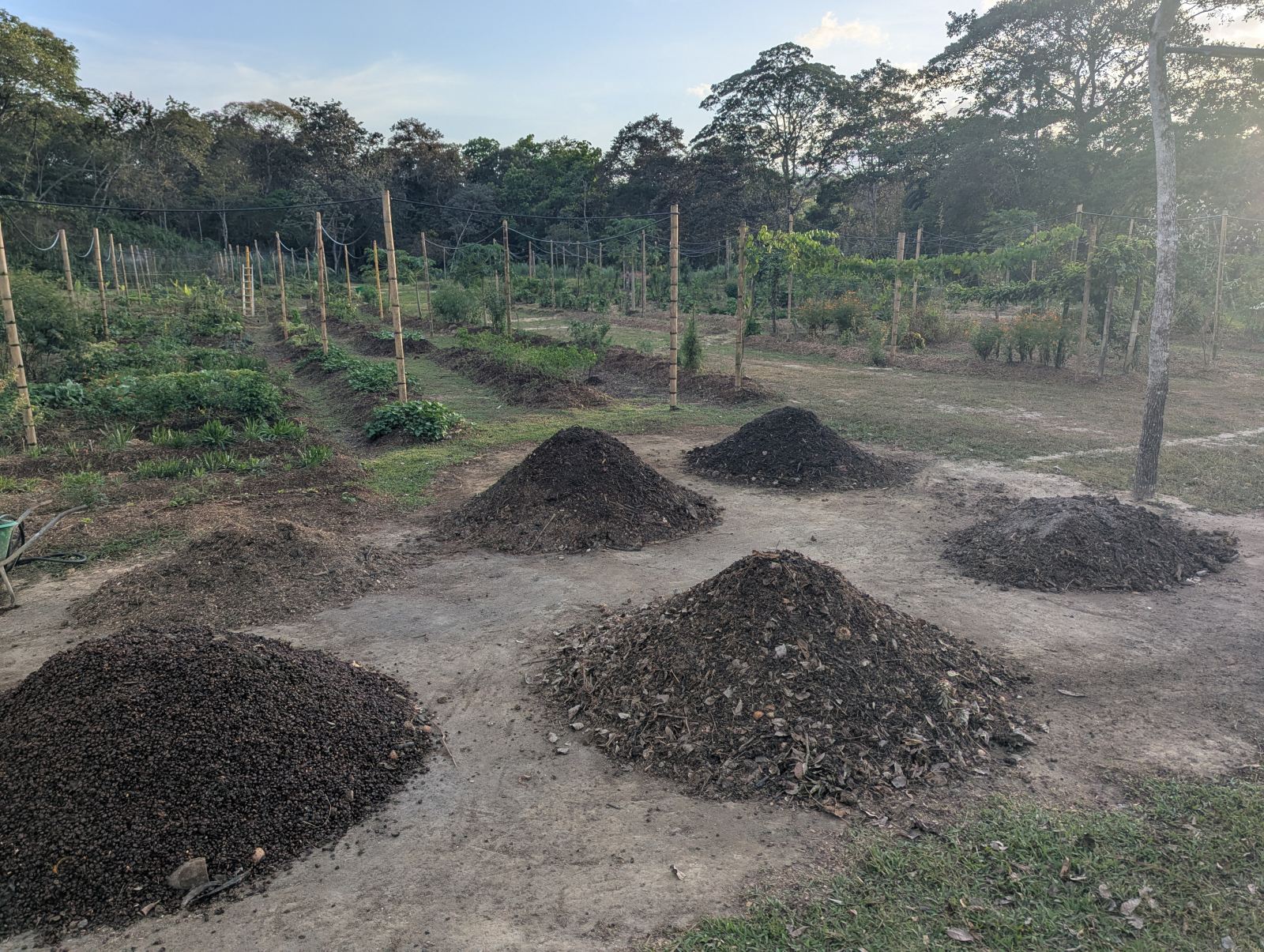
Odum again, on the plot: sun → plant → residue → microbe → soil → again. Landfill cuts the flow.
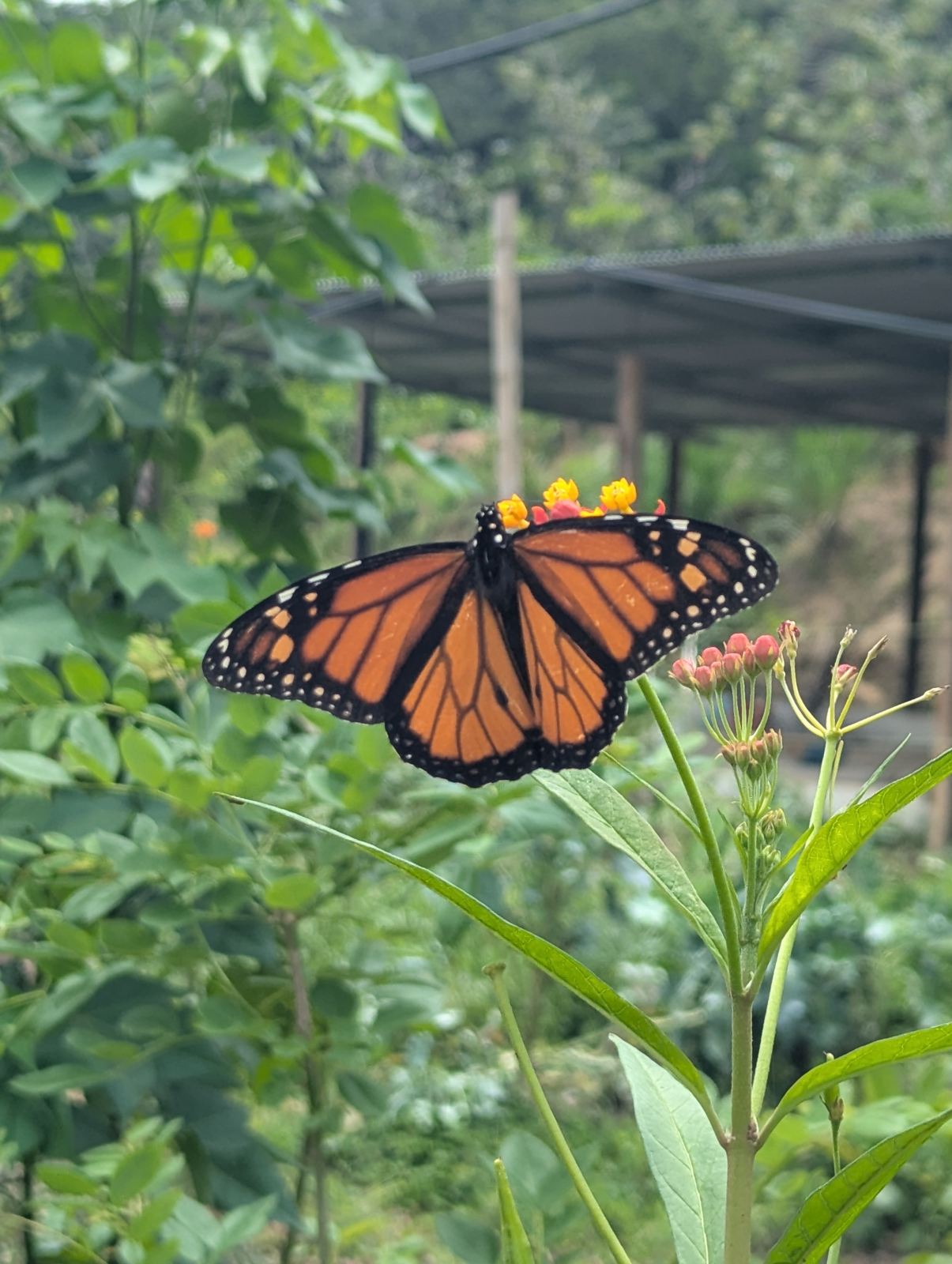
Chinampas, Coquira, honey and Darién are not a regenerative portfolio. They are niche experiments — water, forage, pollinators, forest edge — read on the farm.