 01
Zones and sectors
What needs daily care goes near the house; what is rarely touched goes far away. We mark where sun, wind and water come from, and place everything to work with them.
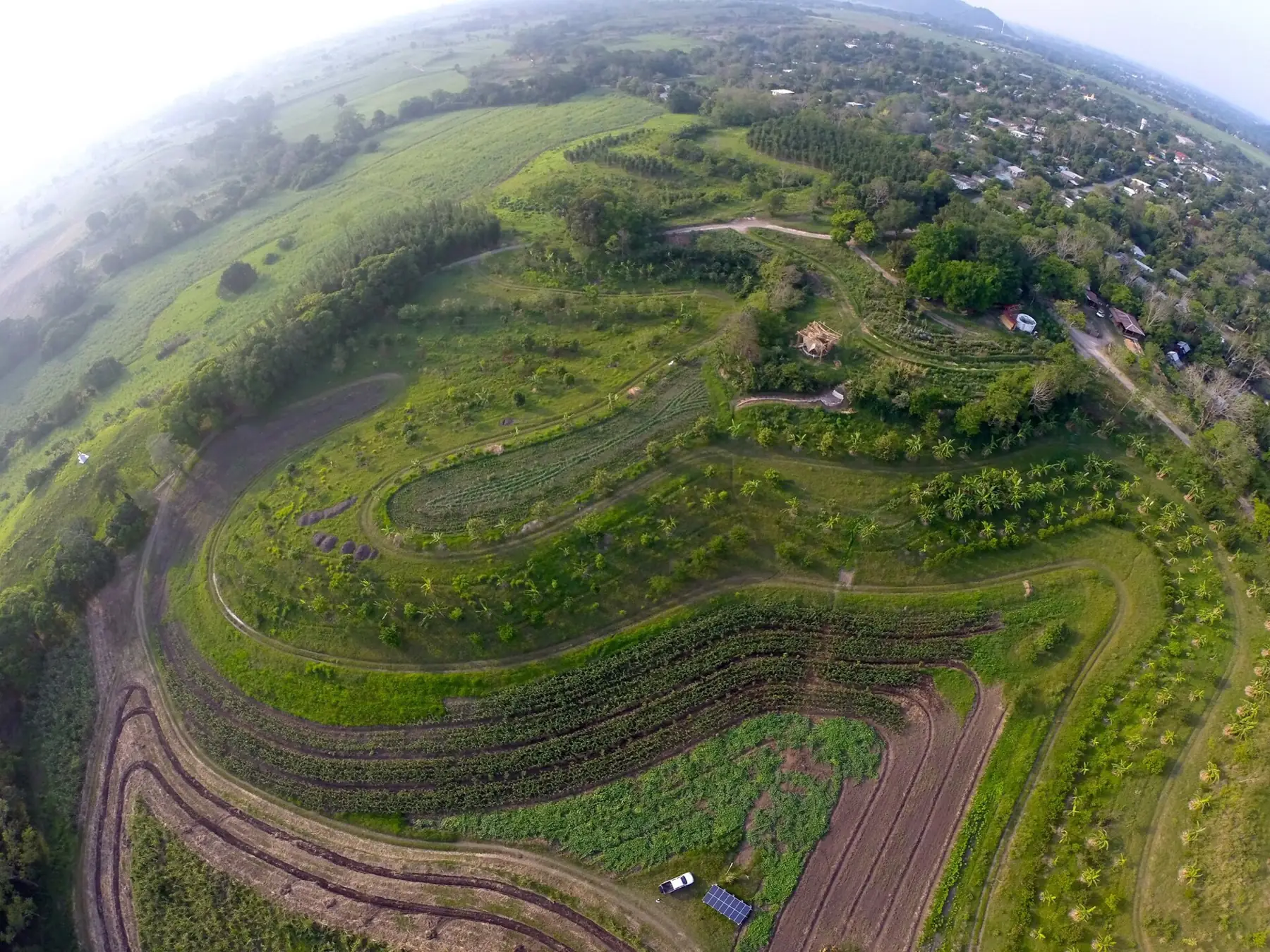
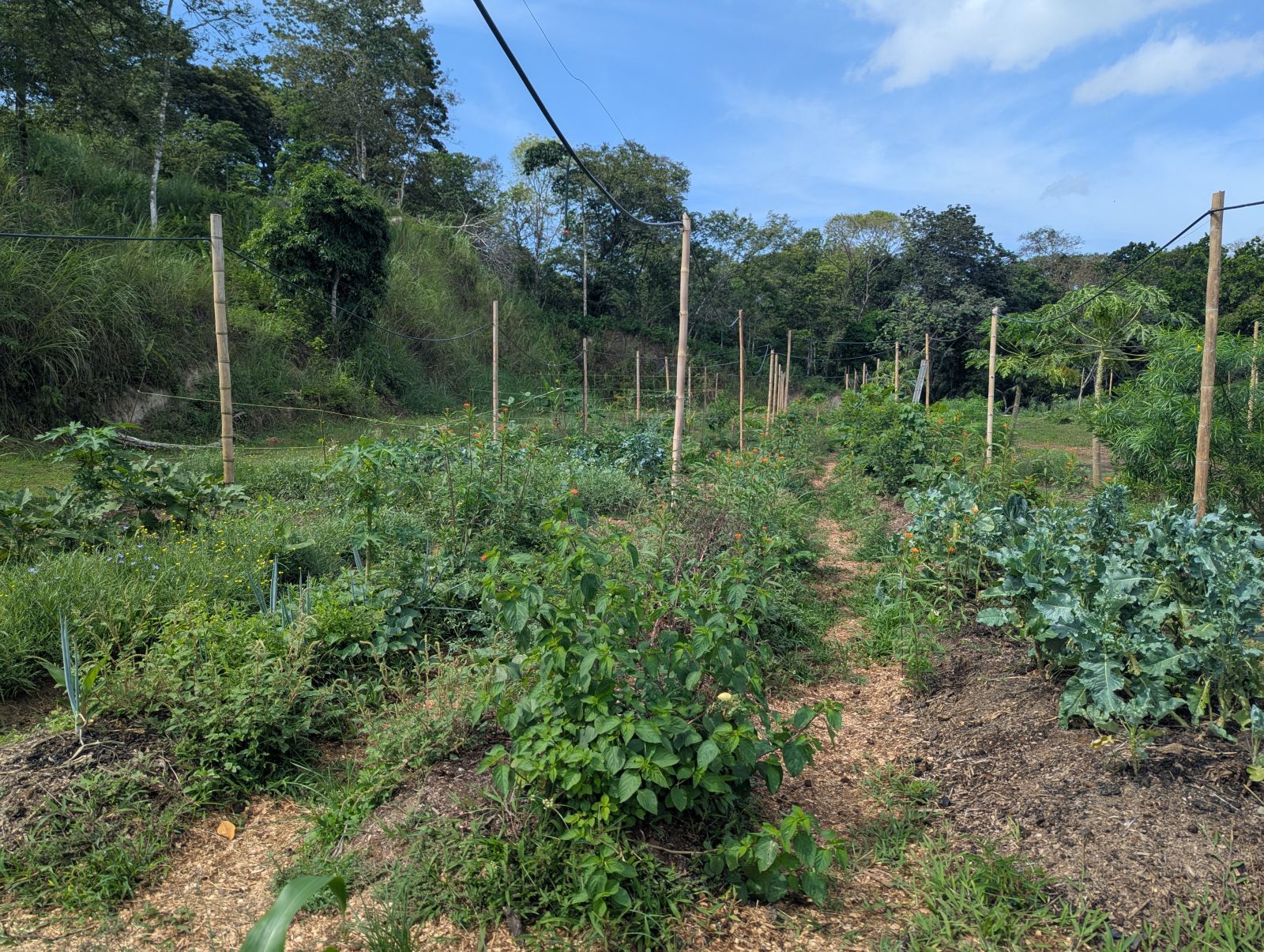
Before planting, we read the land: where the water runs, where the sun hits, where the wind comes from and what soil is there. Then we draw the farm: where each crop, tree, pond and road goes. Built on permaculture principles, with no poisons.
Bill Mollison, co-founder of permaculture
Permaculture is a philosophy of working with, rather than against nature; of protracted and thoughtful observation rather than protracted and thoughtless labor; and of looking at plants and animals in all their functions, rather than treating any area as a single product system.
— Bill Mollison, Introduction to Permaculture (Tagari Publications, 1991). Source
Design principles
01What needs daily care goes near the house; what is rarely touched goes far away. We mark where sun, wind and water come from, and place everything to work with them.
 02
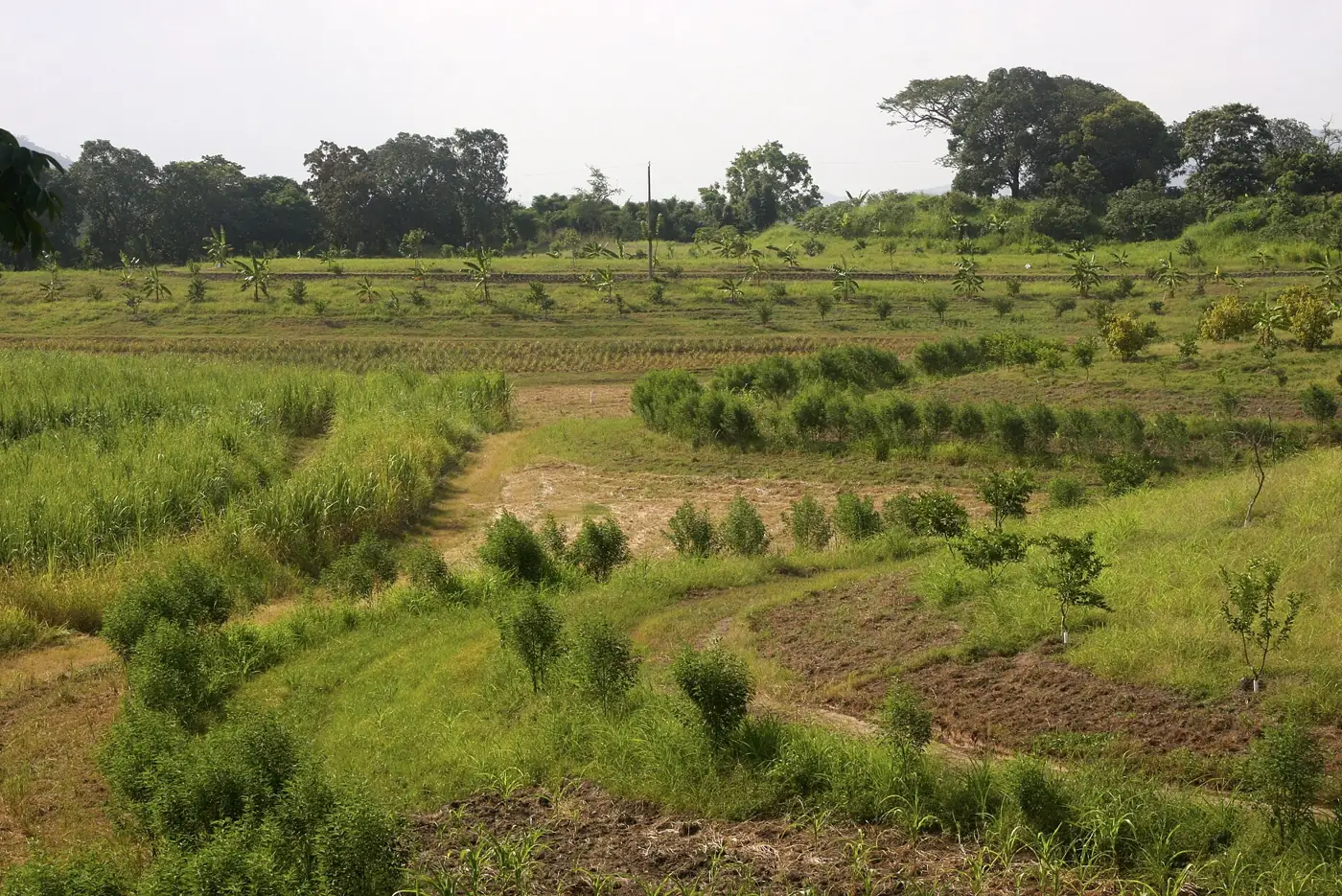
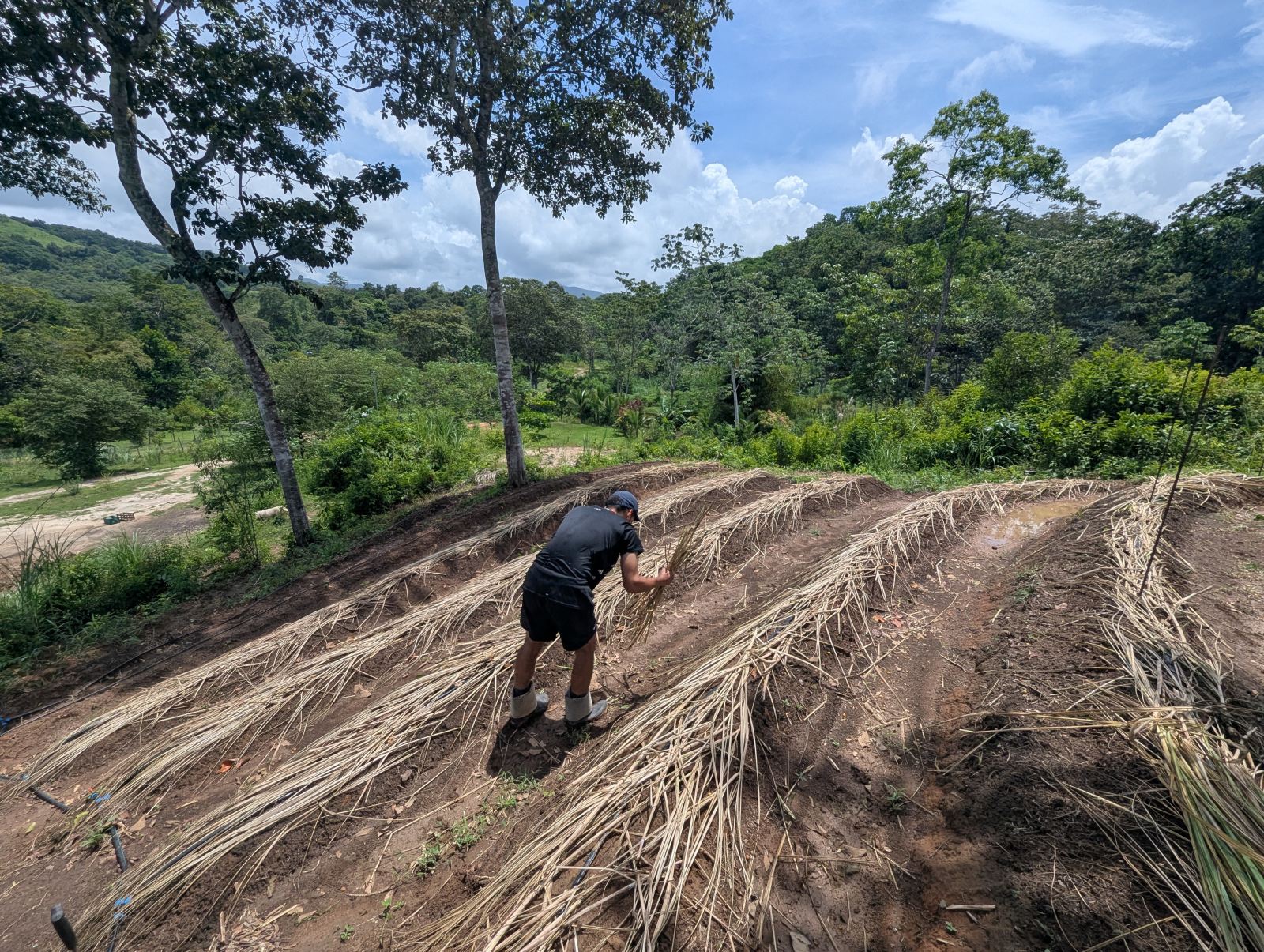
We slow the rain down so it soaks into the ground instead of running off and taking the soil: swales, keyline, contour planting and ponds.
 03
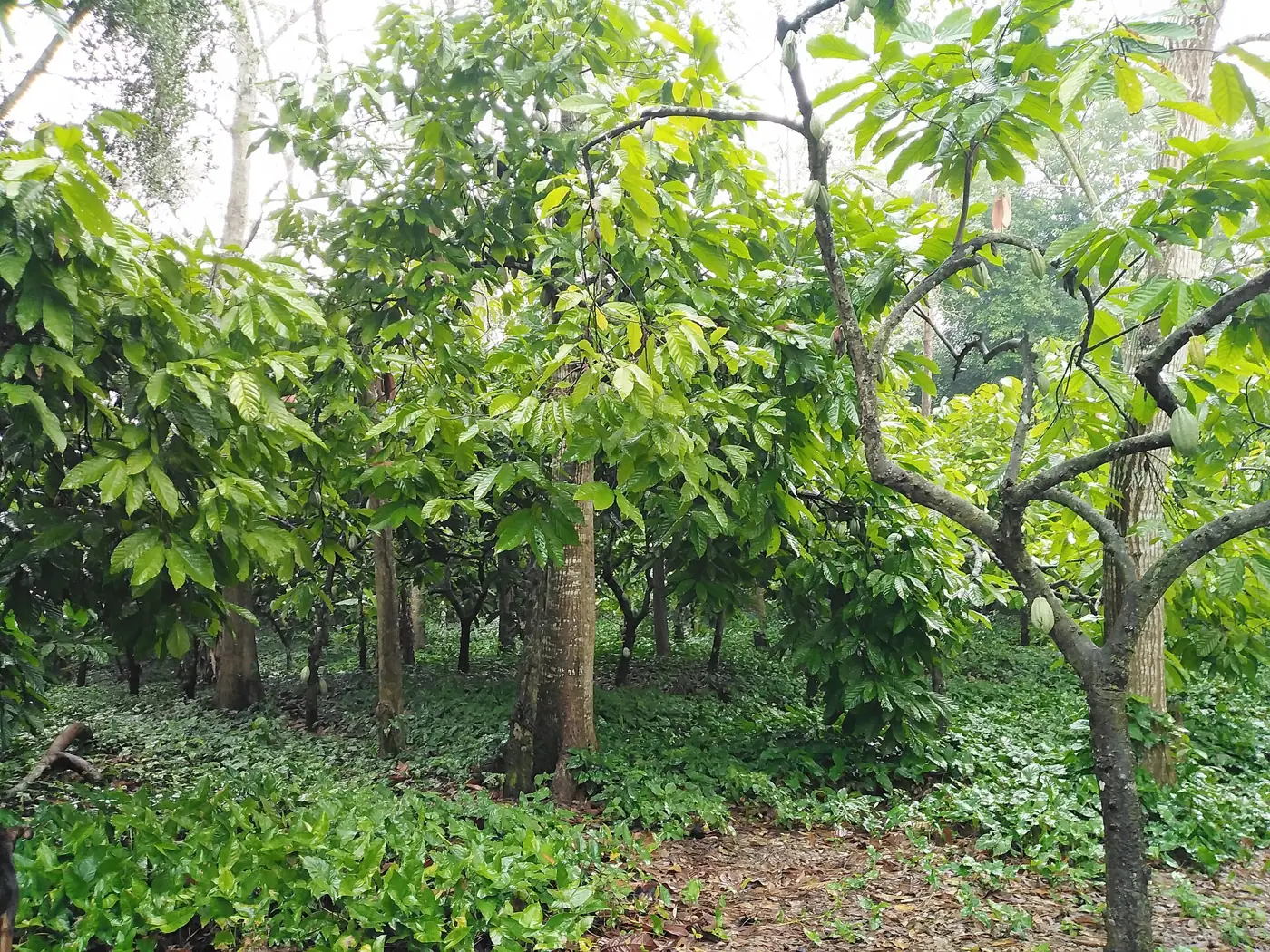
Like a forest: tall trees, fruit trees, shrubs, herbs, groundcovers, roots and vines on the same land. Each layer gives a harvest and protects the one below.
 04
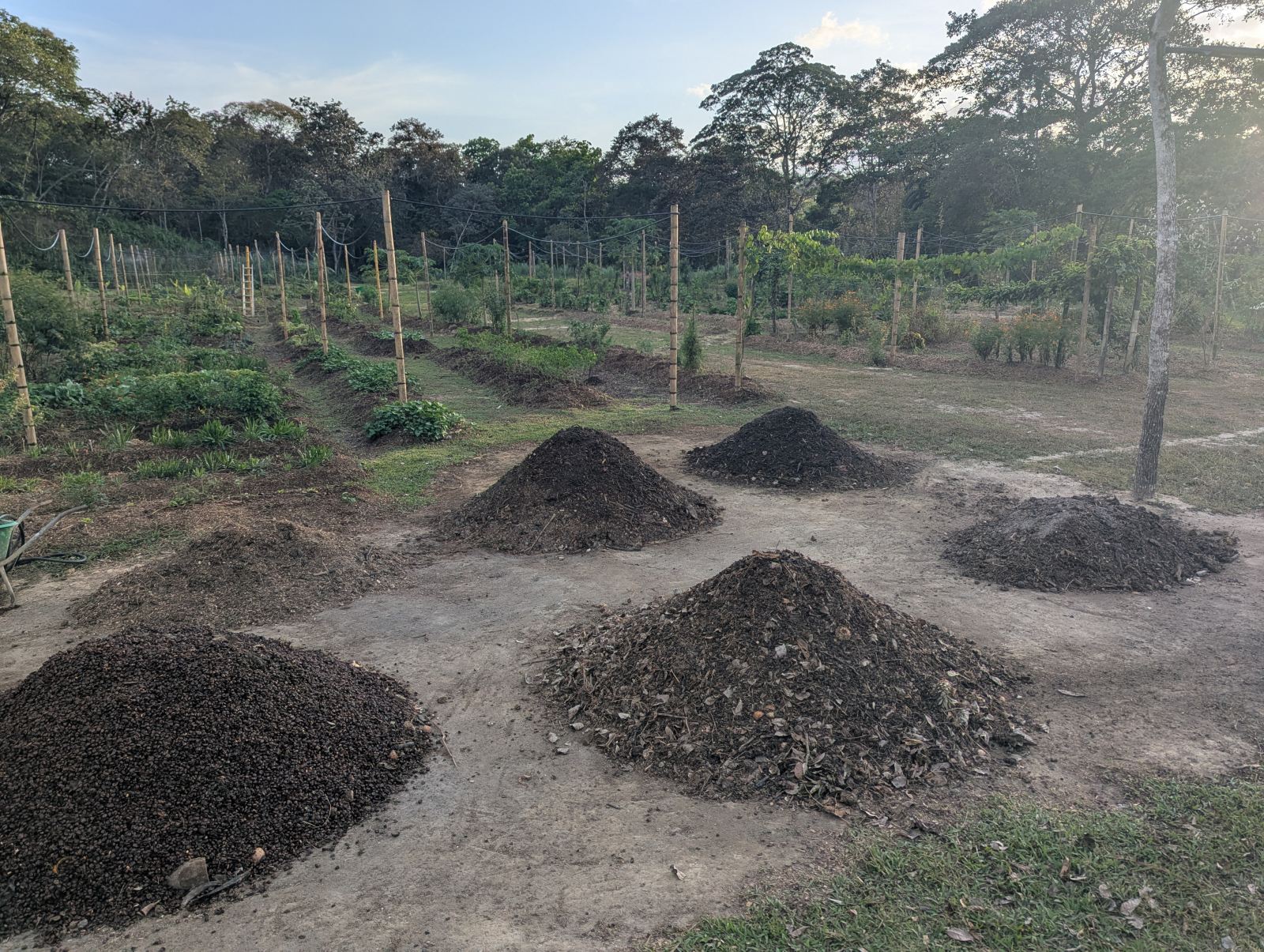
We feed the soil with compost and bocashi made on our farm in Utivé, from organic waste collected by Residuos Dinámicos. No poisons.
Zones
Permaculture splits the farm into zones by how often you need to go to each spot. Tap each zone.
The house, the barn or the farm office. Work starts here.
Sectors: on the map we mark where sun, wind, water, fire and noise come from, and place windbreaks, ponds and crops accordingly.
Water harvesting
In the design, water goes before trees: we decide where it falls, where it runs and where it is stored, and only then plant.
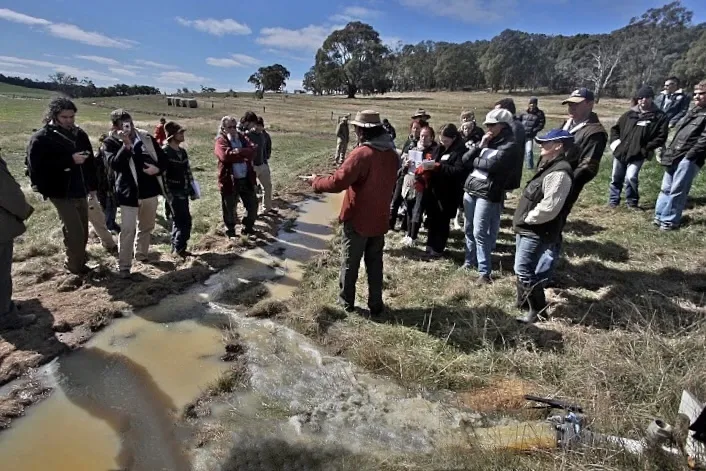
A ditch dug along the contour line, with a mound below where trees are planted. The rain stops and soaks into the ground.
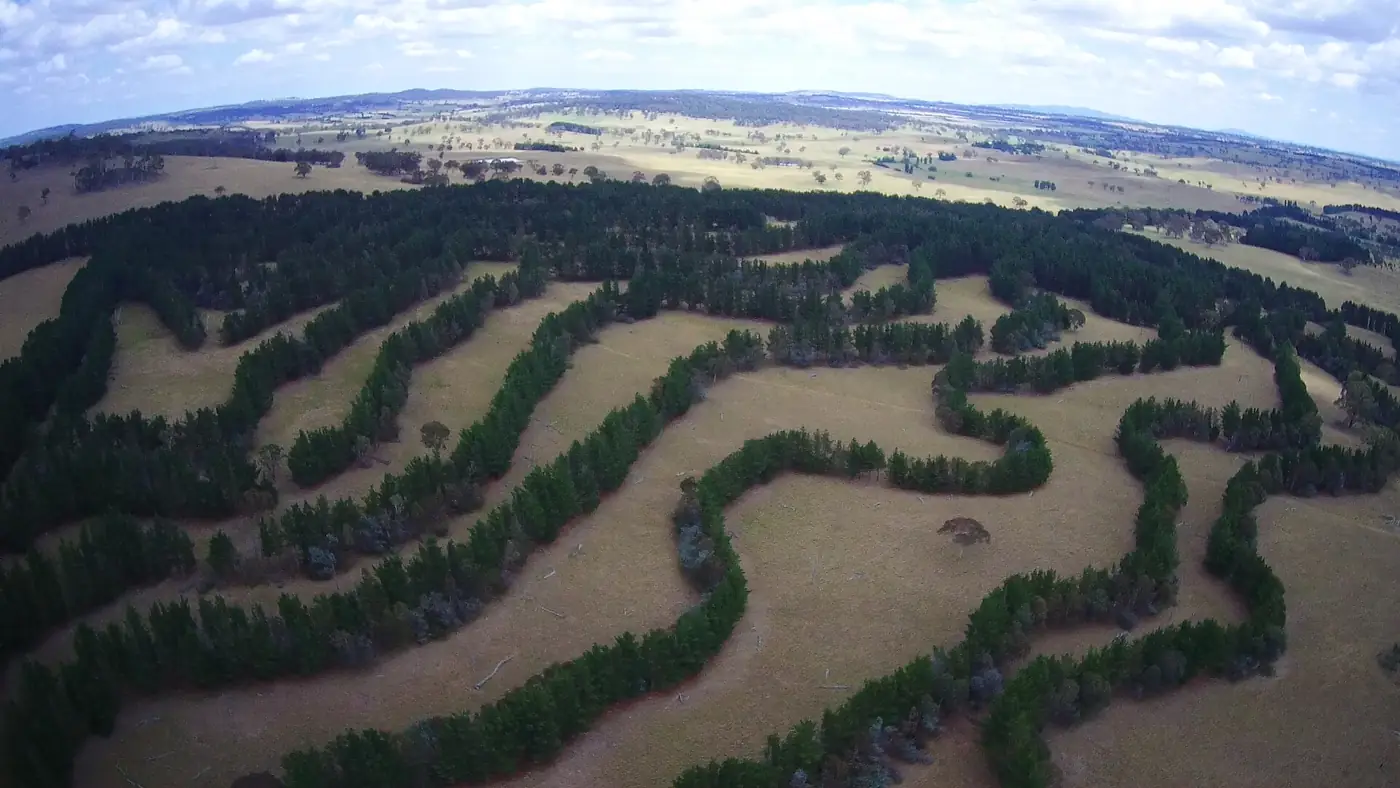
A method created by P. A. Yeomans in Australia: furrows and roads laid almost on contour that move water from the valleys out to the ridges, where it is needed.
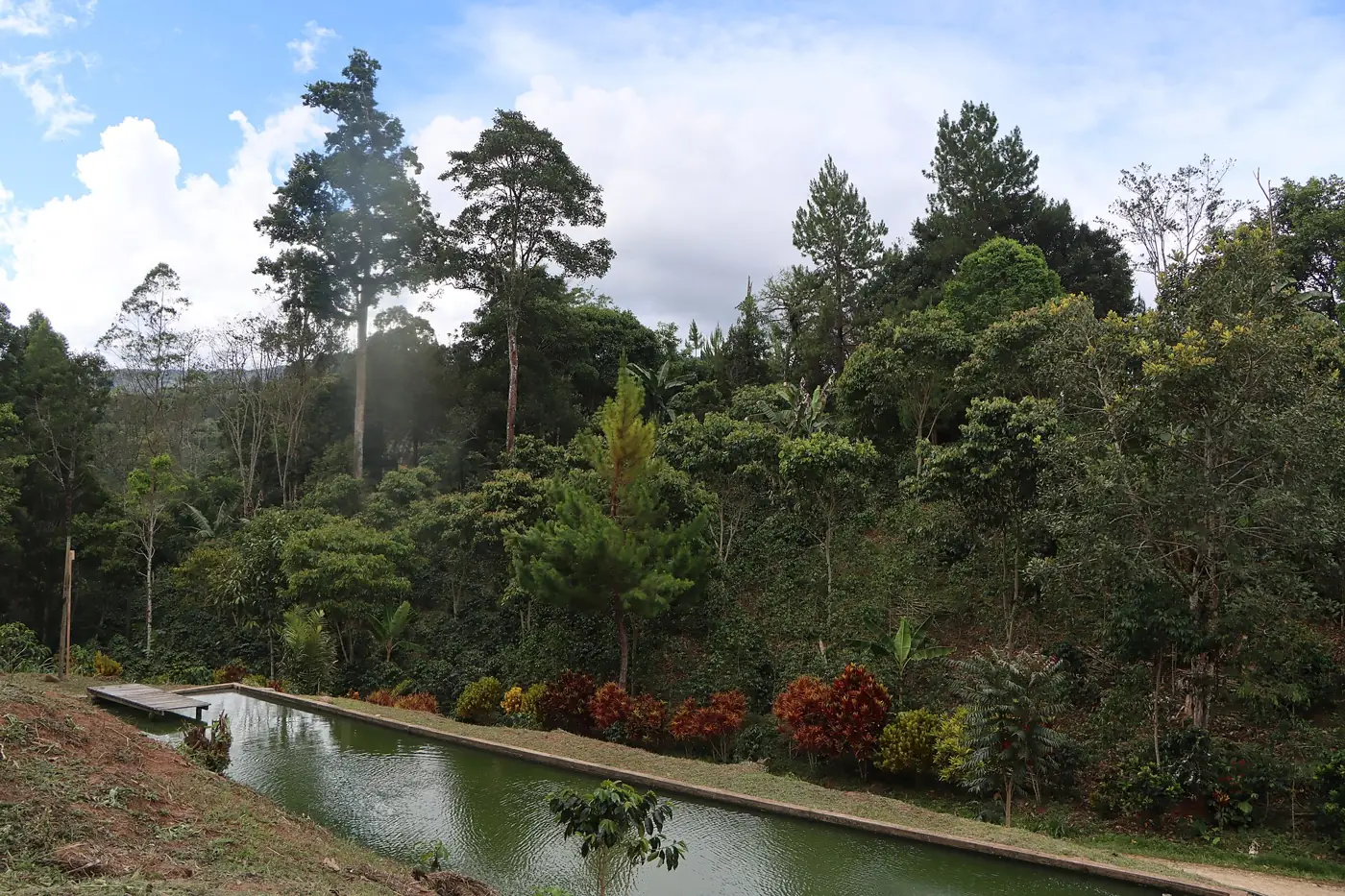
They store water for the dry season, irrigate by gravity and hold fish and water plants.
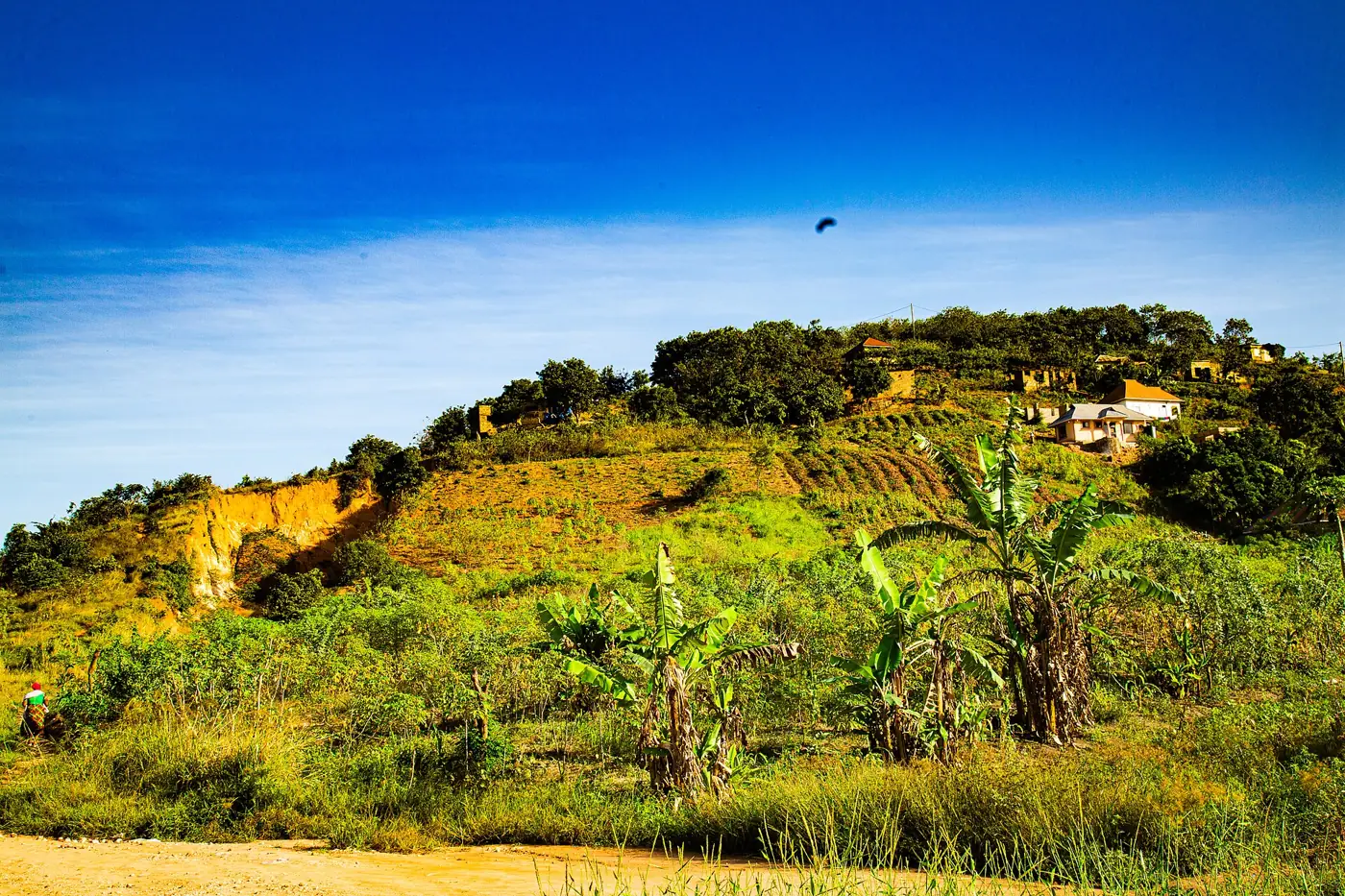
Rows of trees and crops follow the shape of the land, so water does not rush downhill and carry the soil away.
Multi-layered systems
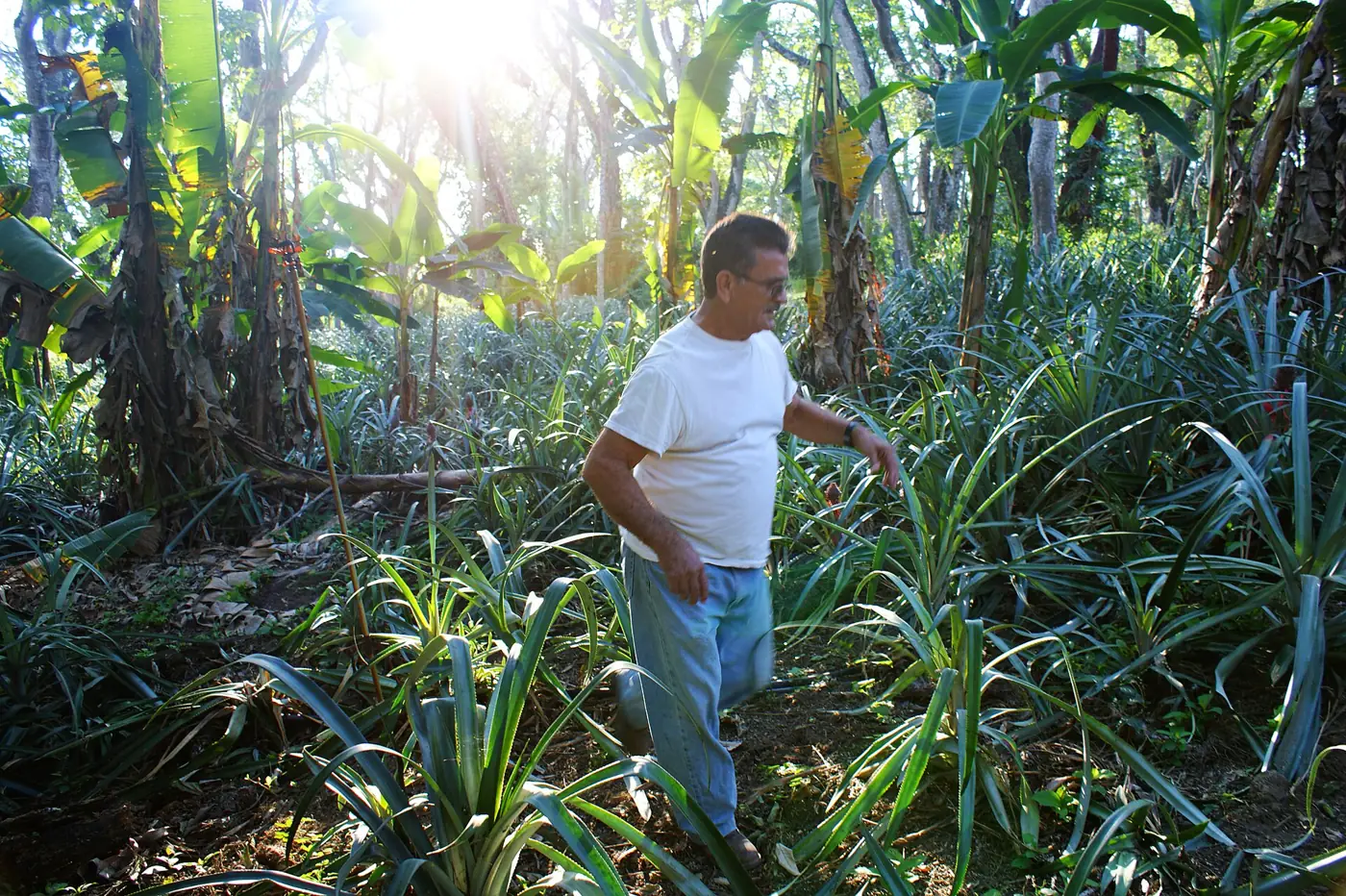
Plants of different heights grow on the same land. The top catches sun, the bottom covers the soil, and the harvest sits in between. These are the seven layers, with tropical examples:
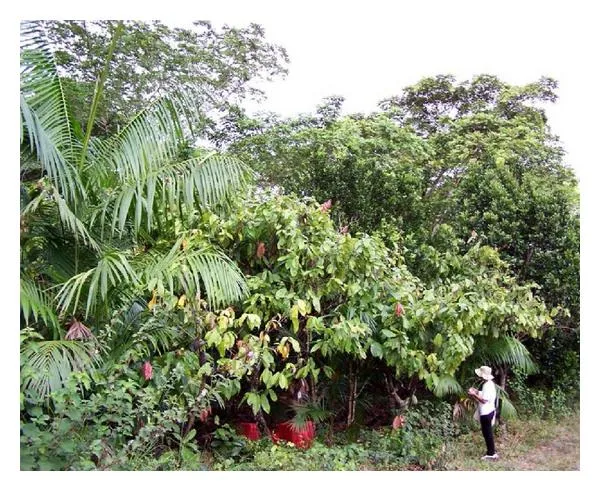
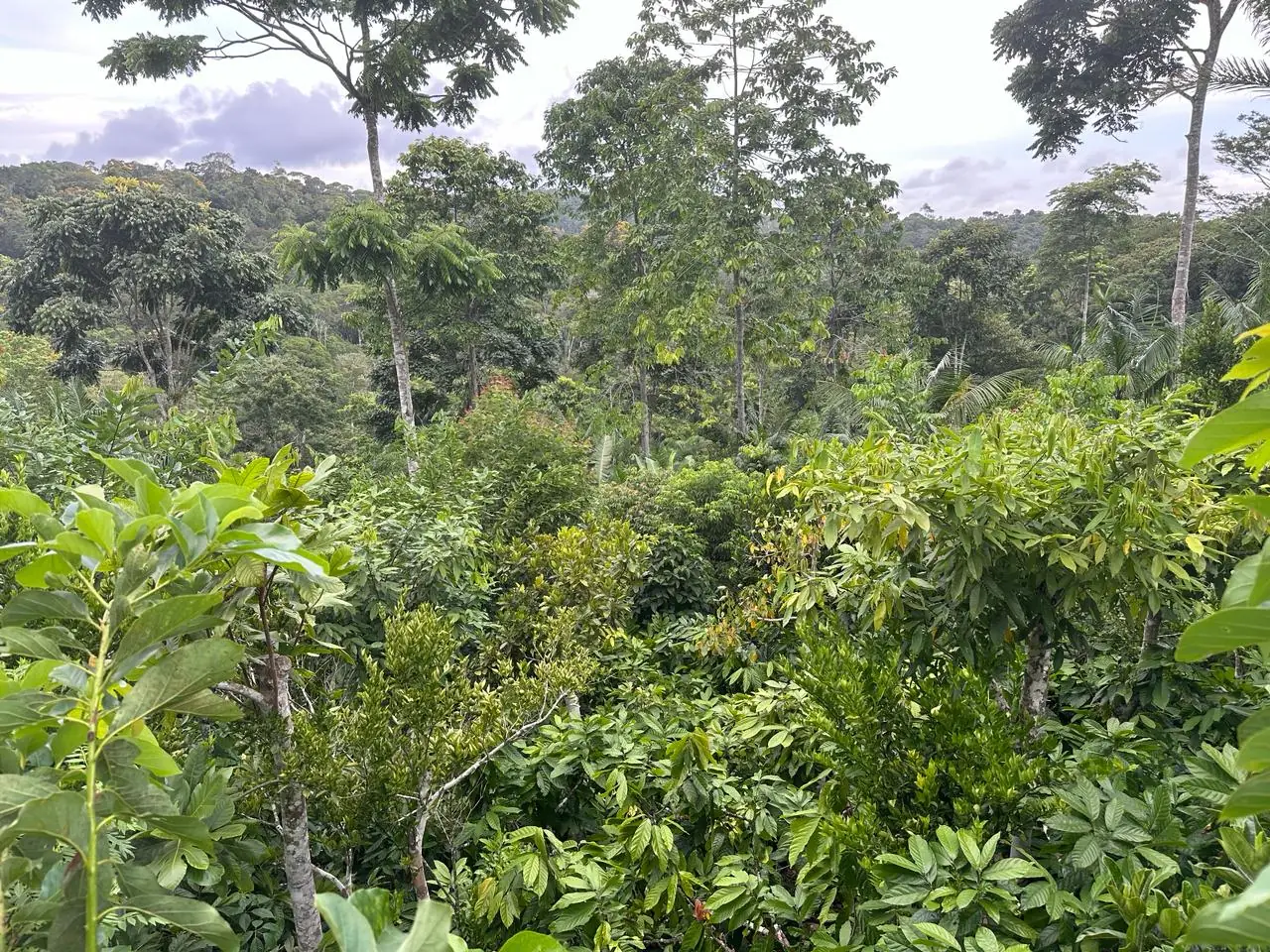
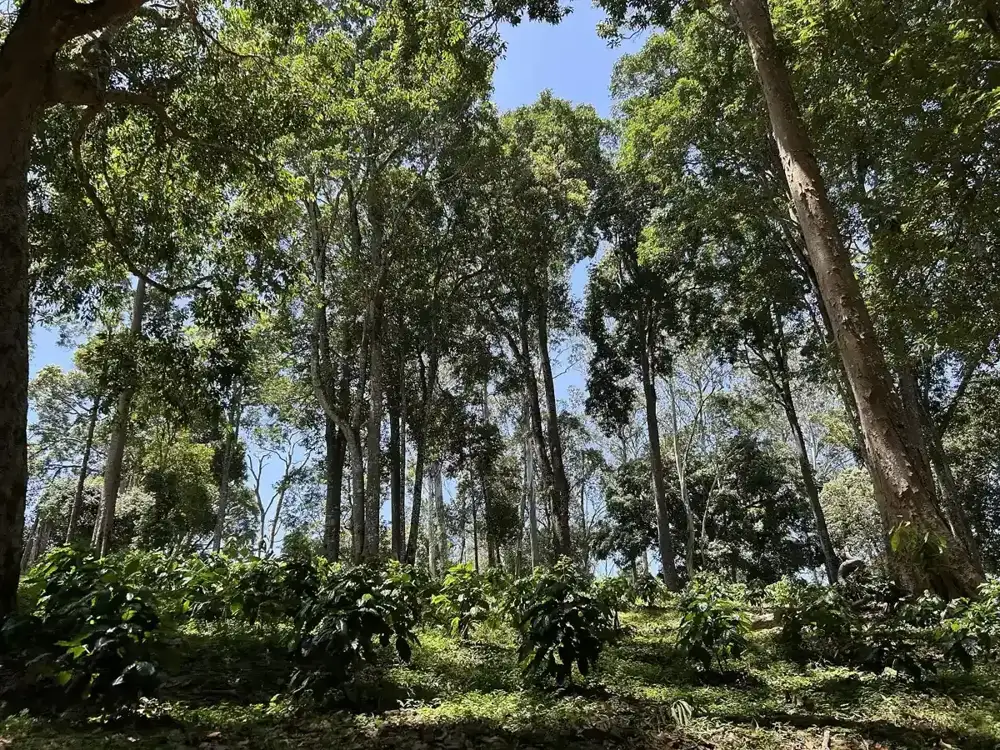
Coffee grows well under taller trees, and it is one of the clearest examples of a multi-layered farm. We do not grow coffee yet: it is an opportunity we want to build with partner farms.
How we work · 5 steps
 01
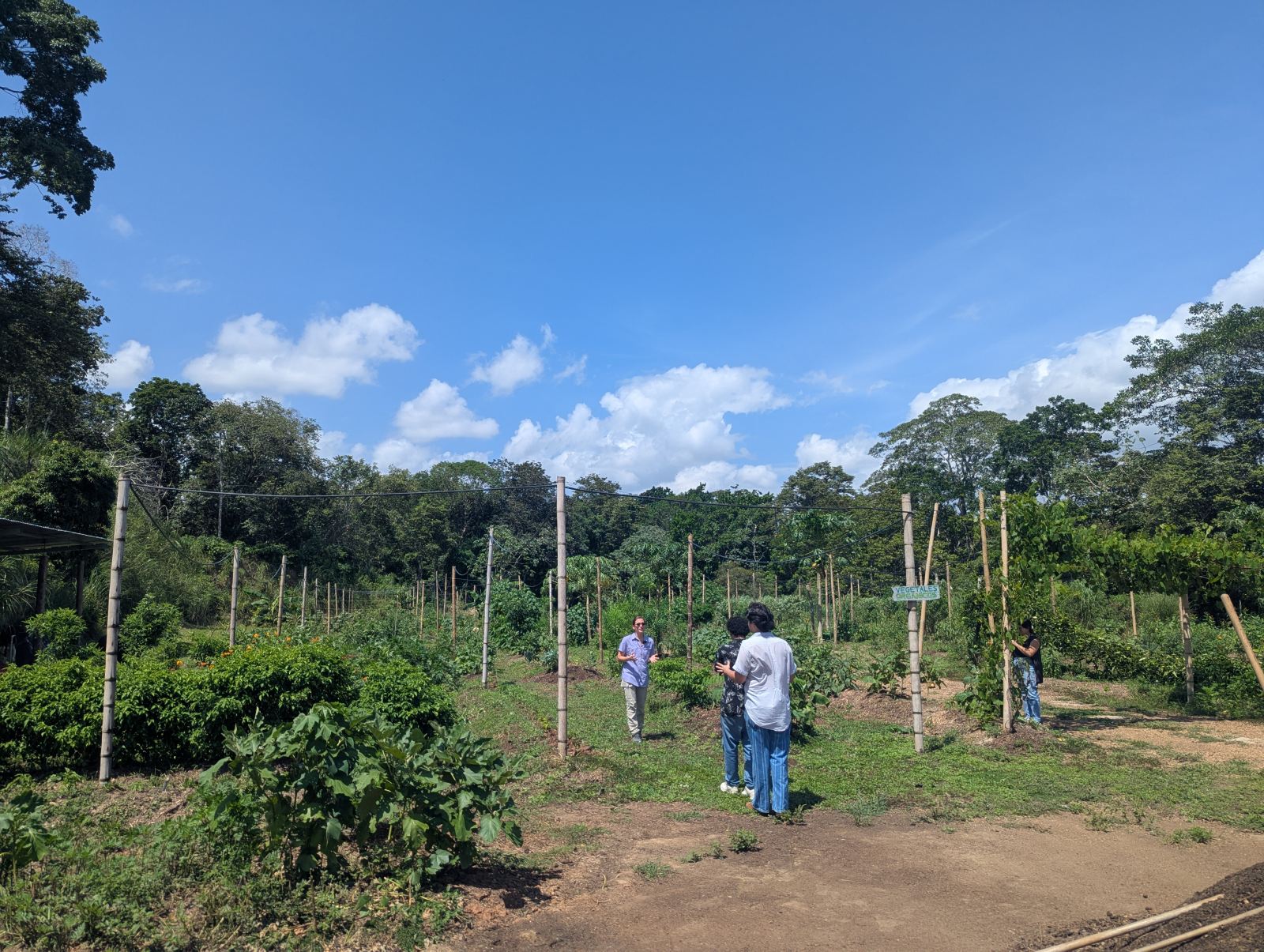
We walk your farm with you. We look at the soil, the water, the slopes and what already grows.
 02
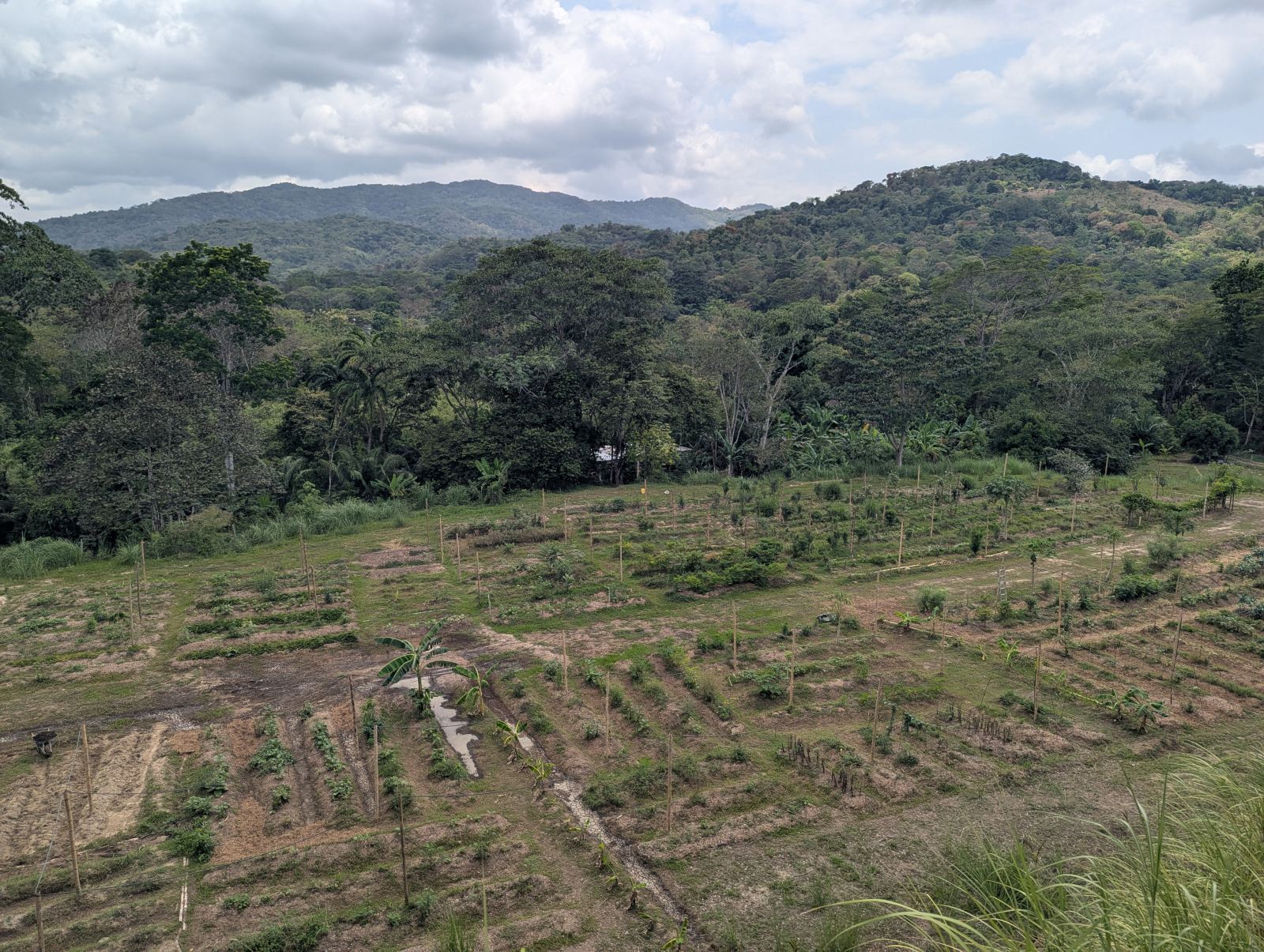
We draw a map of the farm with its slopes, water, roads and what is there today.
 03
On the map we place zones, swales, ponds, trees and crops.
 04
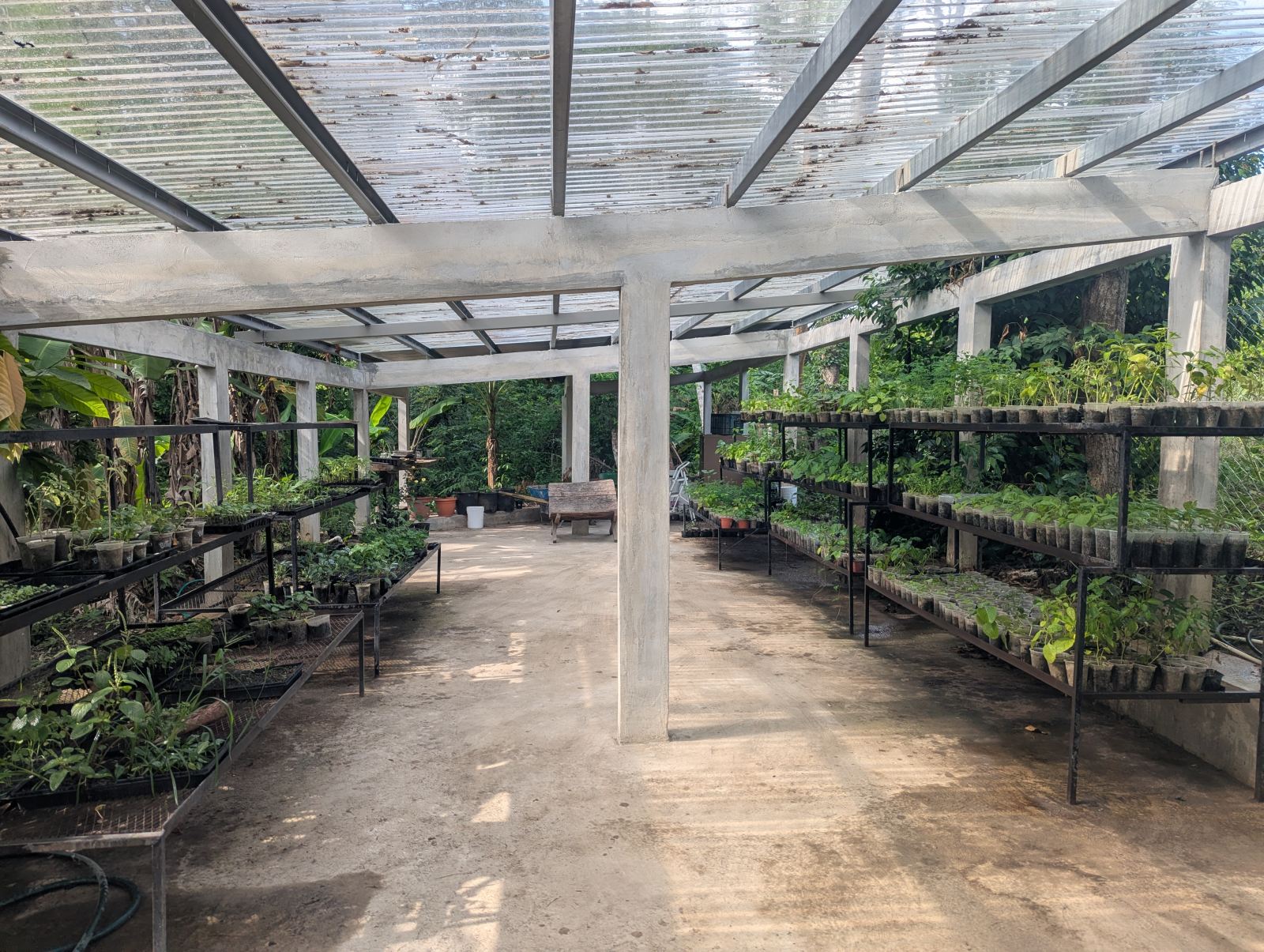
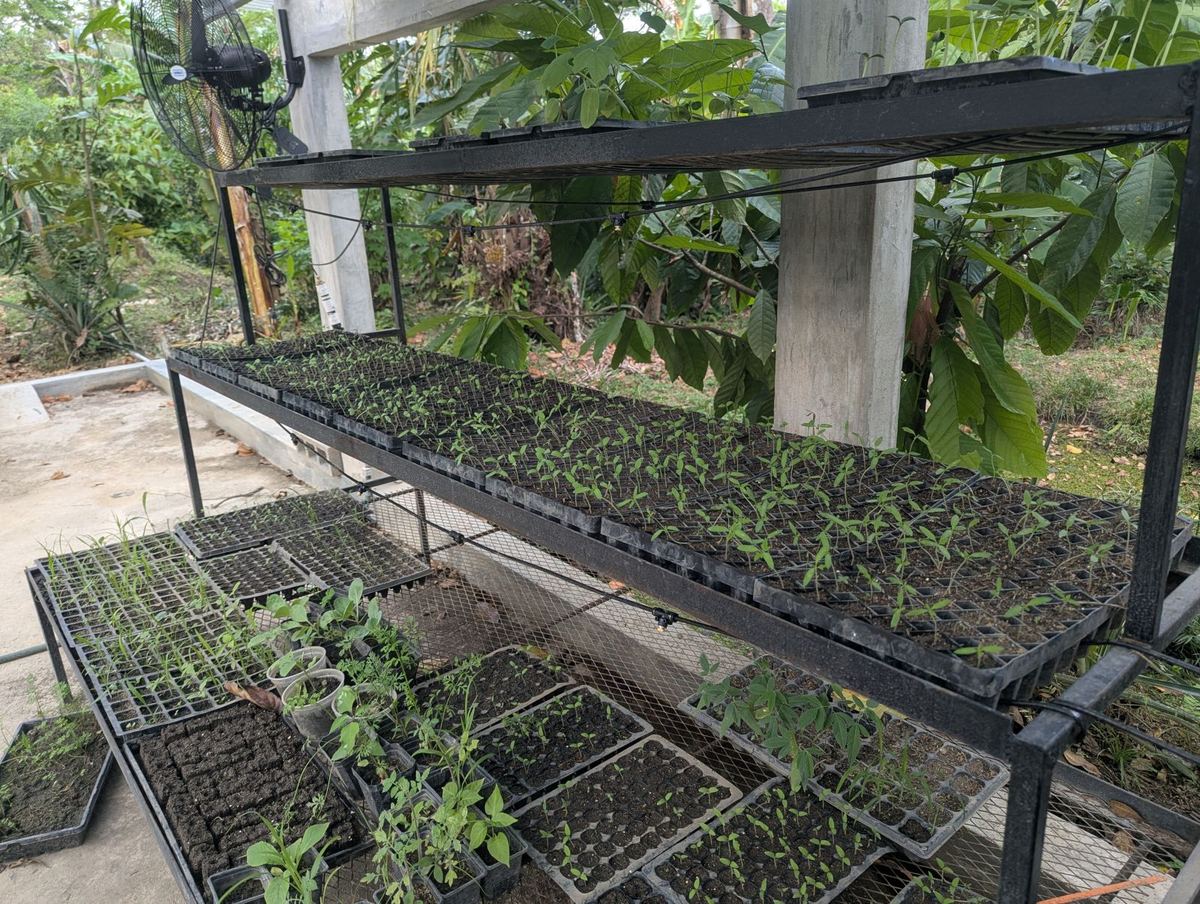
We leave you a written plan of what to do first, when and with what: water, soil, nursery and planting, plot by plot.
 05
We come back, adjust the design, bring compost and bocashi, and train your staff.
Design is part of our organic farm advisory and setup: management plan, compost and inputs, nurseries and training.
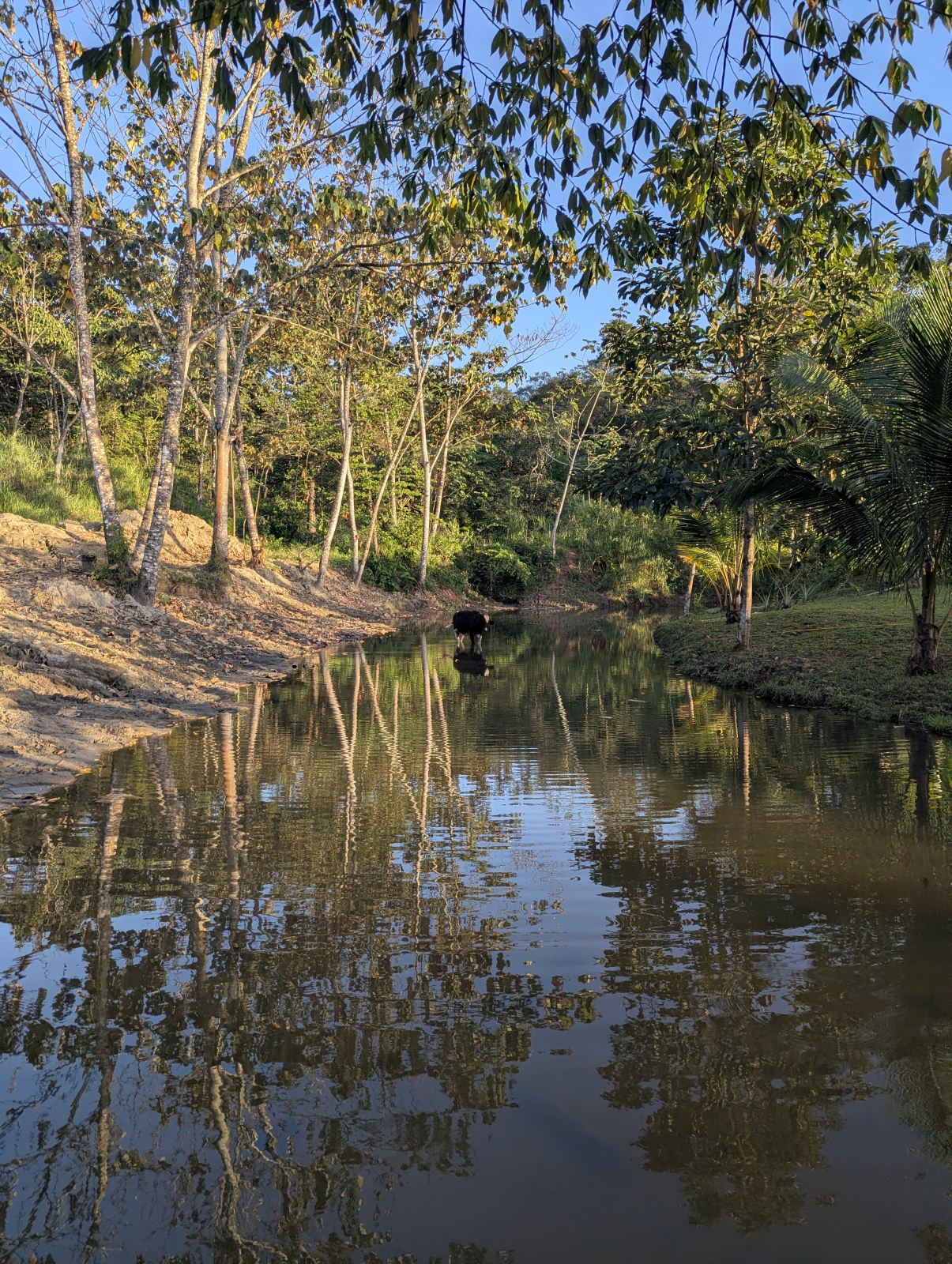
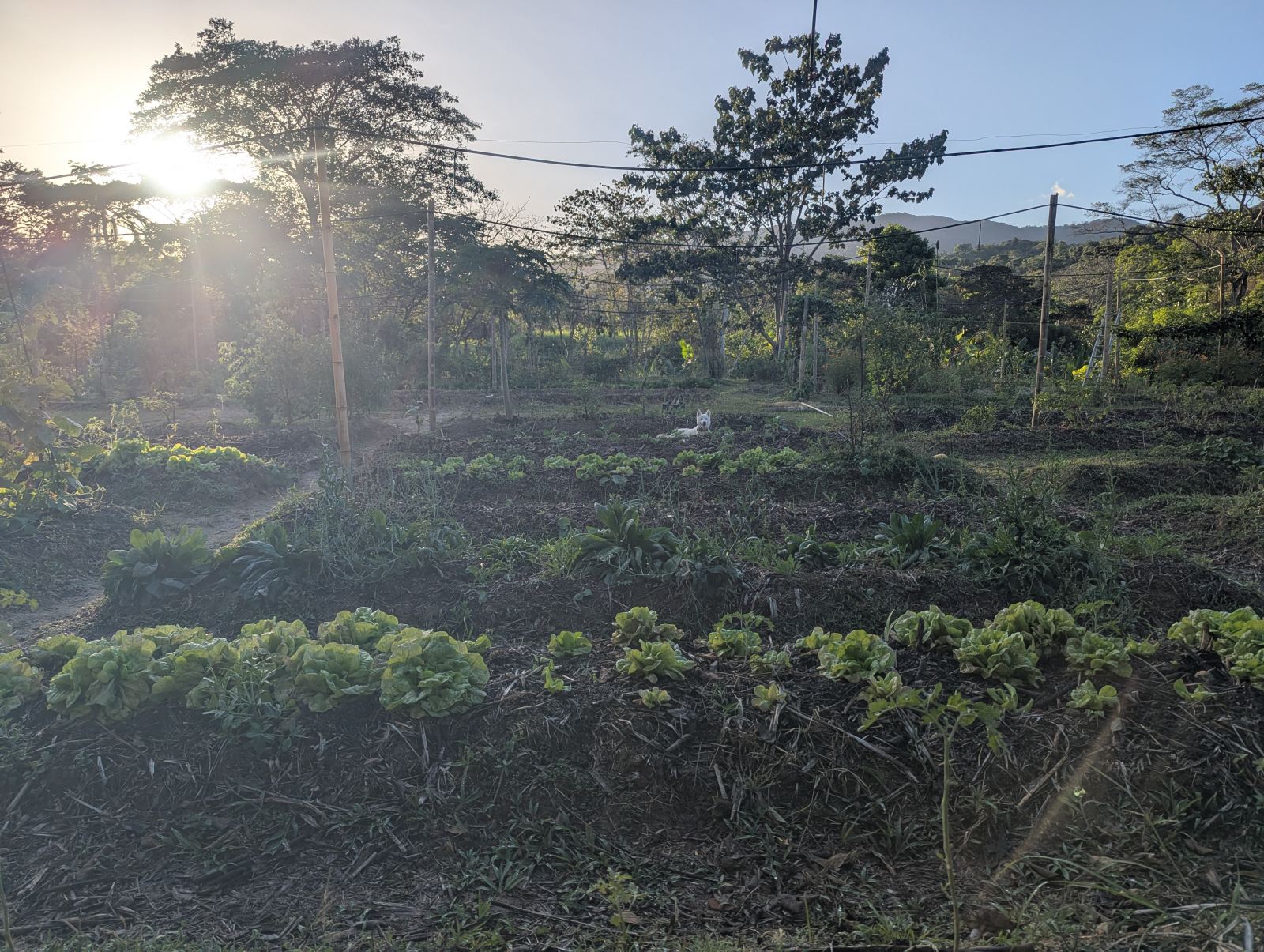
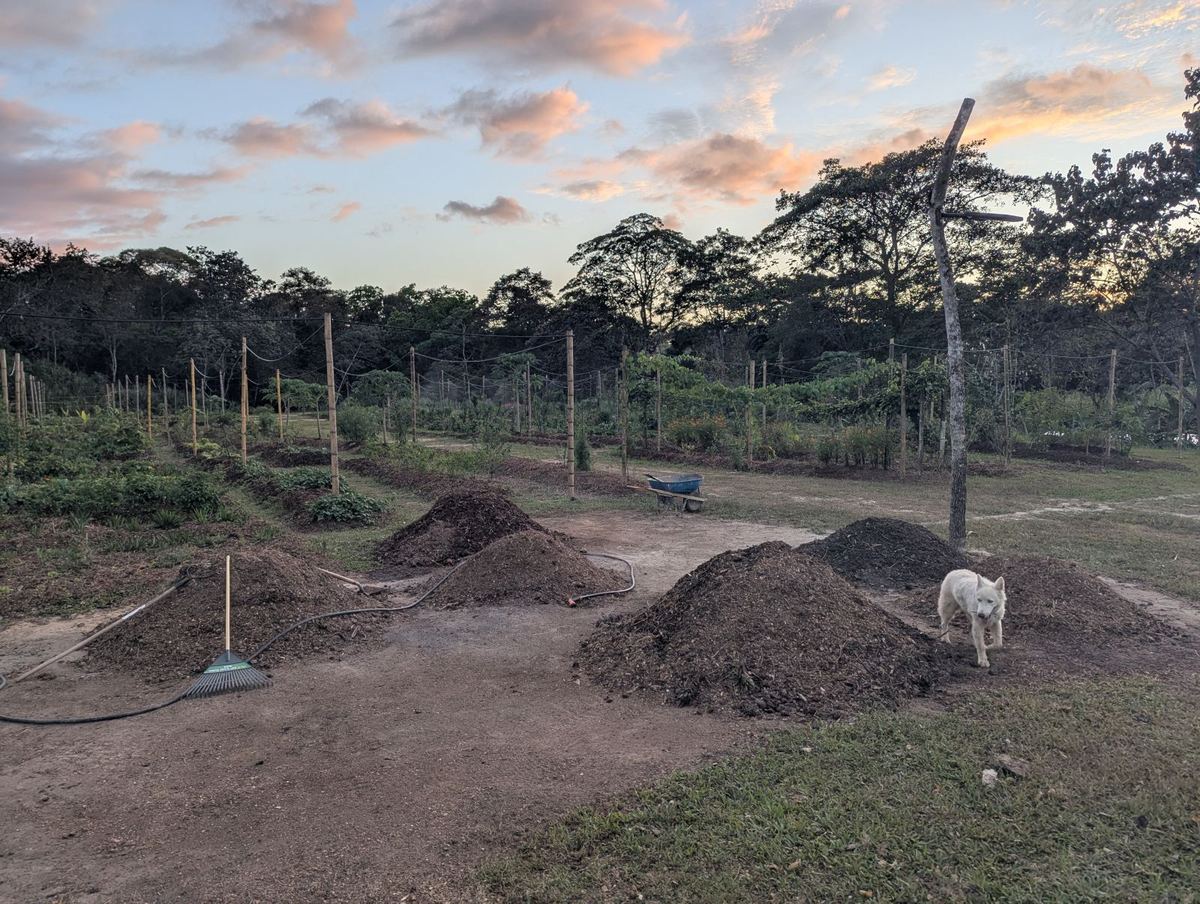
Our farm in Utivé, Pacora
We started on land with no topsoil. This is where we test what we design.
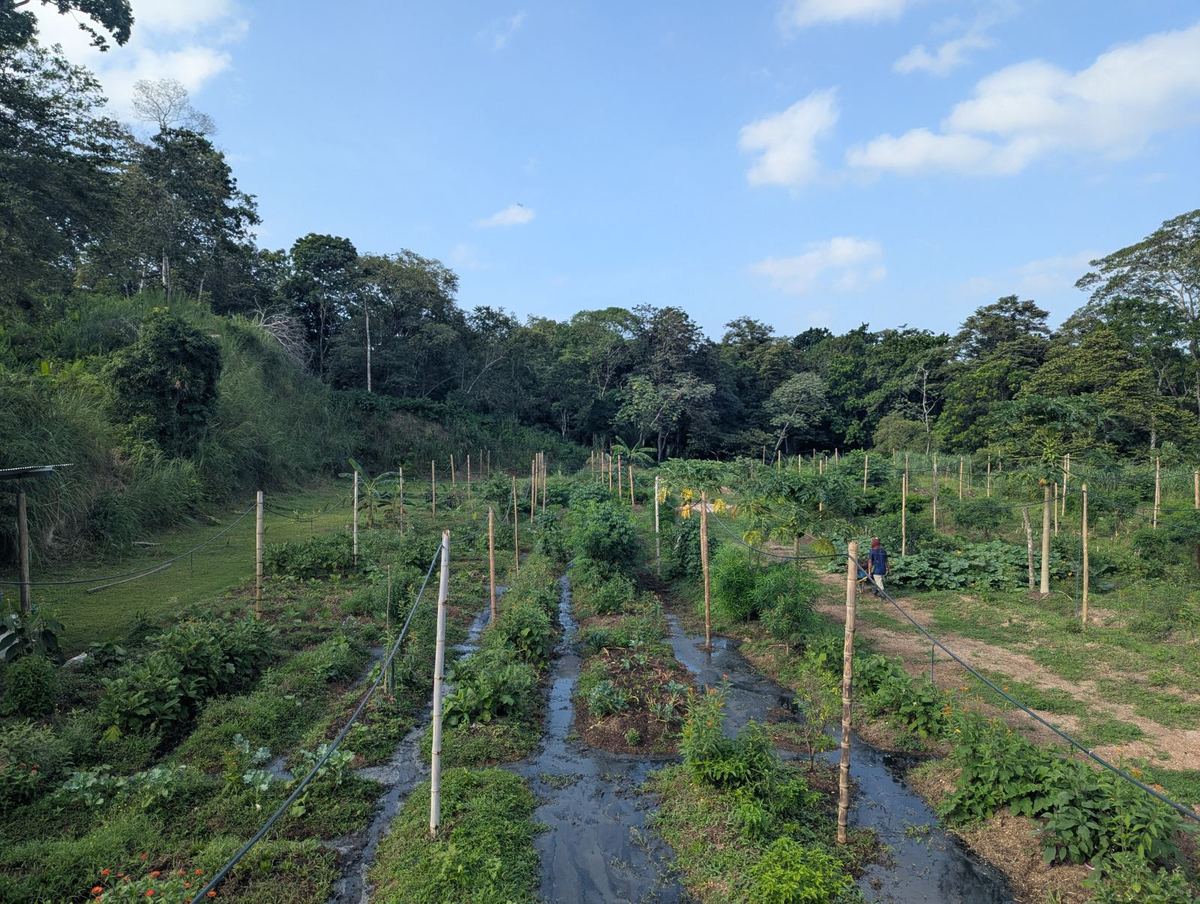
For coffee, cacao, fruit, vegetables or any other crop.
panamaorganicafarms@gmail.com