Utivé, Pacora, Panama · a proposal

Reservorio Arbóreo Utivé

The Asociación de Agricultores Naturalistas de Utivé, a community-based organization, proposes to turn 4.7 hectares of a degraded sand mine in Utivé, in the township of Pacora, eastern Panama, into a reservoir of native tree species and species of the Americas. It would have four roles: restore the mine soil; run a nursery of native trees; keep a seed bank and a living arboretum; and receive schools, farmers and universities. Compost and bocashi from Residuos Dinámicos would be used to rebuild the soil, in each planting hole. The project is planned over 36 months, in four phases.

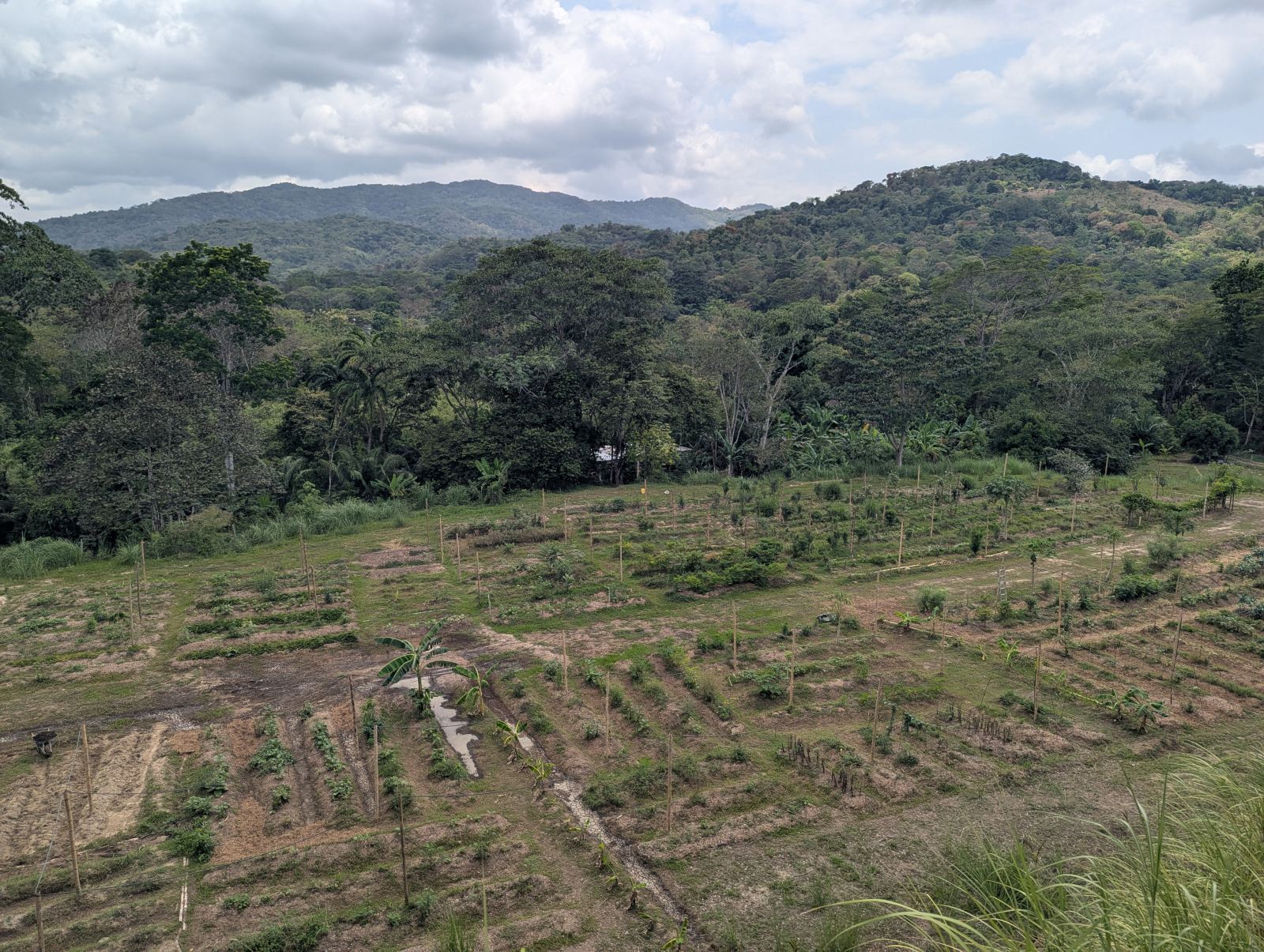
Crop plots at the farm in Utivé, Pacora, with hills in the distance.
A photo of the farm in Utivé, Pacora. This is not a photo of the sand mine.
≈ 4,200 trees on 3.8 ha, a 36-month target
20,000 / year seedlings from year 2; 10,000 in year 1
≥ 100 species with accessions
≥ 1,500 visitors a year, from year 2

The site and the problem

A sand mine left without fertile soil.

Sand extraction removes the fertile layer and leaves unstable slopes, ponds and a substrate poor in organic matter. In the Pacora river basin, neighbors and the press have documented bank erosion, landslides and the loss of farmland. The proposed site is a 4.7-hectare sand mine in Utivé. Almost 30% of the world’s tree species are at risk. In Panama, cocobolo is Critically Endangered and mahogany is Endangered, according to IUCN. In Latin America, the supply of native seed and seedlings with known provenance is a documented bottleneck.

Four components

Soil, nursery, seed, classroom.

This is how the work is laid out on the 4.7 hectares. The land zoning is preliminary and would be adjusted after the initial topographic survey.

01

Restore the mine soil

Compost and bocashi from Residuos Dinámicos would go in each planting hole — not spread over the whole area — together with biochar and mycorrhizal seedlings. Native pioneer species would be planted first. On about 3.8 plantable hectares, at 3 × 3 m spacing, the design estimates ≈ 4,200 trees. Living barriers and mats are proposed on the slopes to control erosion.
02

A nursery of native trees

A 600 m² shade house with automatic irrigation. Design target, to be validated in year 1: 10,000 seedlings in the first year and 20,000 a year from the second, all with provenance records (mother tree, site and collection date). The nursery substrate would be Residuos Dinámicos compost mixed with local soil and mycorrhizal inoculum.

03

Seed bank and living arboretum

Orthodox seeds would be dried and stored at −18 °C, following the FAO Genebank Standards. Species with recalcitrant seed would be kept as living trees. Initial priority: threatened native species of Panama, and a separate block of threatened species of the Americas.

  • Cocobolo (Dalbergia retusa), Critically Endangered
  • Mahogany (Swietenia macrophylla), Endangered
  • Nazareno (Peltogyne purpurea), Vulnerable
  • Spanish cedar (Cedrela odorata), Vulnerable

The list is preliminary.

04

Education center

An open classroom, signed trails, a program for schools in Pacora and eastern Panama, workshops for farmers, and agreements with universities. Design targets from year 2: ≥ 1,500 visitors a year, ≥ 20 school visits and ≥ 4 workshops for farmers a year.

Other 36-month design targets: survival ≥ 75% at 12 months; ≥ 5 species in IUCN Vulnerable, Endangered or Critically Endangered categories, with ≥ 10 mother trees each; and ArbNet Level I accreditation of the arboretum.

The amendment

Compost and bocashi, hole by hole.

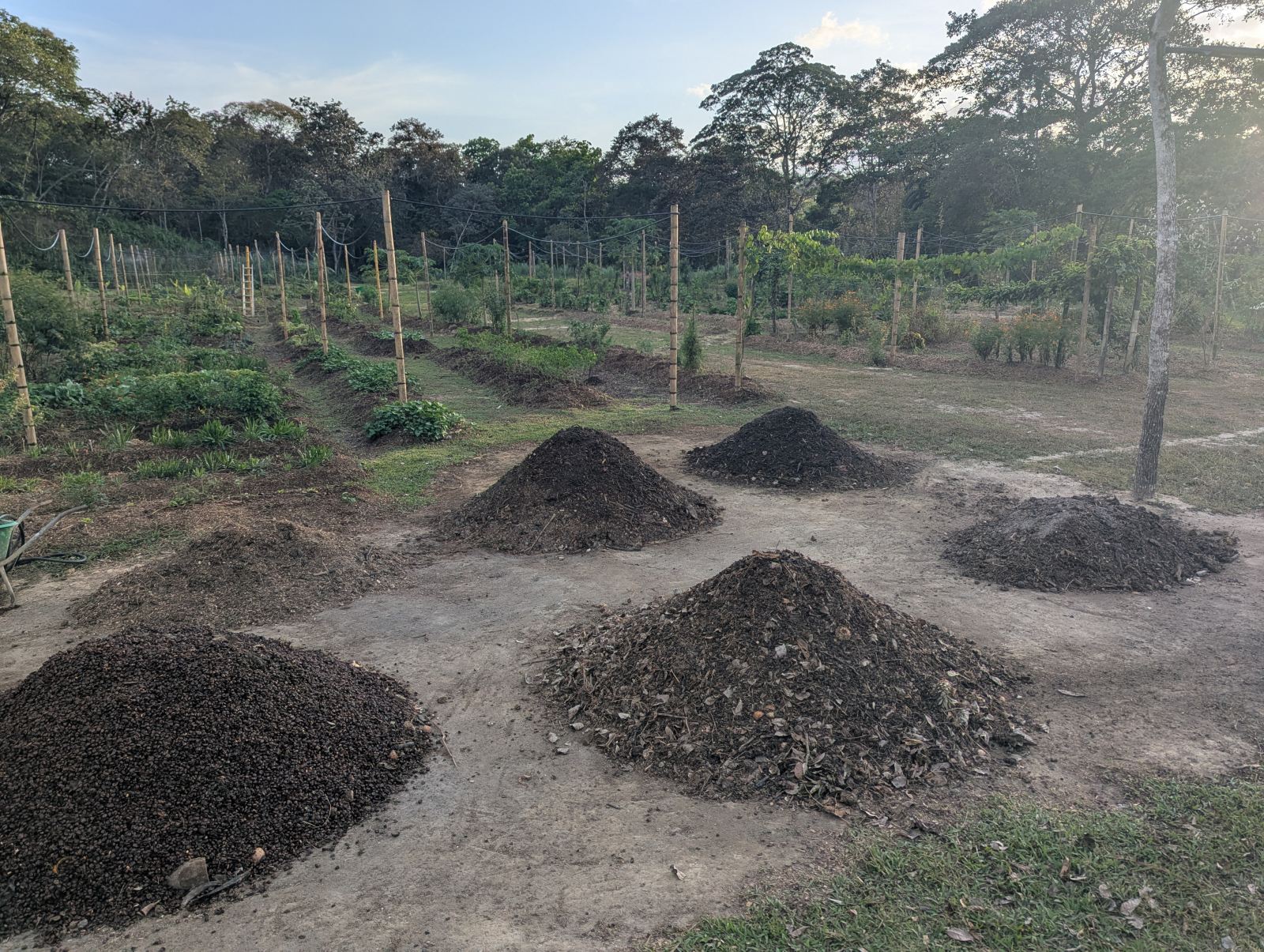
Residuos Dinámicos turns organic residues into fertilizer. In this design, that material would not be spread across the 4.7 hectares: it would go in each planting hole, with biochar, to use less material and less labor. Seedlings would leave the nursery already inoculated. Results in Utivé would be measured with comparison plots.

Compost piles at the farm in Utivé.
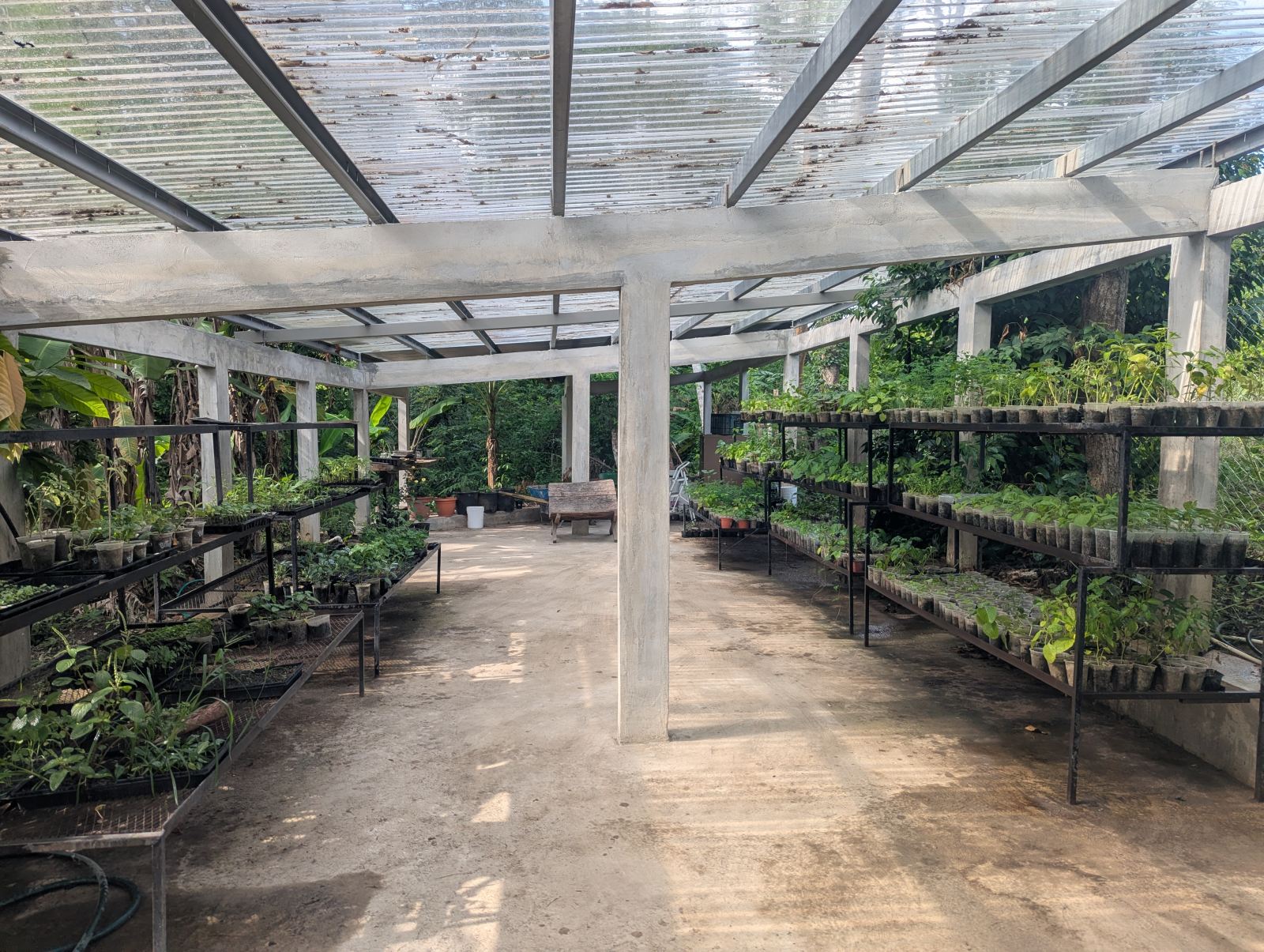
The current nursery at the farm in Utivé, with seedlings in trays on shelves.
The current nursery at the farm in Utivé. The project proposes a 600 m² shade house; this photo is not that structure.

The nursery

Seedlings with recorded provenance.

The seedlings would supply the planting on the site itself and, from year 2, would be sold to reforestation programs and to projects with environmental-compensation obligations. Germination trials would be run by species and published as open propagation protocols.

Budget

B/. 268,051 in four phases. Estimate

All figures are estimates, in balboas (B/. 1 = US$ 1), for 36 months. They were calculated from the 4.7 ha design, unit-cost assumptions still pending quotes, and a 7% contingency. No funding is presented here as committed.

  1. Phase 0 · Diagnosis and agreements
    Months 1–3
    B/. 14,691
  2. Phase 1 · Substrate restoration and nursery
    Months 4–12
    B/. 78,086
  3. Phase 2 · Seed bank, arboretum and education center
    Months 13–24
    B/. 105,078
  4. Phase 3 · Consolidation
    Months 25–36
    B/. 70,196
  5. 36-month total
    Estimated budget
    B/. 268,051

The design anticipates income from the sale of seedlings and seed, and from educational visits. Those are projected revenues, not committed funds.

Who is behind it

A community-based organization in Utivé.

The proposal is put forward by the Asociación de Agricultores Naturalistas de Utivé, a community-based organization in Pacora. Its president is Roberto Enrique Downing Peláez, who founded Panama Organic Farms (Finca Hierbawena) and Residuos Dinámicos. He holds a master’s degree in Research and Management of Neotropical Protected Areas (Universidad Pablo de Olavide, 2023).

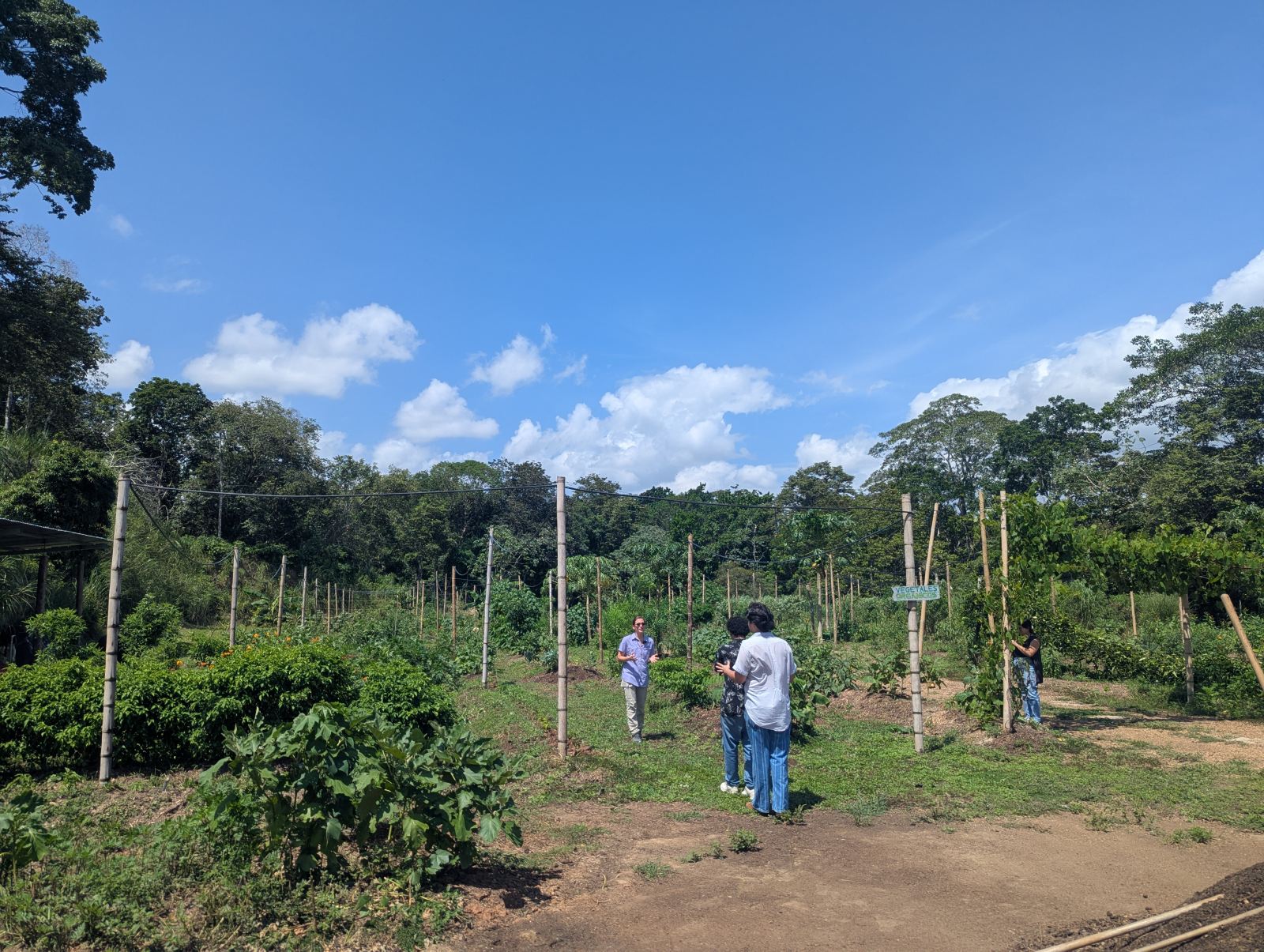
A farm visit and fieldwork at the farm in Utivé.
A visit at the farm in Utivé.

Take part

If you want to support or partner on this project, write to us.

Please use the site’s contact page. The project is seeking funds; this page does not present any funding as committed.

Text based on the Reservorio Arbóreo Utivé proposal, version 1.0 (26 Nov 2026), a draft for fundraising.